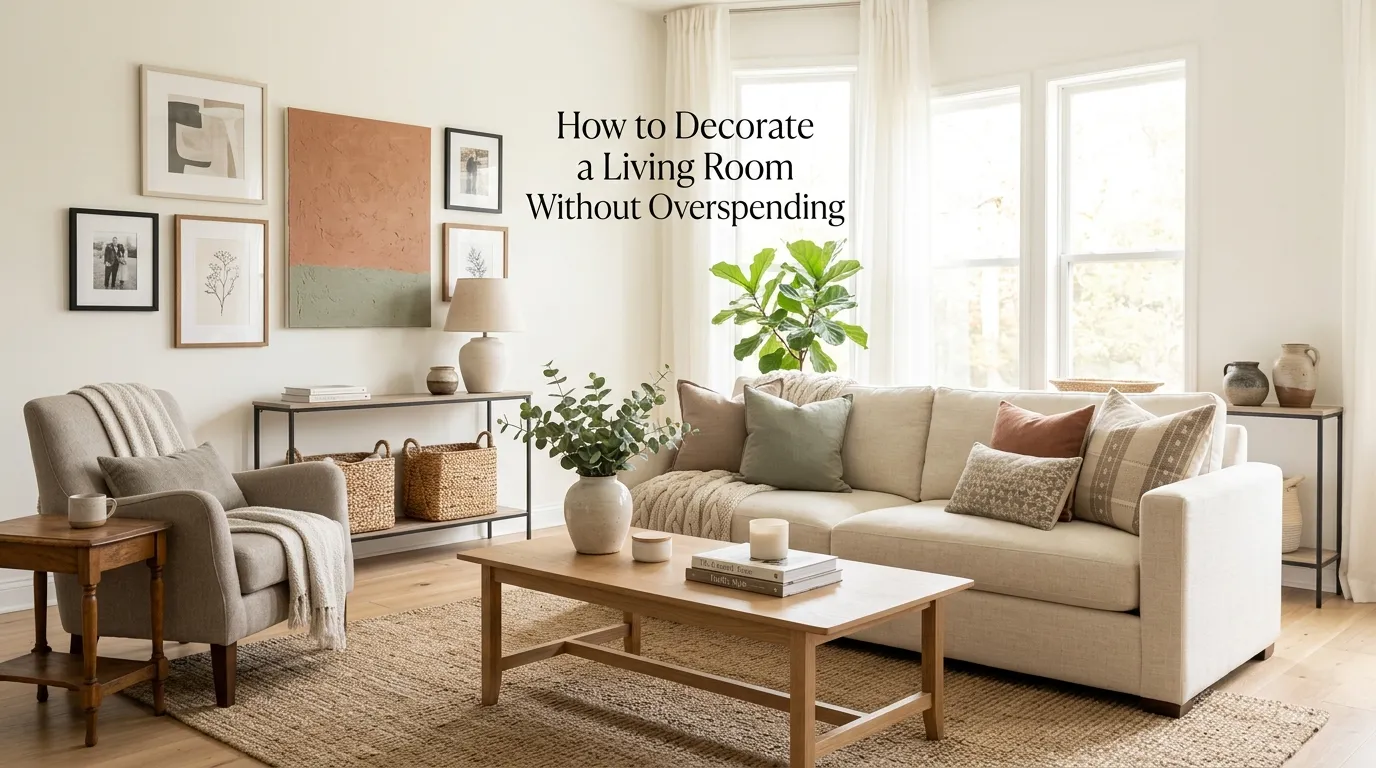
How to Decorate a Living Room Without Overspending
Decorating a living room can feel expensive surprisingly quickly. A new sofa, coffee table, rug, lighting, artwork, and accessories can easily turn into a much larger investment than expected. But creating a beautiful living room doesn’t require buying everything new—or spending a fortune.
The smartest approach is to decorate strategically instead of shopping impulsively. Before purchasing anything, look at what you already own and identify which pieces can be rearranged, refreshed, repurposed, or styled differently.
In my experience, a room often feels unfinished because of layout, lighting, empty walls, or a lack of visual balance—not necessarily because it needs more furniture. Moving a sofa, changing the placement of artwork, adding a few cushions, or bringing in a plant can sometimes make a bigger difference than an expensive purchase.
A budget-friendly living room should also feel personal. Thrifted finds, family pieces, handmade décor, books, plants, and items collected over time can give a space more character than a room filled entirely with matching new furniture.
The goal is not to make your living room look cheap. It’s to spend money where it matters and save where it doesn’t.
These ideas can help you create a warm, polished living room while keeping your decorating budget under control.
Table of Contents
1. Rearrange Your Furniture
Refresh the room without buying anything.
2. Shop Your Own Home
Give existing pieces a new purpose.
3. Update Soft Furnishings
Make the room feel fresh with small changes.
4. Create a Focal Point
Make one area feel intentionally designed.
5. Use Affordable Artwork
Decorate empty walls without overspending.
6. Bring in More Greenery
Add life with plants and natural textures.
7. Upgrade the Lighting
Change the atmosphere without replacing furniture.
8. Style With Books and Objects
Create layers using what you already have.
9. Mix Thrifted and New Pieces
Create a collected, personalized look.
10. Decorate in Stages
Avoid expensive impulse purchases.
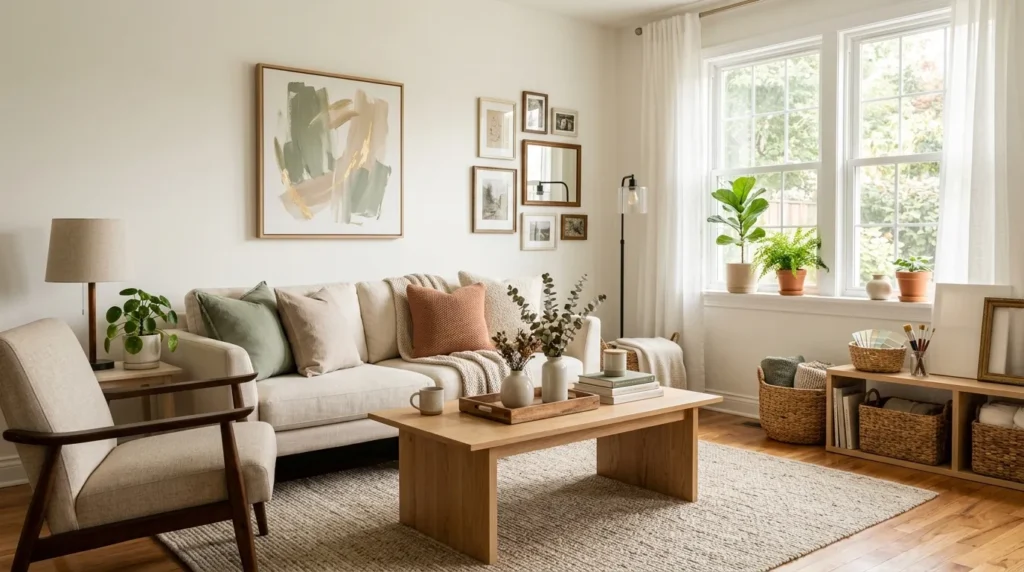
1. Rearrange Your Furniture
Quick Benefits
- Costs nothing
- Changes the room instantly
- Improves traffic flow
- Can make the room feel larger
- Helps identify what you actually need
Why It Works
Furniture placement has an enormous effect on how a living room feels. A sofa pushed against a wall isn’t always the best arrangement, and a coffee table that’s too far from the seating can make the room feel disconnected.
Before buying anything, experiment with the layout you already have.
How To Style It
Create a comfortable conversation area rather than simply lining furniture around the perimeter.
Make sure there are clear walking paths and that seating relates naturally to the coffee table, television, fireplace, or primary focal point. Try several arrangements before deciding that the room needs new furniture.
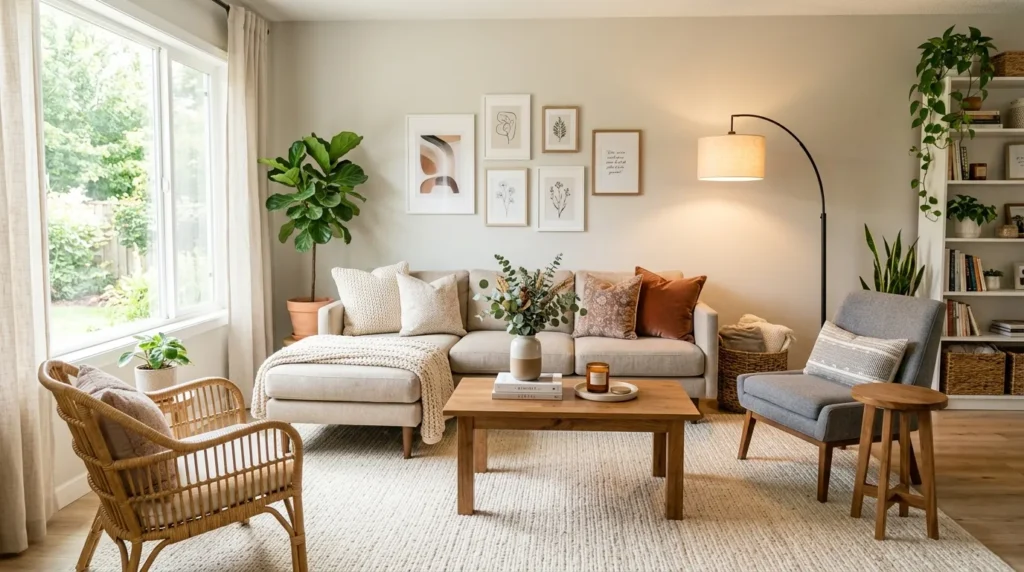
2. Shop Your Own Home
Quick Benefits
- Completely free
- Reduces clutter elsewhere
- Encourages creativity
- Gives old pieces new life
- Helps avoid unnecessary purchases
Why It Works
You may already own many of the decorative pieces your living room needs. A vase from the bedroom, artwork stored in a closet, a basket from the entryway, or a lamp from a guest room can look completely different when placed somewhere new.
How To Style It
Walk through your home and gather items that aren’t currently being used. Look for lamps, mirrors, baskets, artwork, books, trays, plants, ceramics, and textiles.
Group similar pieces together and test them in the living room. You may discover that the room needs editing rather than shopping.
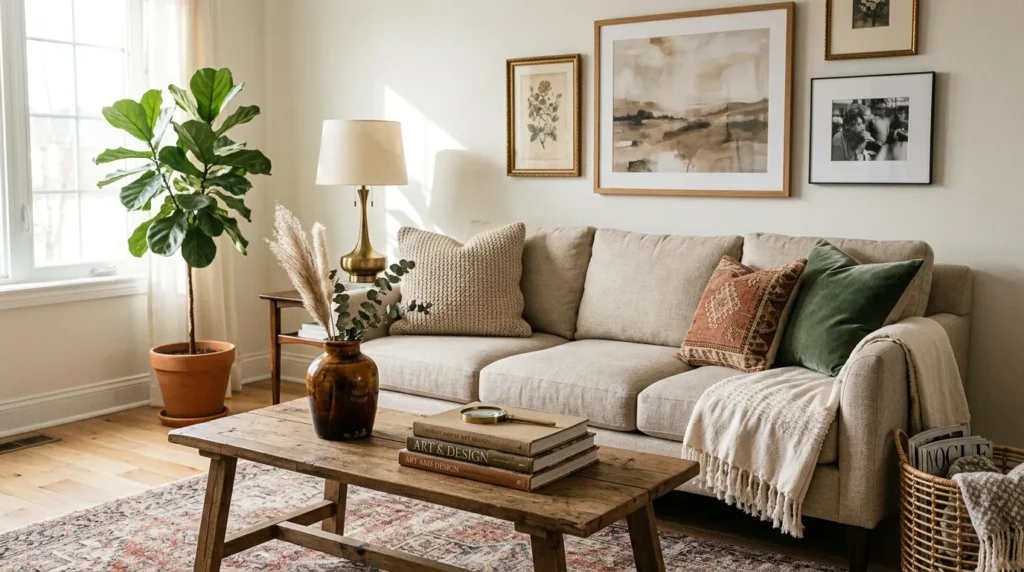
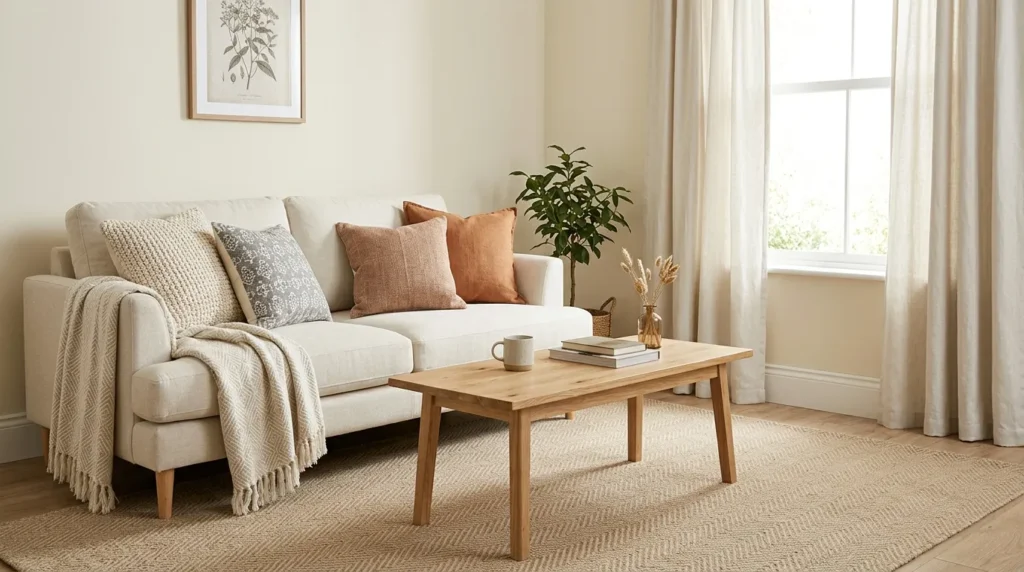
3. Update Soft Furnishings
Quick Benefits
- Creates a noticeable change
- Costs less than replacing furniture
- Adds color and texture
- Easy to change seasonally
- Makes seating more inviting
Why It Works
Pillows, throws, curtains, and small textiles can completely change the visual character of a living room.
If your main furniture is neutral, changing these smaller elements can introduce an entirely new color palette without requiring a major investment.
How To Style It
Choose two or three complementary colors and repeat them throughout the room.
Mix textures such as linen, cotton, woven materials, and soft knits. Rather than buying a dozen pillows, choose a few with different sizes and textures for a more intentional arrangement.
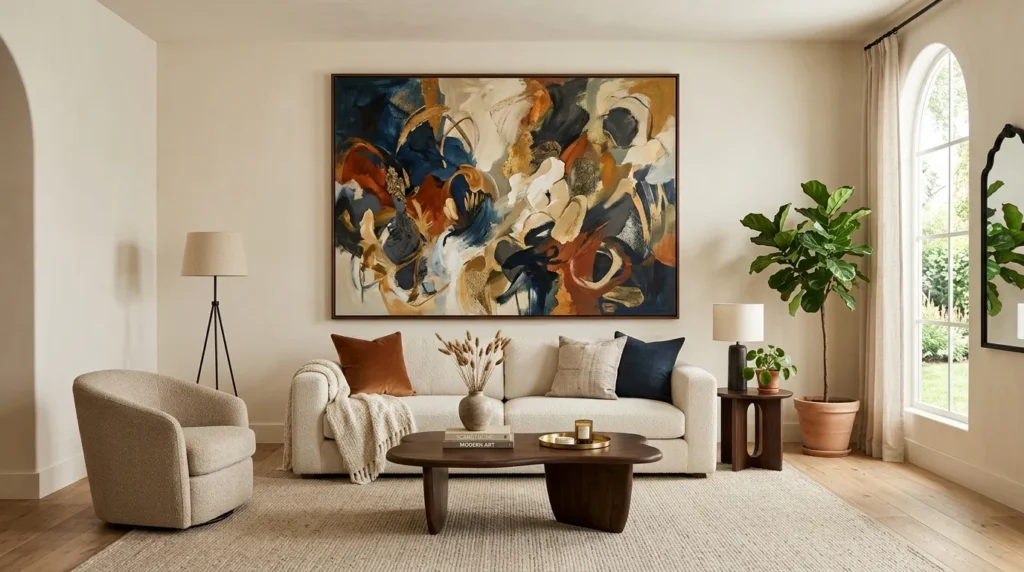
4. Create a Focal Point
Quick Benefits
- Makes decorating easier
- Creates visual organization
- Draws attention to one area
- Reduces the need for excessive décor
- Makes the room feel finished
Why It Works
A room doesn’t need every wall and surface decorated. In fact, trying to decorate everything can make a budget room feel cluttered.
One strong focal point can provide much of the visual impact.
How To Style It
Choose a fireplace, large artwork, accent wall, television wall, beautiful window, or architectural feature.
Arrange furniture so the focal point is easy to notice. Then keep nearby accessories relatively simple.
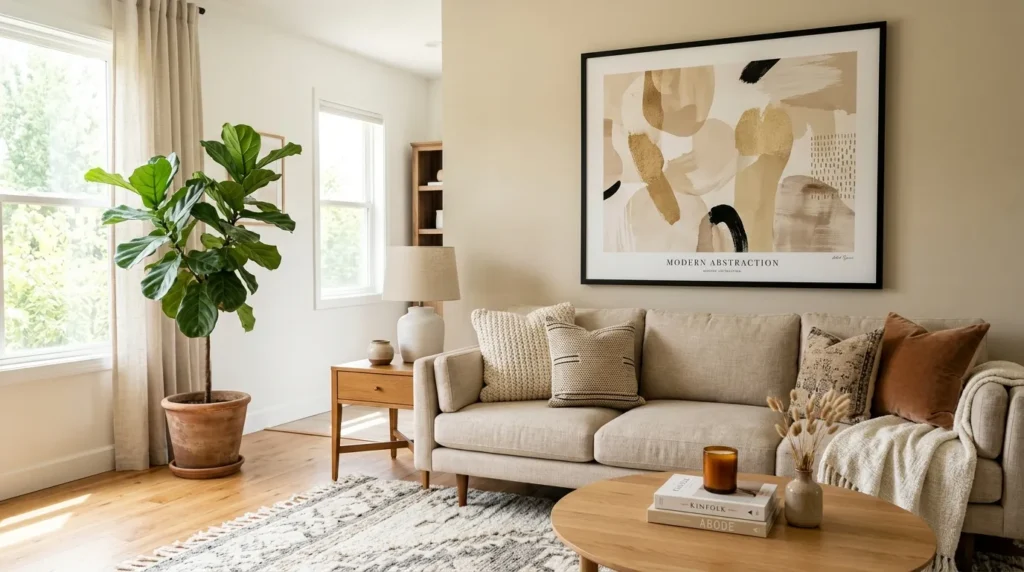
5. Use Affordable Artwork
Quick Benefits
- Fills empty walls
- Adds personality
- Creates color
- Can look custom
- Easy to change
Why It Works
Wall art doesn’t need to be expensive to have visual impact. The way artwork is framed, grouped, and positioned often matters more than the price tag.
How To Style It
Look for affordable prints, thrifted artwork, vintage pieces, photographs, or handmade art.
For a more elevated appearance, choose a consistent frame style or create a gallery wall with a cohesive color palette. Oversized artwork can also make a simple room feel more intentional.
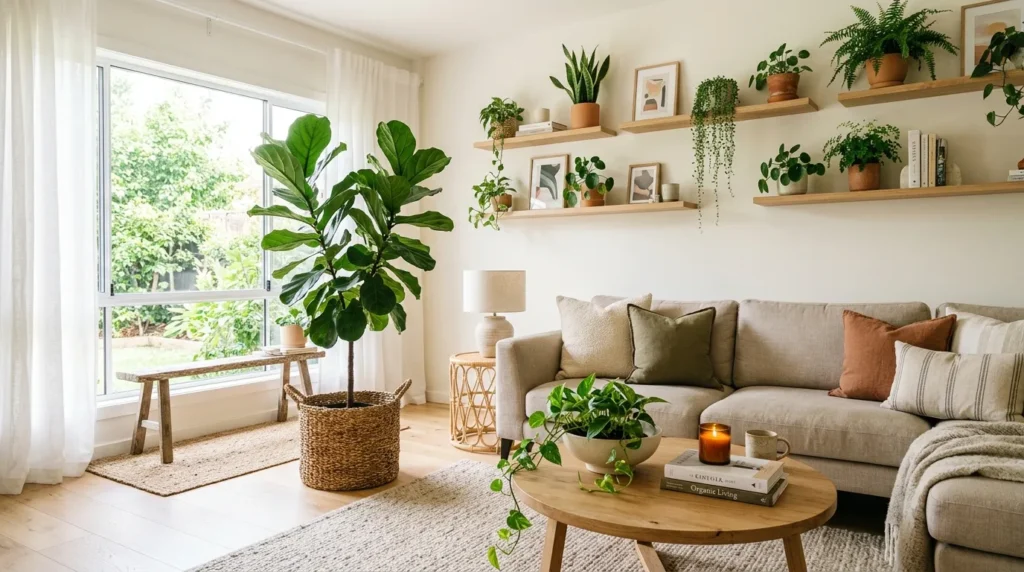
6. Bring in More Greenery
Quick Benefits
- Adds natural color
- Creates texture
- Makes the room feel fresh
- Works with many decorating styles
- Can fill awkward corners
Why It Works
Plants introduce organic shapes that soften furniture and architectural lines. They can also add visual height and fill empty corners without requiring expensive furniture.
How To Style It
Choose plants based on the actual light conditions in your living room and your ability to care for them.
Use one larger plant in an empty corner and smaller plants on shelves or side tables. Attractive planters can become part of the décor themselves.
If real plants aren’t practical, high-quality artificial greenery can provide a similar visual effect.
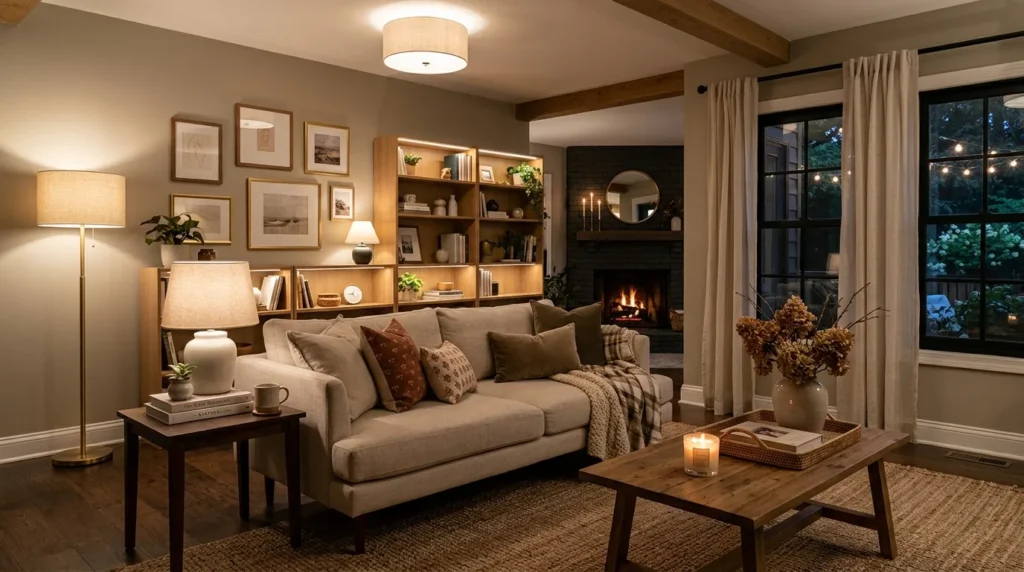
7. Upgrade the Lighting
Quick Benefits
- Changes the atmosphere
- Makes décor more attractive
- Adds warmth
- Creates layers
- Doesn’t require new furniture
Why It Works
Good lighting can make an inexpensive room feel dramatically more polished. A single overhead fixture often creates a flat atmosphere, while multiple light sources create depth.
How To Style It
Combine overhead lighting with floor lamps, table lamps, wall lights, or strategically placed accent lighting.
Use bulbs appropriate for the fixtures and desired atmosphere. Warm-toned lighting is often particularly inviting in living spaces.
8. Style With Books and Objects
Quick Benefits
- Uses items you may already own
- Adds personality
- Creates visual layers
- Makes shelves feel intentional
- Easy to rearrange
Why It Works
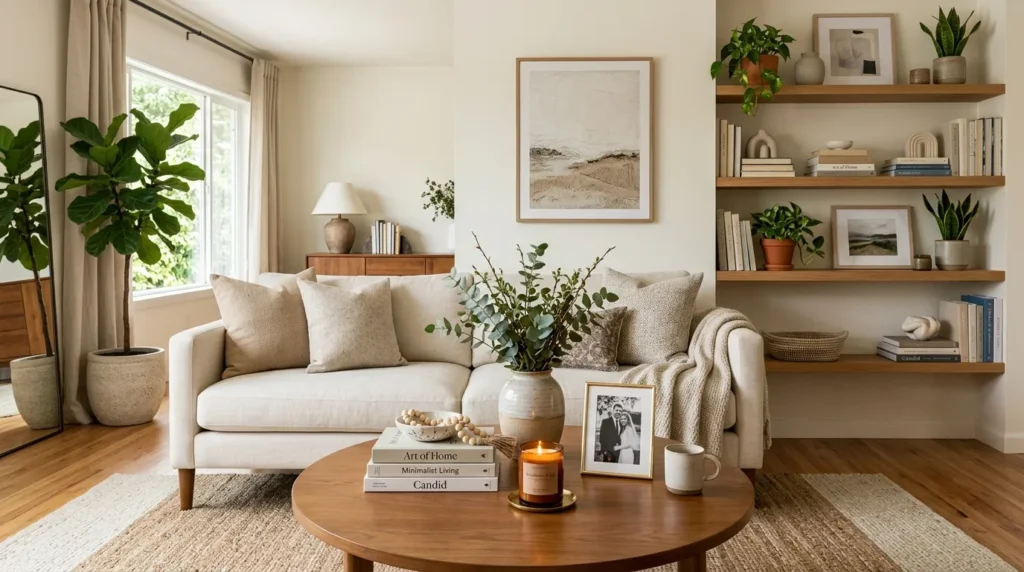
Books, bowls, vases, candles, framed photographs, and small decorative objects can make a living room feel lived-in.
The key is editing. Too many small objects can create visual noise.
How To Style It
Group items in small collections rather than spreading individual objects across every surface.
Stack a few books beneath a vase, place a decorative bowl on a coffee table, or combine objects of different heights on a shelf. Leave some empty space so the arrangement can breathe.
9. Mix Thrifted and New Pieces
Quick Benefits
- Saves money
- Adds character
- Prevents a showroom look
- Creates unique combinations
- Encourages sustainable decorating
Why It Works
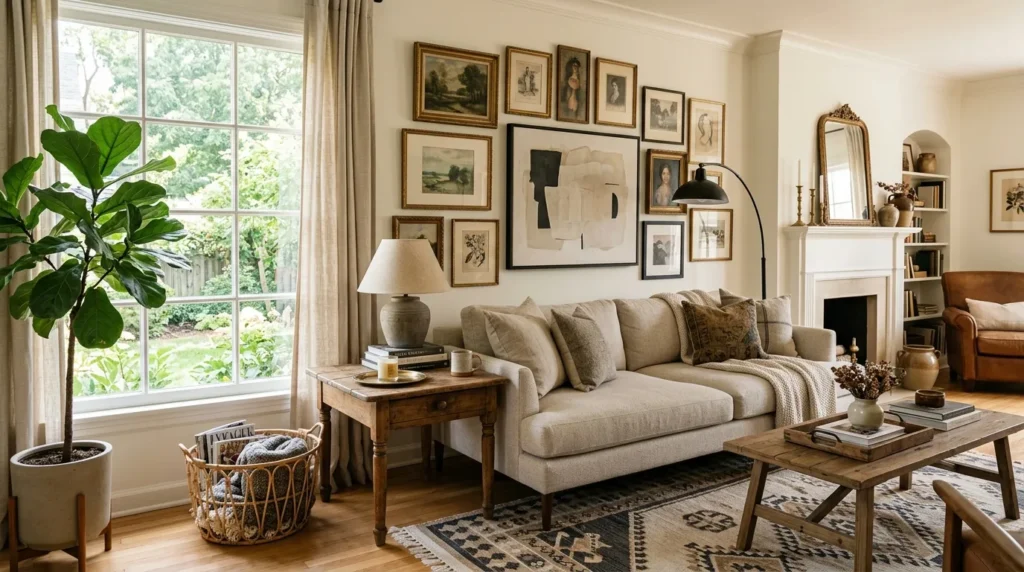
A living room filled entirely with new furniture can feel predictable. Mixing affordable new pieces with thrifted, vintage, or secondhand finds creates a more collected appearance.
How To Style It
Look for solid furniture with good proportions rather than focusing only on its current finish.
An older wooden side table can often become beautiful with cleaning, light refinishing, or new hardware. Pair one-of-a-kind pieces with simpler contemporary furniture for balance.
10. Decorate in Stages
Quick Benefits
- Prevents impulse buying
- Protects your budget
- Makes design decisions easier
- Allows the room to evolve
- Encourages intentional decorating
Why It Works
Trying to finish an entire living room in one shopping trip can lead to unnecessary purchases. You may buy something simply because you feel the room needs “something” rather than because the piece genuinely works.
Decorating slowly gives you time to understand what the room is missing.
How To Style It
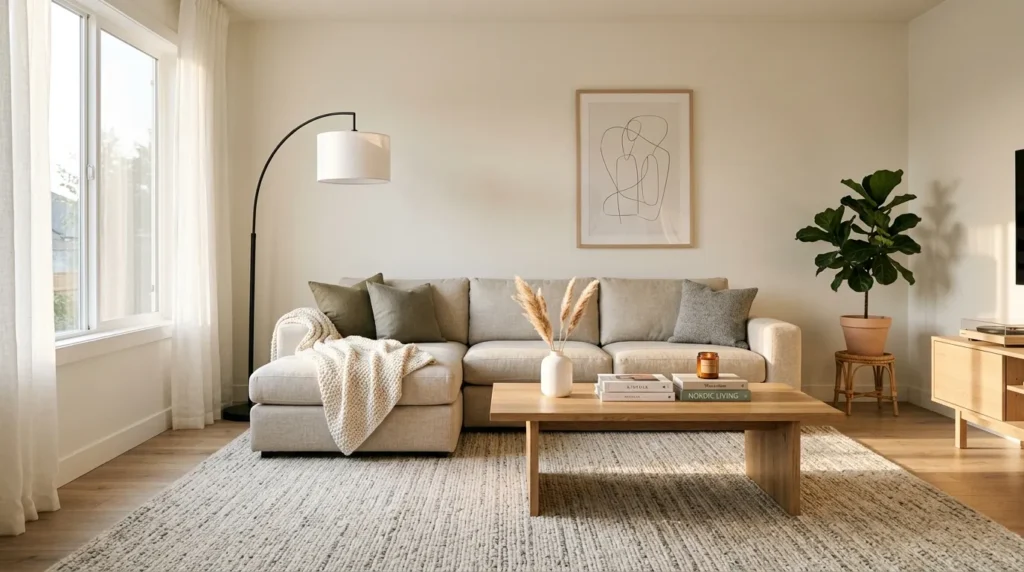
Start with the essentials: comfortable seating, functional lighting, a useful table, and an appropriate rug if needed.
Then live with the room for a while. Add artwork, plants, textiles, and accessories gradually.
Before every purchase, ask whether the item solves a specific problem or genuinely improves the room.
Frequently Asked Questions
How can I decorate my living room on a very small budget?
Start with the layout and items you already own. Rearrange furniture, shop other rooms in your home, add inexpensive textiles, bring in plants, improve lighting, and use affordable artwork before purchasing large furniture pieces.
What should I buy first when decorating a living room?
Prioritize functional pieces you genuinely need, such as comfortable seating and appropriate lighting. Decorative purchases can come later once you understand how the room functions.
How can I make cheap décor look expensive?
Choose fewer, larger, or more intentional pieces instead of filling the room with many small accessories. Consistent colors, good proportions, thoughtful placement, and attractive textures can make affordable décor feel much more polished.
Should everything in a living room match?
No. A coordinated color palette is generally more important than having matching furniture. Combining different materials, finishes, and styles can make the room feel more collected and personal.
How can I refresh a living room without buying furniture?
Rearrange the layout, change pillows and throws, move artwork, restyle shelves, add plants, adjust lighting, and bring decorative objects from other areas of your home.
How do I avoid overspending while decorating?
Create a prioritized shopping list, establish a budget, measure your space before purchasing anything, and avoid buying décor simply to fill an empty area. Decorating in stages can also help prevent impulse purchases.
Conclusion
Decorating a beautiful living room doesn’t have to mean starting from scratch or spending a large amount of money.
The most budget-friendly approach is to work with what you already have. Rearrange the furniture, move décor between rooms, refresh your textiles, improve the lighting, and create one strong focal point.
When you do spend money, prioritize pieces that will have a meaningful impact. A quality lamp, well-sized rug, comfortable seating, or large piece of artwork can often contribute more than a collection of inexpensive accessories.
Don’t be afraid to shop secondhand, either. Vintage furniture, thrifted artwork, and collected objects can give your living room personality that matching new sets simply can’t replicate.
Most importantly, give yourself permission to decorate slowly.
A beautiful living room doesn’t have to be completed in one weekend. Let the space evolve, pay attention to what you actually use, and buy only what makes the room more comfortable, functional, or beautiful.
The result will not only save money—it will feel much more like your home.