

How to Decorate a Bedroom That Feels Warm and Relaxing
A bedroom should feel like the easiest room in the home to unwind in. After a busy day, you want to walk through the door and immediately notice softer lighting, comfortable textures, calming colors, and an arrangement that doesn’t demand too much attention.
Creating that feeling doesn’t require a complete bedroom makeover or an expensive furniture upgrade. Often, the biggest difference comes from combining several simple elements in a thoughtful way. A comfortable bed, layered bedding, warm light, natural materials, and a little visual organization can completely change the mood of the space.
In my experience, warmth comes from more than color. A beige bedroom can still feel cold if it has harsh lighting and bare surfaces, while a neutral room filled with wood, linen, woven textures, and gentle illumination can feel incredibly inviting.
It’s also important to design around real life. Your bedroom needs to work when you’re getting dressed in the morning, reading at night, putting away laundry, or simply trying to relax. Beautiful décor is much more successful when it supports those everyday routines.
The ideas below focus on creating a bedroom that feels warm, restful, personal, and comfortable without becoming cluttered. Whether you’re working with a spacious primary bedroom, a guest room, or a compact apartment bedroom, you can adapt these principles to suit your space.
Start with the elements that influence comfort most—your bed, lighting, color palette, and furniture layout—then gradually add texture and personality.
Table of Contents
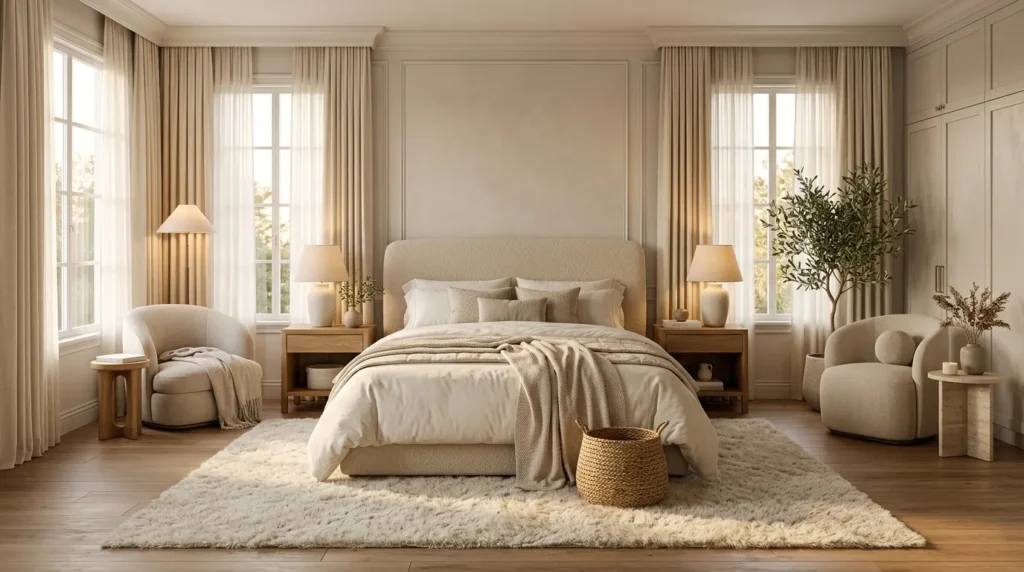
1. Layer Comfortable Bedding
Build a soft and inviting foundation.
2. Choose Warm Neutral Colors
Create a calming visual backdrop.
3. Add Natural Wood
Introduce warmth and organic texture.
4. Use Soft Ambient Lighting
Make evenings feel more relaxing.
5. Add Textured Rugs
Bring softness underfoot.
6. Hang Flowing Curtains
Soften windows and control daylight.
7. Create a Cozy Reading Spot
Give yourself a place to unwind.
8. Keep Nightstands Organized
Reduce visual distractions.
9. Add Meaningful Decor
Make the room feel personal.
10. Layer Natural Textures
Create depth without visual clutter.
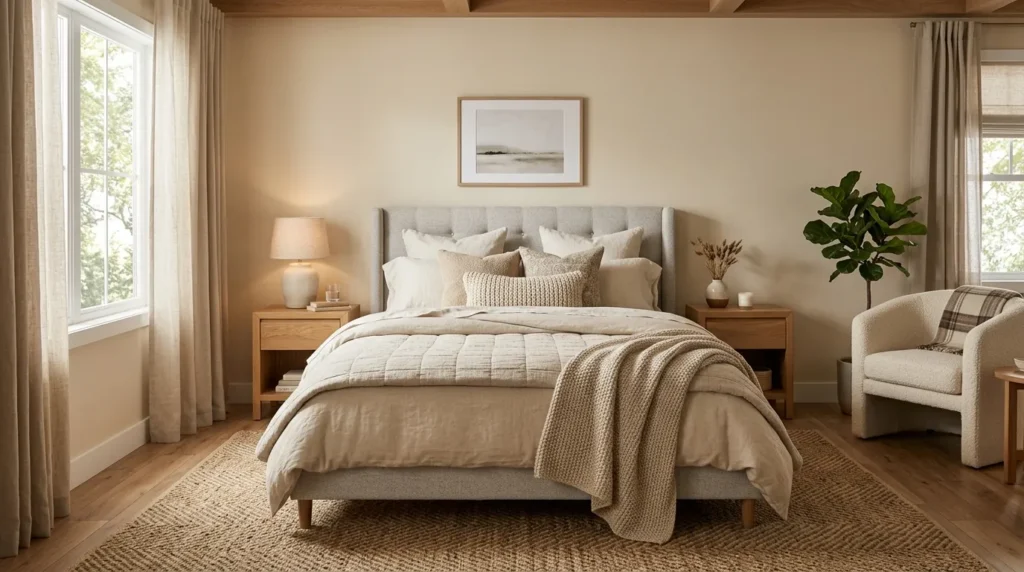
1. Layer Comfortable Bedding
Quick Benefits
- Makes the bed more inviting
- Adds softness
- Creates visual depth
- Improves seasonal flexibility
- Establishes the room’s main focal point
Why It Works
The bed is naturally the most important feature in a bedroom, so it should look and feel comfortable. Layered bedding creates the impression of softness while allowing you to adjust individual pieces according to the season.
Instead of relying on one heavy blanket, several lighter layers create texture and flexibility.
How To Style It
Start with breathable sheets, then add a duvet or comforter, quilt, blanket, and a few pillows. Choose fabrics that feel comfortable against your skin and are practical for your lifestyle.
Keep the palette coordinated rather than matching every piece exactly. Cream sheets, a warm beige duvet, a textured throw, and muted accent pillows can create a relaxed layered appearance.
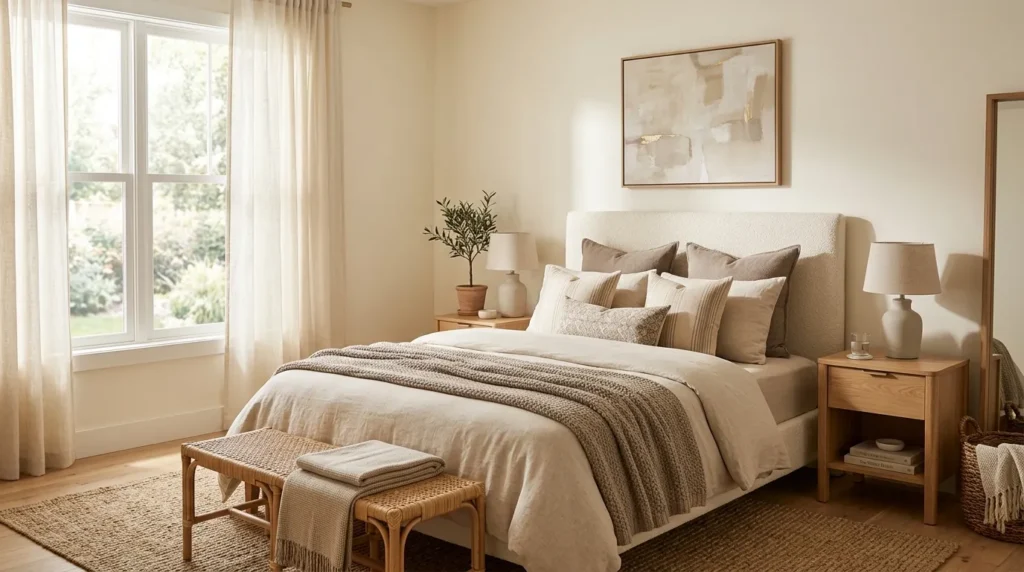
2. Choose Warm Neutral Colors
Quick Benefits
- Creates visual calm
- Makes the room feel warmer
- Works with natural materials
- Provides decorating flexibility
- Creates a timeless foundation
Why It Works
Warm neutrals can make a bedroom feel peaceful without becoming bland. Cream, beige, taupe, warm white, soft brown, and muted earthy colors provide a gentle backdrop for relaxing.
Unlike stark white, warmer shades can complement wood and natural textiles particularly well.
How To Style It
Choose one dominant neutral and repeat it across the larger surfaces. Then add two or three complementary shades through bedding, curtains, rugs, and accessories.
If you prefer stronger color, introduce muted terracotta, dusty blue, sage green, or warm brown through smaller decorative elements.
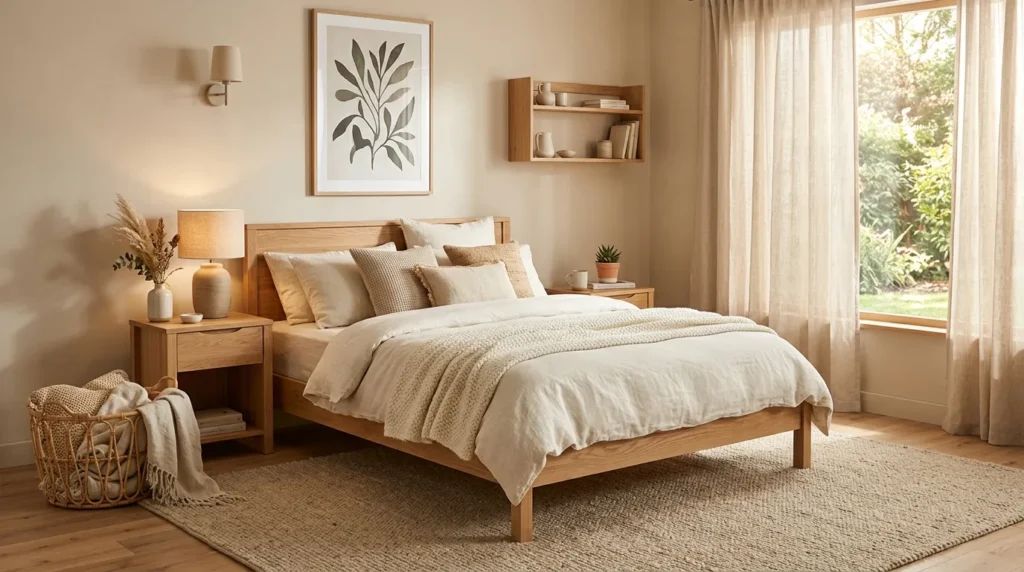
3. Add Natural Wood
Quick Benefits
- Adds warmth
- Creates organic character
- Balances soft fabrics
- Works with neutral colors
- Makes modern rooms feel less clinical
Why It Works
Wood brings visual warmth to a bedroom filled with painted walls, fabric, glass, or metal. Its natural grain also adds subtle variation without requiring bold patterns.
This makes it particularly useful when you’re creating a calm, understated interior.
How To Style It
Use wood through nightstands, a bed frame, dresser, bench, shelving, or picture frames. Light oak creates an airy Scandinavian-inspired feeling, while walnut and darker wood tones create richer contrast.
You don’t need every wood finish to match perfectly. Repeating similar undertones throughout the room is usually enough to create cohesion.
4. Use Soft Ambient Lighting
Quick Benefits
- Creates a relaxing mood
- Softens the room at night
- Makes textures more inviting
- Supports different activities
- Adds decorative character
Why It Works
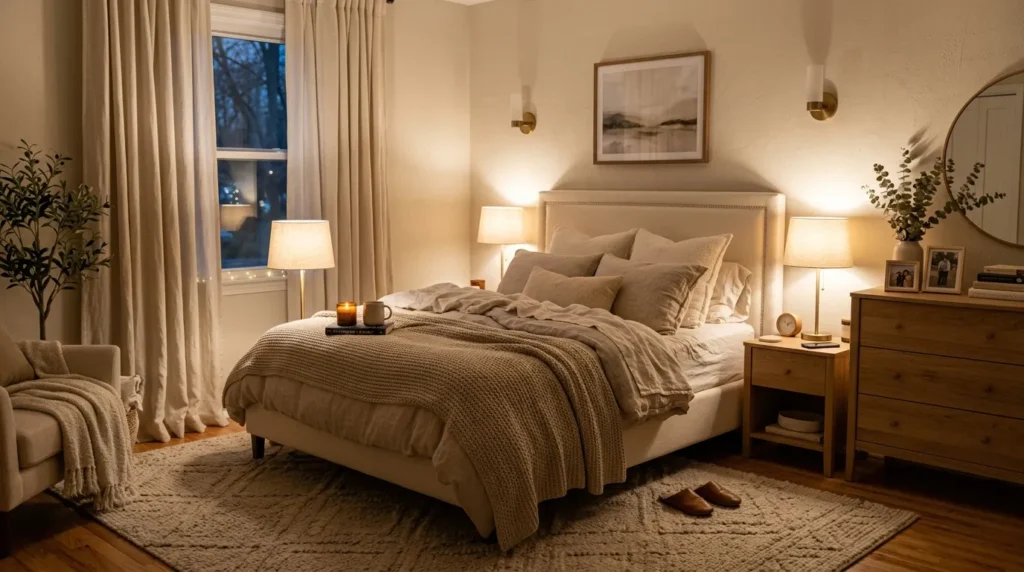
Lighting can completely change the atmosphere of a bedroom. A bright overhead fixture may be useful for certain tasks, but it isn’t always the most relaxing choice at the end of the day.
Several smaller light sources create a softer and more layered environment.
How To Style It
Use bedside lamps, wall sconces, floor lamps, or other appropriate fixtures to create illumination at different heights.
Choose shades that diffuse light gently and consider dimmable options where practical. Keep the light sources visually coordinated so the room feels intentional.
5. Add Textured Rugs
Quick Benefits
- Makes floors feel softer
- Adds warmth
- Defines the bed area
- Introduces texture
- Reduces visual hardness
Why It Works
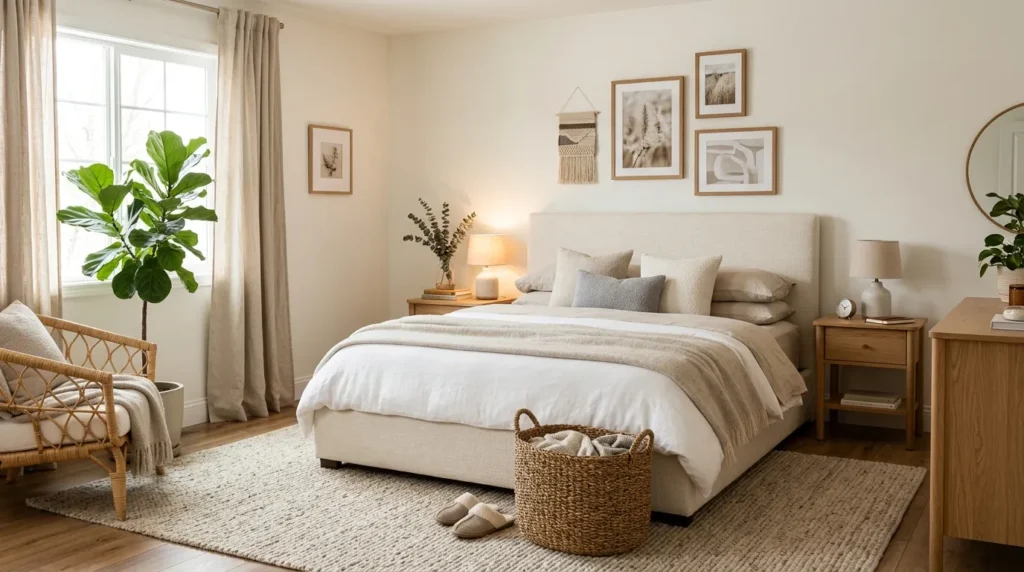
A rug can make a bedroom feel significantly more comfortable, especially when placed around the bed. It adds a layer of softness between hard flooring and bare feet while also helping anchor the furniture.
Texture matters just as much as color.
How To Style It
Choose a rug large enough to visually connect the bed and nearby furniture. A neutral wool-inspired or woven texture works beautifully in warm bedrooms.
If the room already contains patterned bedding, curtains, or artwork, choose a quieter rug. If everything is neutral, subtle texture can provide enough interest without adding strong pattern.
6. Hang Flowing Curtains
Quick Benefits
- Adds softness
- Provides privacy
- Controls natural light
- Creates visual height
- Complements layered bedding
Why It Works
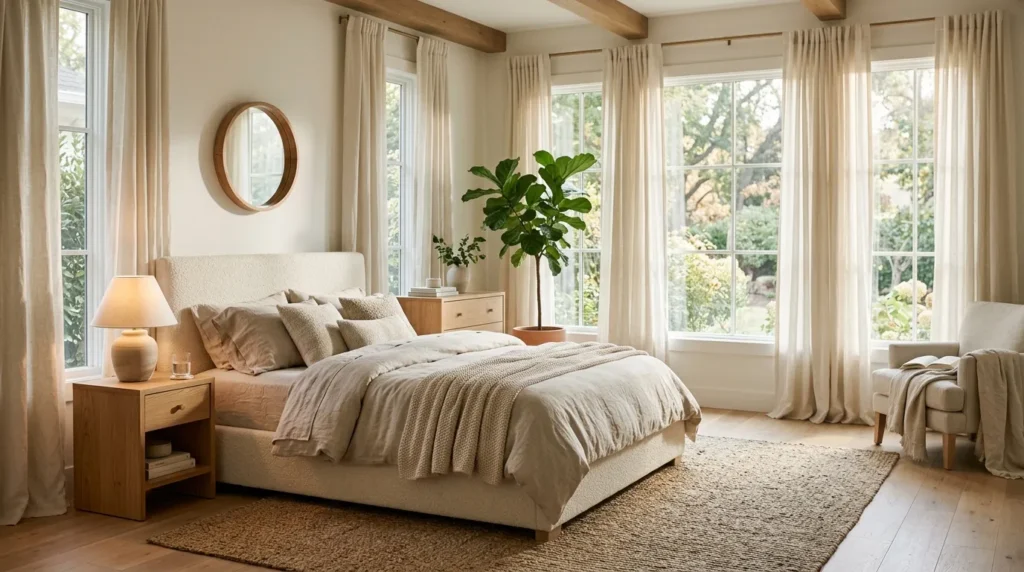
Curtains soften the architectural lines of windows while creating another opportunity to introduce fabric and texture.
They can also influence how the entire bedroom feels during the day. Light-filtering curtains preserve brightness, while lined or blackout options can provide stronger light control when needed.
How To Style It
Choose curtains in a color close to the walls for a subtle appearance, or use a slightly darker neutral to create definition.
Linen-look and other softly textured fabrics work well with warm bedroom styles. Hang panels appropriately so they frame the window rather than making the room feel visually compressed.
7. Create a Cozy Reading Spot
Quick Benefits
- Adds another relaxation zone
- Uses empty corners
- Makes the bedroom more functional
- Encourages screen-free downtime
- Adds personality
Why It Works
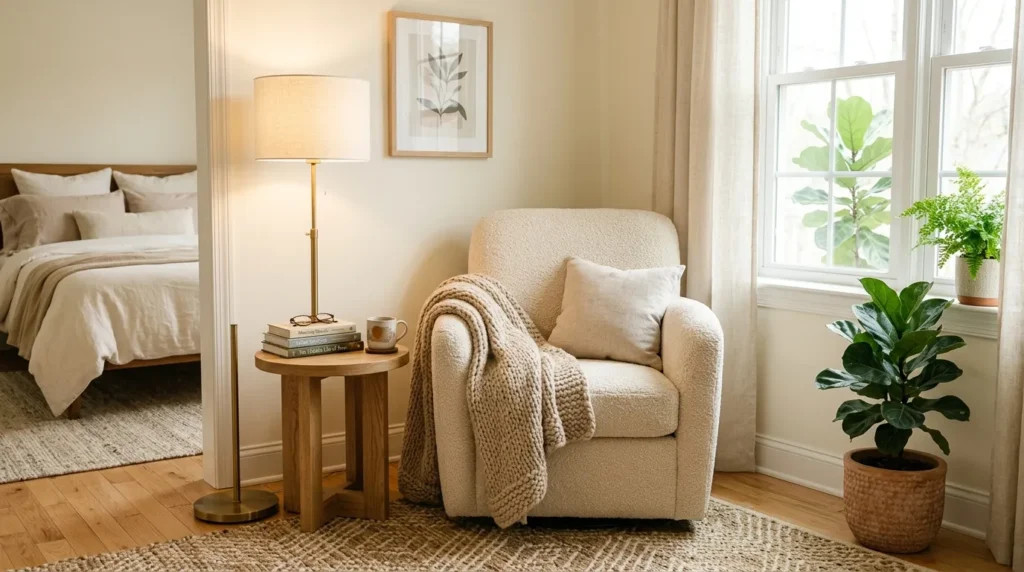
If your bedroom has an unused corner, turning it into a small reading area can make the room feel more intentional. You don’t need a large chair or elaborate setup.
Even a compact chair with a small side table can create a dedicated place to sit.
How To Style It
Choose a comfortable chair that fits the available footprint. Add a small table for a book or drink and position a suitable floor lamp nearby.
A soft throw or small cushion can connect the reading area to the rest of the bedroom’s color palette.
8. Keep Nightstands Organized
Quick Benefits
- Reduces visual clutter
- Makes bedtime routines easier
- Keeps essentials accessible
- Creates a calmer atmosphere
- Improves everyday functionality
Why It Works
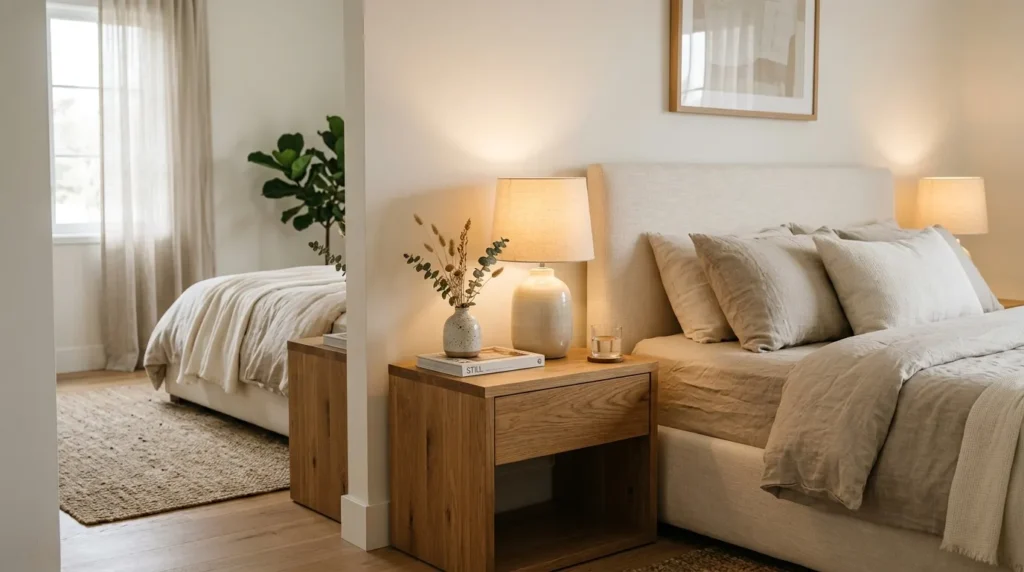
The nightstand is one of the last surfaces you see before going to sleep and one of the first you see when you wake up. When it’s covered with chargers, papers, cups, products, and miscellaneous objects, the room can feel visually busy.
A simple bedside arrangement supports relaxation.
How To Style It
Keep only the items you genuinely use. A lamp, book, small tray, water glass, or one decorative object may be enough.
Use drawers for personal items and a small cable-management solution for charging cords. Leave some open surface so the nightstand doesn’t feel crowded.
9. Add Meaningful Decor
Quick Benefits
- Adds personality
- Creates emotional warmth
- Makes the bedroom feel personal
- Prevents generic styling
- Works on any budget
Why It Works
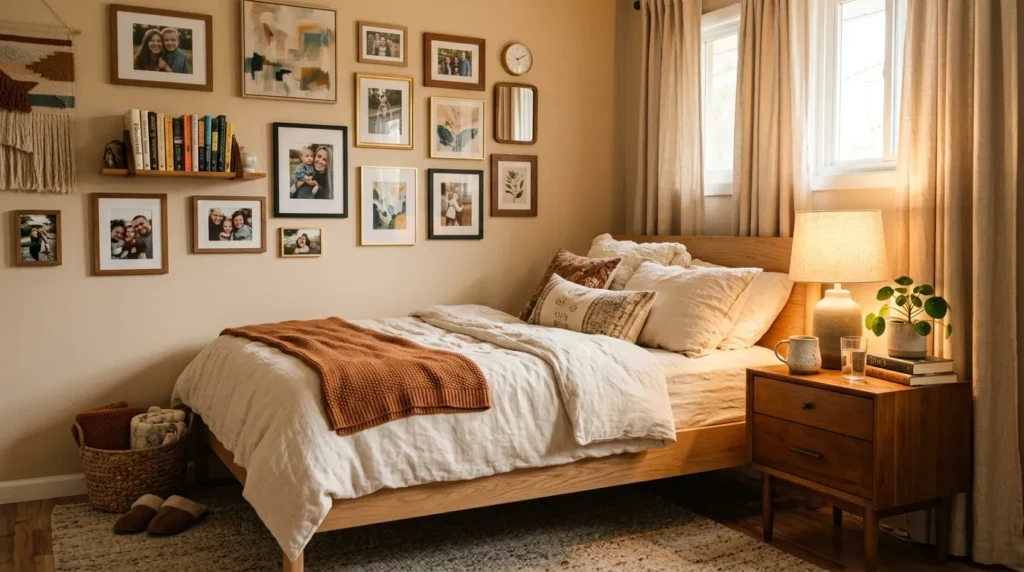
A relaxing bedroom shouldn’t feel like a hotel room unless that is specifically your goal. Personal objects create familiarity and make the space feel connected to your life.
The most effective décor isn’t necessarily expensive. It is meaningful.
How To Style It
Display a favorite photograph, a piece of artwork, a treasured book, handmade ceramic, or another object with personal significance.
Keep the collection edited. A few meaningful pieces can make a stronger visual statement than numerous small accessories competing for attention.
10. Layer Natural Textures
Quick Benefits
- Adds visual depth
- Creates warmth
- Softens modern furniture
- Makes neutral rooms more interesting
- Creates a relaxed atmosphere
Why It Works
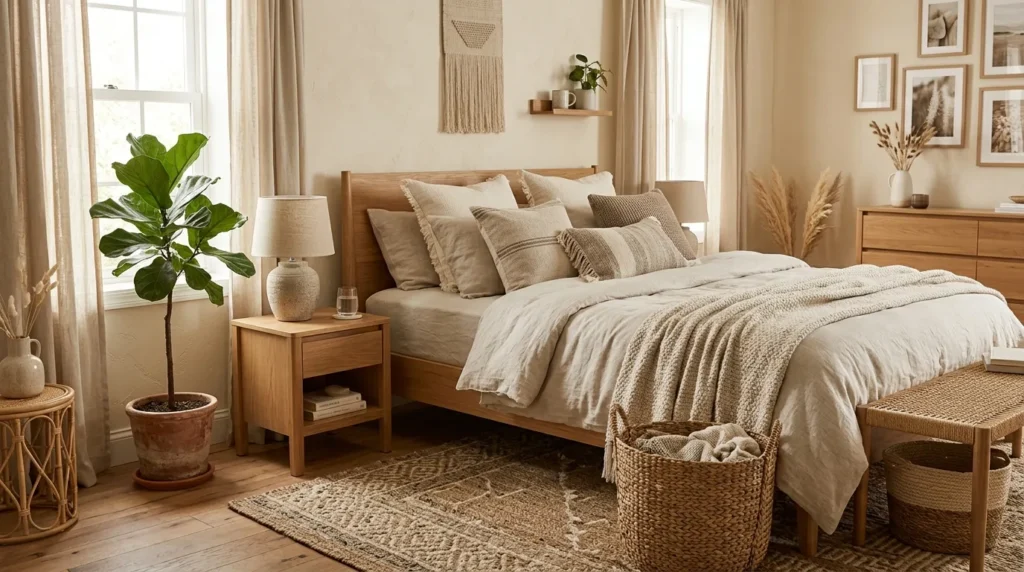
Texture is one of the easiest ways to create warmth without introducing lots of color. Linen, cotton, woven fibers, wood, ceramics, rattan, and wool-inspired materials each contribute a different tactile quality.
The combination creates richness while keeping the color palette calm.
How To Style It
Start with major pieces such as bedding, rugs, curtains, and furniture. Then add smaller elements such as woven baskets, ceramic lamps, wood frames, or textured cushions.
Vary the materials while keeping the colors coordinated. This gives the bedroom depth without making it visually overwhelming.
Frequently Asked Questions
What colors make a bedroom feel warm and relaxing?
Warm white, cream, beige, taupe, soft brown, muted sage, dusty blue, and earthy terracotta can create a relaxing atmosphere. Warm neutrals are particularly versatile because they pair naturally with wood and soft textiles.
How can I make my bedroom feel cozy without buying new furniture?
Start by rearranging the existing furniture to improve the layout. Add layers to the bed, change the lighting, introduce textiles, clear clutter from the nightstands, and rearrange artwork or accessories. These changes can create a noticeable transformation without major purchases.
What type of lighting is best for a relaxing bedroom?
Layered lighting is generally more versatile than relying on one bright overhead fixture. Bedside lamps, sconces, floor lamps, and dimmable fixtures can provide softer illumination while still supporting practical activities.
How do I make a modern bedroom feel warmer?
Add natural wood, textured bedding, woven accessories, warm neutral colors, soft curtains, and gentle lighting. These elements balance the clean lines of modern furniture and create a more inviting atmosphere.
Should bedroom curtains match the bedding?
They don’t have to match exactly. Coordinating their undertones is usually more effective. For example, cream curtains can work beautifully with beige bedding, while muted taupe curtains can complement warm gray or earthy bedding.
How many decorative items should I have in a bedroom?
There isn’t a specific number. The goal is balance. Choose a few meaningful objects and leave enough empty space for the room to feel calm. If surfaces are difficult to clean or the décor feels visually distracting, it’s probably time to edit the arrangement.
Pinterest AI Image Prompts
1. Layer Comfortable Bedding
Image Description: Warm and relaxing bedroom featuring a plush upholstered bed layered with cream linen sheets, beige duvet, textured quilt, chunky knit throw and soft neutral pillows, natural oak nightstands, woven rug, warm daylight, peaceful sophisticated atmosphere, photorealistic Pinterest interior photography.
2. Choose Warm Neutral Colors
Image Description: Serene bedroom decorated in warm cream, beige, taupe and soft brown, upholstered bed with layered neutral bedding, natural wood nightstands, subtle artwork, woven accessories, soft curtains, gentle morning sunlight, cozy sophisticated atmosphere, high-resolution Pinterest photography.
3. Add Natural Wood
Image Description: Inviting bedroom with a natural oak bed frame and matching nightstands, cream linen bedding, beige textured rug, woven basket, neutral walls, soft curtains, simple ceramic décor, warm sunlight, organic modern styling, photorealistic Pinterest interior photography.
4. Use Soft Ambient Lighting
Image Description: Cozy bedroom illuminated by warm bedside lamps and subtle wall lighting, cream upholstered bed, layered beige bedding, natural wood furniture, textured rug, soft curtains, gentle evening shadows, intimate relaxing atmosphere, premium Pinterest bedroom photography.
5. Add Textured Rugs
Image Description: Comfortable bedroom featuring a large textured neutral rug beneath a cream upholstered bed, soft beige bedding, natural wood nightstands, woven basket, warm white walls, gentle daylight, tactile layered décor, calm inviting atmosphere, photorealistic Pinterest interior photography.
6. Hang Flowing Curtains
Image Description: Warm bedroom with floor-length flowing linen curtains framing large windows, cream upholstered bed, beige layered bedding, natural oak furniture, woven rug, soft morning sunlight filtering through fabric, airy relaxing atmosphere, elegant Pinterest interior photography.
7. Create a Cozy Reading Spot
Image Description: Relaxing bedroom corner featuring a comfortable boucle reading chair, small wooden side table, soft throw blanket, warm floor lamp, stack of books, woven rug, cream and beige palette, natural daylight, intimate peaceful retreat, photorealistic Pinterest lifestyle photography.
8. Keep Nightstands Organized
Image Description: Beautiful calm bedroom with neatly styled oak nightstands, warm bedside lamps, small ceramic vase, one book, water glass, cream upholstered bed, soft beige bedding, uncluttered surfaces, warm ambient lighting, sophisticated Pinterest interior photography.
9. Add Meaningful Decor
Image Description: Personal warm bedroom featuring framed family photographs, meaningful artwork, favorite books, handmade ceramic pieces, cream bedding, natural wood furniture, soft beige curtains, warm lighting, intimate lived-in atmosphere, tasteful modern styling, high-resolution Pinterest photography.
10. Layer Natural Textures
Image Description: Cozy bedroom filled with natural textures including linen bedding, woven baskets, oak furniture, rattan accents, textured rug, ceramic lamp, cotton curtains and soft neutral pillows, warm cream palette, gentle sunlight, sophisticated organic atmosphere, photorealistic Pinterest interior photography.
Conclusion
A warm and relaxing bedroom is created through layers rather than one dramatic decorating decision.
Begin with the bed and make it genuinely comfortable. Layer breathable bedding, soft blankets, and pillows that invite you to slow down. Then build a warm color palette around creams, beiges, earthy tones, or other shades that make you feel at ease.
Lighting should come next. Replace harsh illumination with softer sources at different heights, and use natural wood and textiles to balance harder surfaces.
Finally, make the room personal. A favorite photograph, a meaningful piece of artwork, a small reading corner, or a collection of well-loved books can make the bedroom feel connected to you rather than simply decorated.
You don’t have to redesign everything at once. Start with one area that bothers you most and improve it gradually.
A comfortable bedroom isn’t about following every decorating trend. It’s about creating a space that feels peaceful at the end of the day, works well for everyday routines, and makes you want to stay just a little longer in the morning.