
10 Modern Living Room Ideas with Clean Minimal Decor
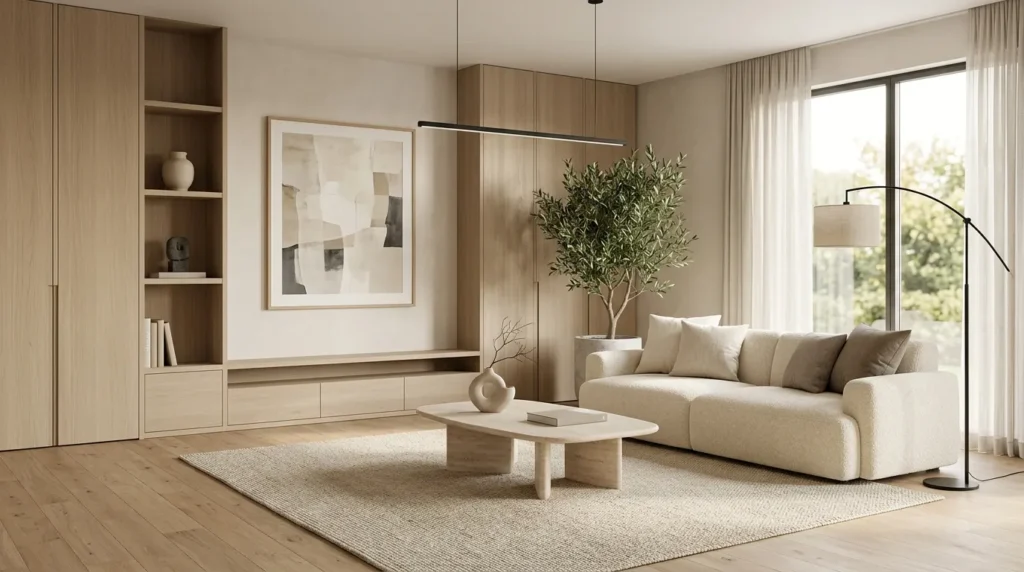
A modern living room doesn’t have to feel cold, empty, or overly formal. The most inviting minimalist spaces combine clean lines with comfortable furniture, warm materials, thoughtful lighting, and just enough décor to give the room personality.
Clean minimal decor is less about owning as little as possible and more about being intentional with what you bring into the room. Instead of filling every shelf and tabletop, each piece has a purpose—whether it’s functional, beautiful, or meaningful.
In my experience, the easiest way to achieve this look is to start with a simple foundation. Choose a restrained color palette, select furniture with clean silhouettes, and then add warmth through wood, textiles, greenery, and layered lighting. This keeps the room visually calm while preventing it from feeling sterile.
Modern minimalism also works beautifully in real American homes because it can adapt to different layouts and lifestyles. You can create the look in a spacious open-concept home, a suburban family room, or a compact apartment living area.
The ideas below focus on practical ways to create a polished modern living room while keeping surfaces uncluttered and the overall atmosphere comfortable. Whether you’re starting from scratch or simply refreshing your existing space, small changes can create a surprisingly sophisticated result.
Table of Contents
1. Choose Streamlined Furniture
Create a clean foundation with simple silhouettes.
2. Use a Neutral Palette
Build a calm and cohesive color scheme.
3. Add Warm Wood
Prevent minimalism from feeling cold.
4. Layer Soft Textiles
Bring comfort into clean interiors.
5. Style Open Shelves
Display only what matters.
6. Choose Statement Lighting
Add architectural visual interest.
7. Keep Surfaces Clear
Create an uncluttered atmosphere.
8. Add Sculptural Decor
Introduce personality through simple forms.
9. Bring In Greenery
Soften the modern aesthetic naturally.
10. Create Balanced Zones
Make the room functional and intentional.
1. Choose Streamlined Furniture
Quick Benefits
- Creates visual simplicity
- Makes the room feel organized
- Improves circulation
- Works with many layouts
- Provides a timeless foundation
Why It Works
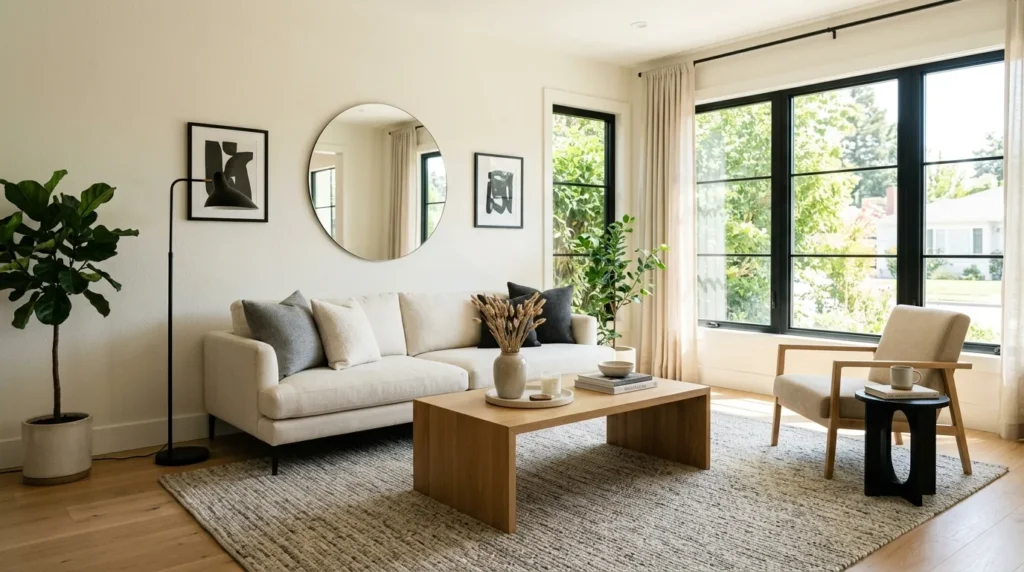
Furniture with clean lines gives a modern living room its structure. Instead of ornate details or oversized silhouettes, streamlined pieces allow the room’s architecture, materials, and proportions to become part of the design.
This doesn’t mean choosing uncomfortable furniture. A simple sofa can still have generous cushions and supportive seating while maintaining a refined appearance.
How To Style It
Look for sofas with simple arms, clean upholstery, and proportions appropriate for the room. Pair them with a streamlined coffee table and one or two carefully selected accent chairs.
Avoid purchasing furniture simply because it looks minimalist. Prioritize comfort, durability, and scale first, then choose pieces with the cleanest silhouette that meets those needs.
2. Use a Neutral Palette
Quick Benefits
- Creates visual calm
- Makes decorating easier
- Highlights architectural details
- Works across seasons
- Supports minimalist styling
Why It Works
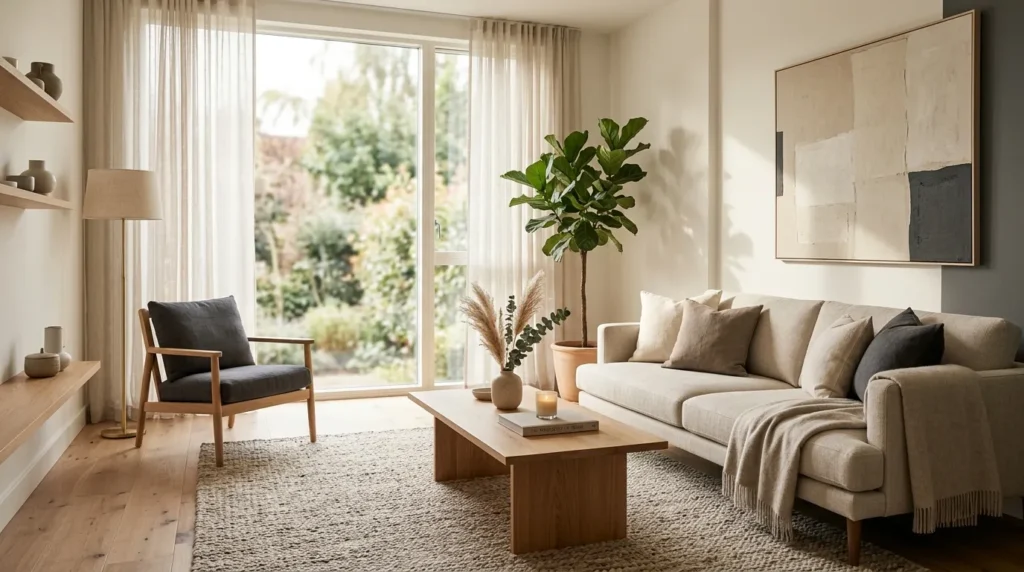
Neutral colors provide a quiet backdrop that allows furniture shapes, textures, and natural materials to become more noticeable. Warm white, cream, beige, taupe, soft gray, and muted brown can create a sophisticated modern palette without making the room feel stark.
A restrained color scheme also makes it easier to avoid visual clutter.
How To Style It
Choose one dominant neutral, then add two or three supporting shades. For example, warm white walls can pair with beige upholstery, light oak furniture, and charcoal accents.
Use contrast thoughtfully. Dark artwork or black metal details can add definition without requiring a large amount of color.
3. Add Warm Wood
Quick Benefits
- Adds natural warmth
- Softens modern lines
- Creates texture
- Works with neutrals
- Makes the room feel inviting
Why It Works
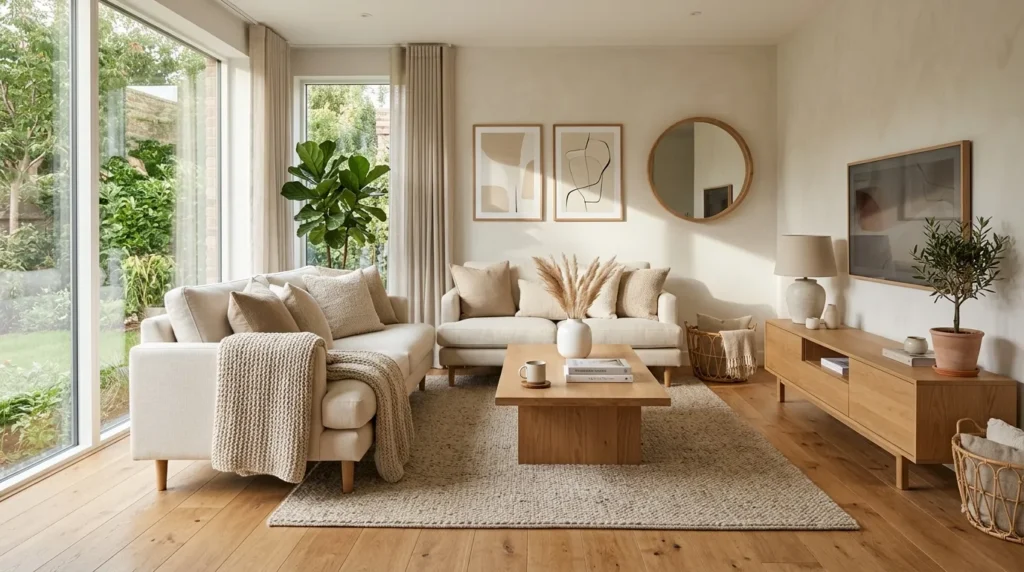
One common concern with minimalist decorating is that the room can feel too cold. Natural wood solves that problem by introducing warmth, organic variation, and visual texture.
Oak, walnut, ash, and other suitable wood finishes can work beautifully with contemporary furniture.
How To Style It
Introduce wood through a coffee table, media console, shelving, side tables, picture frames, or accent furniture.
You don’t need every wood finish to match exactly. Focus on compatible undertones and repeat wood in several small areas so the material feels intentional throughout the room.
4. Layer Soft Textiles
Quick Benefits
- Adds comfort
- Softens clean lines
- Creates visual depth
- Makes the room feel lived-in
- Balances hard materials
Why It Works
Minimal décor can look beautiful but may feel visually hard if the room contains too many smooth surfaces. Textiles provide softness without disrupting the clean aesthetic.
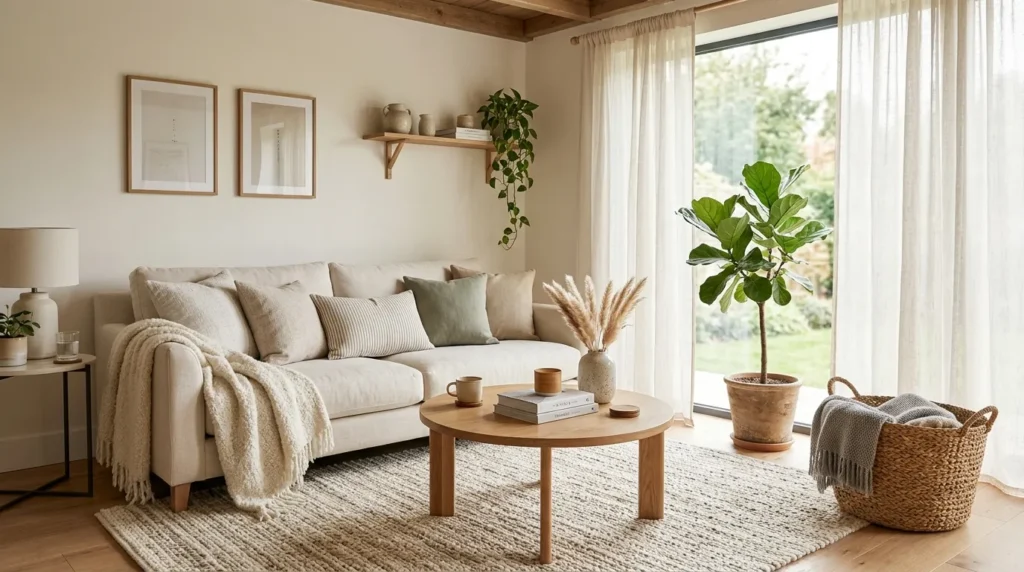
A rug, cushions, curtains, and a throw can make the room feel much more comfortable while preserving a minimalist appearance.
How To Style It
Choose textiles in closely related shades rather than introducing many competing patterns. A cream sofa can be paired with taupe cushions, an ivory throw, and a subtle textured rug.
Mix materials such as linen, cotton, woven fibers, and wool-inspired fabrics for understated depth.
5. Style Open Shelves
Quick Benefits
- Adds storage and display space
- Prevents visual overload
- Highlights favorite objects
- Creates vertical interest
- Makes décor easier to edit
Why It Works
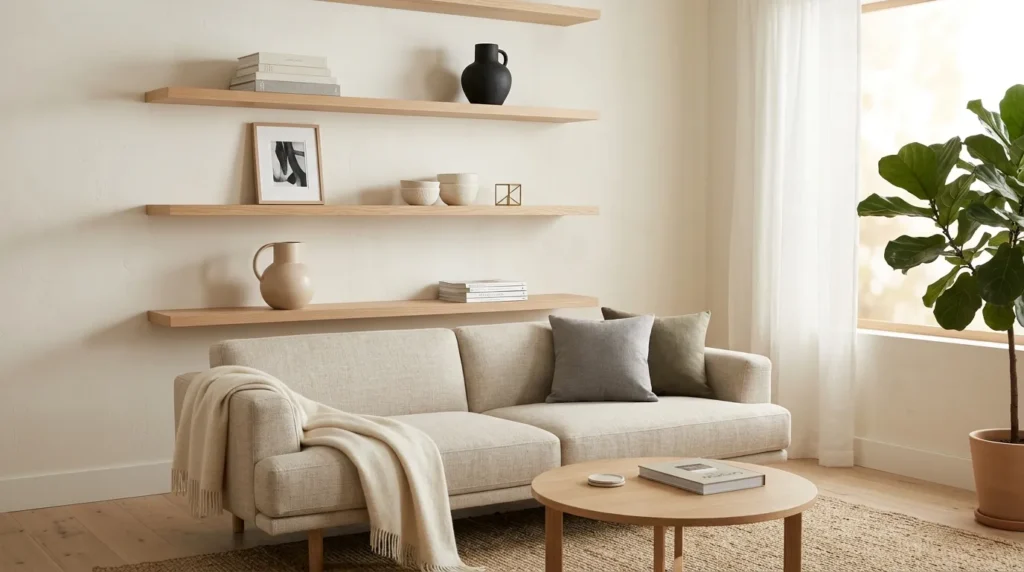
Open shelving can complement modern interiors beautifully, but only when it is thoughtfully curated. Too many objects can quickly undermine the clean aesthetic.
The goal is to leave intentional empty space around the items you choose to display.
How To Style It
Group books, ceramics, framed artwork, and small decorative objects into simple arrangements. Vary heights and shapes while maintaining a restrained palette.
Leave portions of each shelf empty. You can rotate decorative items seasonally rather than continually adding more.
6. Choose Statement Lighting
Quick Benefits
- Adds architectural interest
- Creates a focal point
- Improves room function
- Supports layered lighting
- Enhances modern style
Why It Works
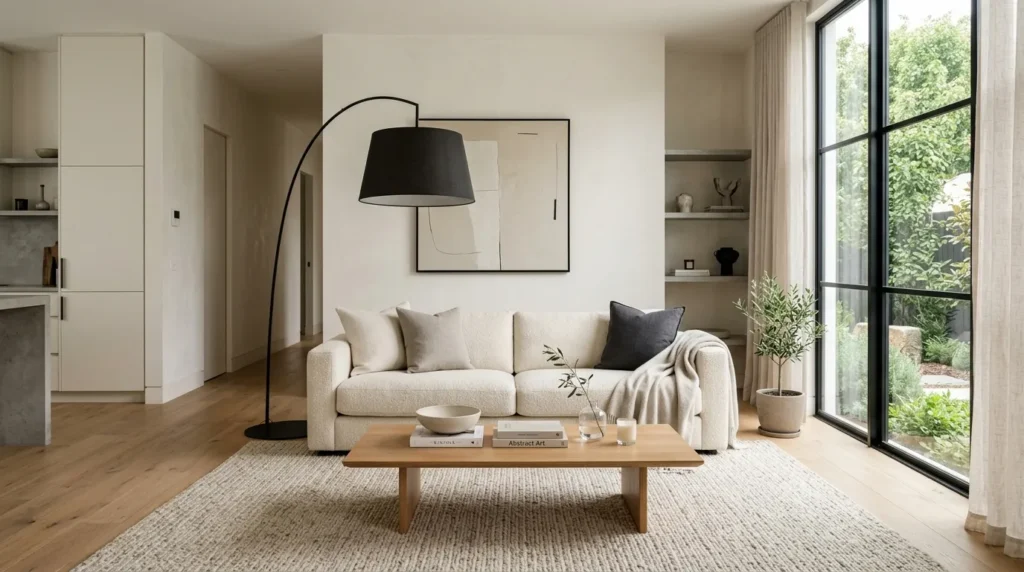
A minimalist room benefits from a few strong visual moments. Lighting is ideal because it can be both functional and decorative.
A sculptural pendant, oversized floor lamp, or streamlined wall fixture can become a focal point without adding clutter to tables or shelves.
How To Style It
Choose a fixture with a shape that complements the furniture. In a room with mostly straight lines, a curved lamp can add softness; in a room with rounded furniture, a linear fixture can introduce contrast.
Layer the main fixture with lamps positioned near seating areas.
7. Keep Surfaces Clear
Quick Benefits
- Reduces visual clutter
- Makes cleaning easier
- Highlights selected décor
- Creates a calm atmosphere
- Improves everyday functionality
Why It Works
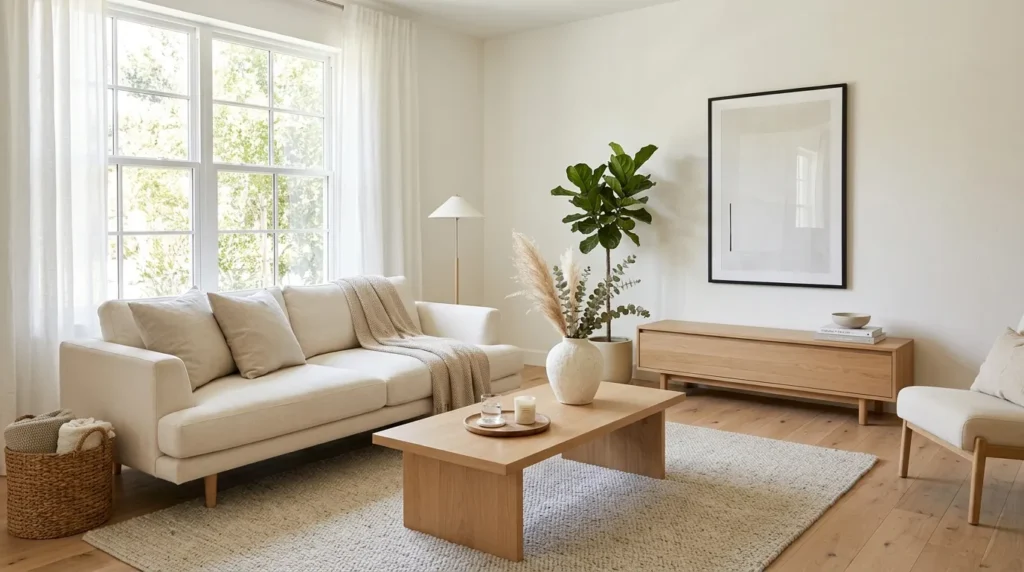
Clear surfaces are one of the most recognizable elements of clean minimal decorating. A coffee table covered with miscellaneous items can make even a beautifully designed room feel chaotic.
Leaving some negative space allows the furniture and architectural details to stand out.
How To Style It
Choose one or two functional decorative objects for each major surface. A coffee table might hold a tray and a small vase, while a console could feature one lamp and a piece of artwork.
Store remote controls, chargers, paperwork, and everyday items in drawers or baskets.
8. Add Sculptural Decor
Quick Benefits
- Adds personality
- Creates visual interest
- Works with neutral colors
- Requires few objects
- Enhances modern style
Why It Works
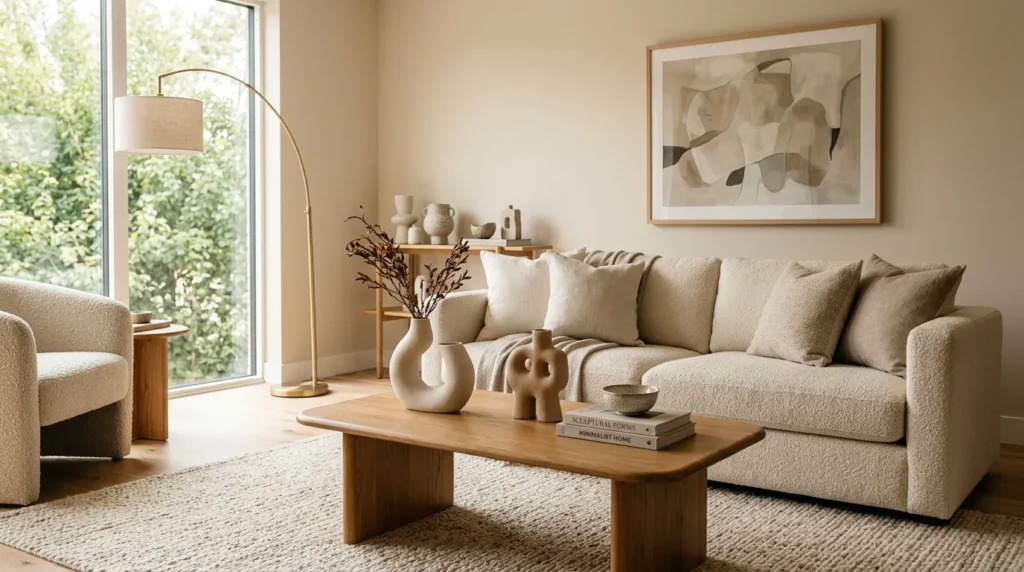
When there are fewer decorative objects, the shape of each piece becomes more noticeable. Sculptural décor can provide personality without requiring bright colors or complicated arrangements.
Organic ceramics, abstract objects, curved vases, and simple stone-inspired accessories can work particularly well.
How To Style It
Choose pieces with interesting silhouettes rather than collecting many small objects. Place one larger sculptural item on a console or shelf and balance it with a smaller object nearby.
Look for subtle variations in texture and shape while keeping the overall color palette restrained.
9. Bring In Greenery
Quick Benefits
- Adds natural color
- Softens hard lines
- Introduces texture
- Makes the room feel alive
- Works with neutral interiors
Why It Works
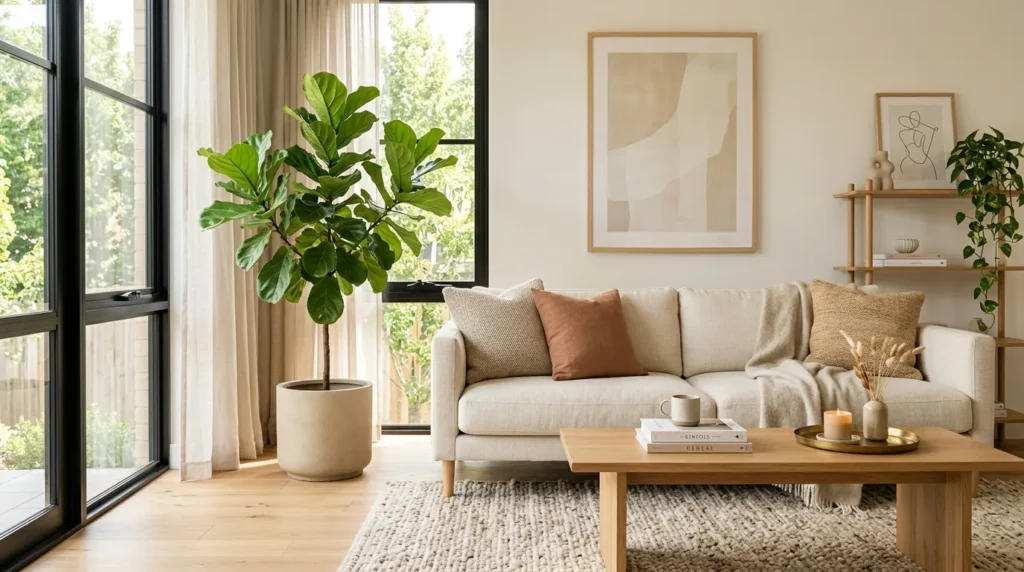
Plants provide a natural contrast to the controlled geometry of modern furniture. Green foliage introduces movement and color while maintaining a clean aesthetic.
Even one well-positioned plant can make a minimalist living room feel considerably warmer.
How To Style It
Choose plants according to the light conditions in your room and their care requirements. Place a larger plant in an unused corner or use a smaller plant on a shelf.
Pair greenery with simple planters in ceramic, stone-inspired, or neutral finishes to keep the look cohesive.
10. Create Balanced Zones
Quick Benefits
- Improves functionality
- Clarifies room purpose
- Makes furniture placement easier
- Supports everyday living
- Creates visual order
Why It Works
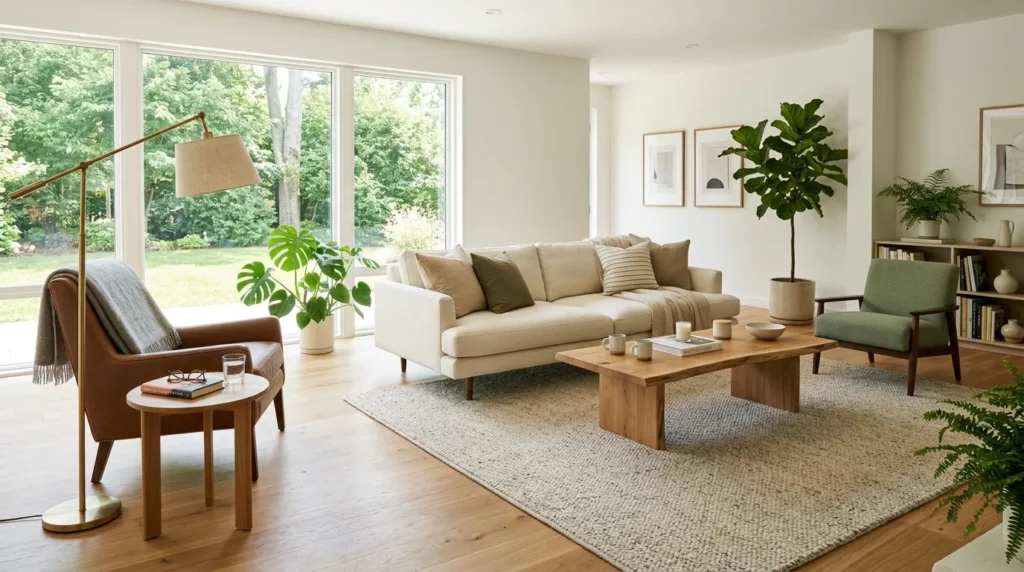
A clean modern living room should still feel functional. Instead of arranging furniture simply around the walls, create intentional zones based on how the room is used.
A seating area, reading corner, conversation zone, or media area can coexist without making the room feel crowded.
How To Style It
Start by identifying the room’s main purpose. Position the sofa and chairs to encourage conversation, then add a rug to visually anchor the arrangement.
Use lighting, side tables, or a small piece of furniture to define secondary zones. Keep pathways open and avoid pushing every piece tightly against the walls.
Frequently Asked Questions
What makes a living room look modern and minimalist?
Clean furniture silhouettes, a restrained color palette, uncluttered surfaces, natural materials, simple artwork, and thoughtful lighting are key elements. The room should feel intentional rather than empty, with comfort remaining part of the design.
How do I make minimalist decor feel warm?
Introduce natural wood, soft textiles, warm lighting, greenery, and subtle variations in neutral colors. Materials often have more influence on warmth than adding more decorative objects.
What colors work best for modern minimalist living rooms?
Warm white, cream, beige, taupe, soft gray, brown, charcoal, and muted earthy colors work well. You can add darker accents through lighting, artwork, metal details, or small furnishings.
How many decorative items should I use?
There is no fixed number. Focus on visual balance rather than quantity. Choose a few meaningful or visually interesting objects and leave intentional empty space around them.
Can modern minimalist decor work in a family home?
Absolutely. Choose durable furniture, practical storage, washable or easy-care textiles where appropriate, and closed storage for everyday clutter. Minimalism can make a family room easier to maintain when organization is designed into the space.
How can I make a modern living room look expensive?
Focus on proportion, quality-looking materials, cohesive colors, good lighting, and visual restraint. A well-arranged room with fewer thoughtfully chosen pieces often looks more polished than one filled with inexpensive decorative objects.
Conclusion
A modern living room with clean minimal decor doesn’t need to feel stark or empty. The most successful spaces balance simplicity with warmth, comfort, and personality.
Begin with streamlined furniture and a restrained neutral palette. Then introduce natural wood, soft textiles, and layered lighting to prevent the room from becoming too clinical. Keep surfaces intentionally clear, but don’t be afraid to display a few sculptural objects, favorite books, artwork, or plants.
The goal isn’t to remove everything. It’s to become more selective about what remains.
Think about how your household actually uses the living room and create furniture zones around those activities. When everything has a purpose and enough space to function comfortably, the room naturally feels more organized.
You can create this aesthetic gradually. Start by clearing unnecessary clutter, rearranging your furniture, and improving the lighting. Then add natural textures and a few carefully chosen decorative pieces.
The result can be a living room that feels modern, calm, sophisticated, and—most importantly—comfortable enough for everyday life.