10 Garden Decor Ideas That Transform Small Gardens
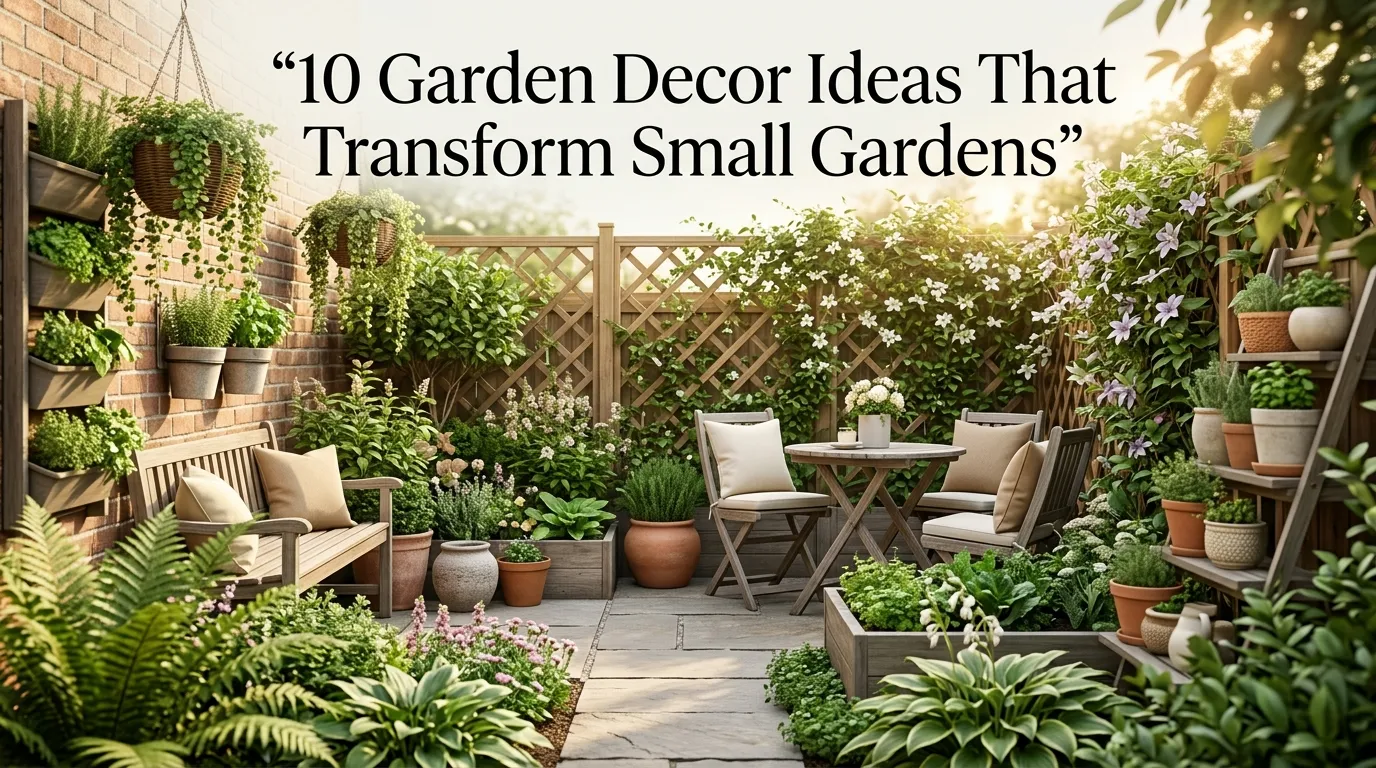
A small garden can have just as much personality as a large backyard. In fact, limited space often encourages more thoughtful decorating because every planter, pathway, seating area, and decorative detail needs to serve a purpose.
The key is to avoid treating a small garden like a miniature version of a large landscape. Instead, focus on creating layers, defining zones, using vertical space, and choosing décor that adds beauty without making the garden feel crowded.
In my experience, the most successful small gardens have a clear focal point. It might be a charming bistro table, a statement planter, a compact water feature, or a beautiful wall covered with greenery. Once you establish that focal point, the rest of the garden becomes easier to design around.
Color and texture also matter. A limited palette can make a compact garden feel cohesive, while varied foliage, pots, stone, wood, and textiles create depth. Even a tiny courtyard can feel surprisingly expansive when the eye has interesting details to discover.
You don’t need to fill every corner. Leaving some breathing room is actually one of the best ways to make a small garden feel larger.
Whether you’re working with a tiny backyard, townhouse courtyard, patio garden, balcony garden, or narrow side yard, these ideas can help you turn limited outdoor space into a beautiful retreat.
Table of Contents
1. Add a Vertical Garden
Use walls and fences to grow upward.
2. Choose Statement Planters
Create impact without using much floor space.
3. Add a Compact Seating Area
Turn a small corner into a destination.
4. Create a Garden Path
Make the space feel larger and more intentional.
5. Use Hanging Planters
Add greenery at different heights.
6. Install a Small Water Feature
Bring sound and movement into the garden.
7. Decorate With Mirrors
Create the illusion of extra space.
8. Add Outdoor Lighting
Make the garden inviting after sunset.
9. Create a Container Garden
Build flexible color and texture.
10. Choose One Focal Point
Give the small garden a memorable centerpiece.
1. Add a Vertical Garden
Quick Benefits
- Saves floor space
- Adds greenery
- Creates visual height
- Makes blank walls useful
- Works in tiny gardens
Why It Works
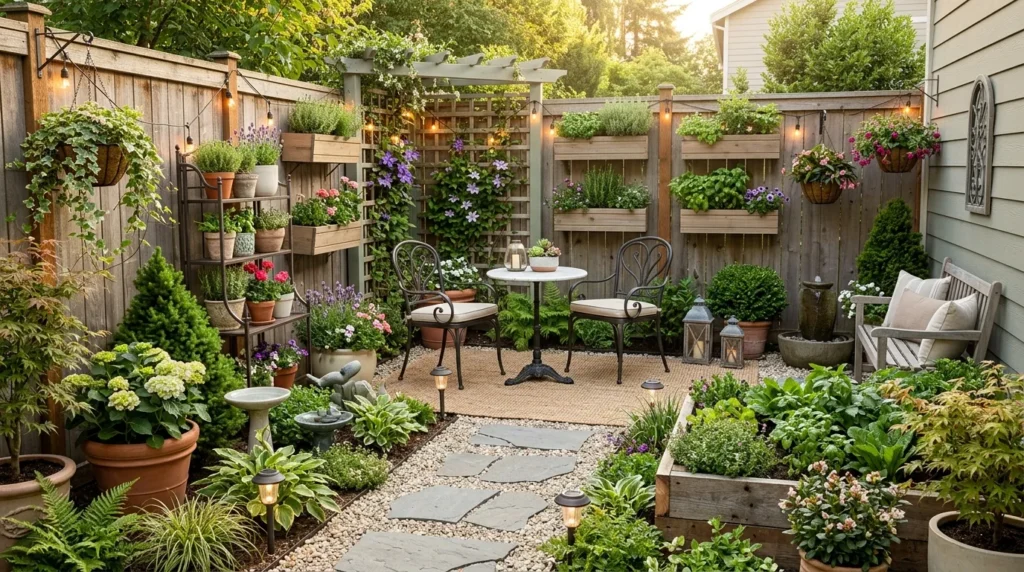
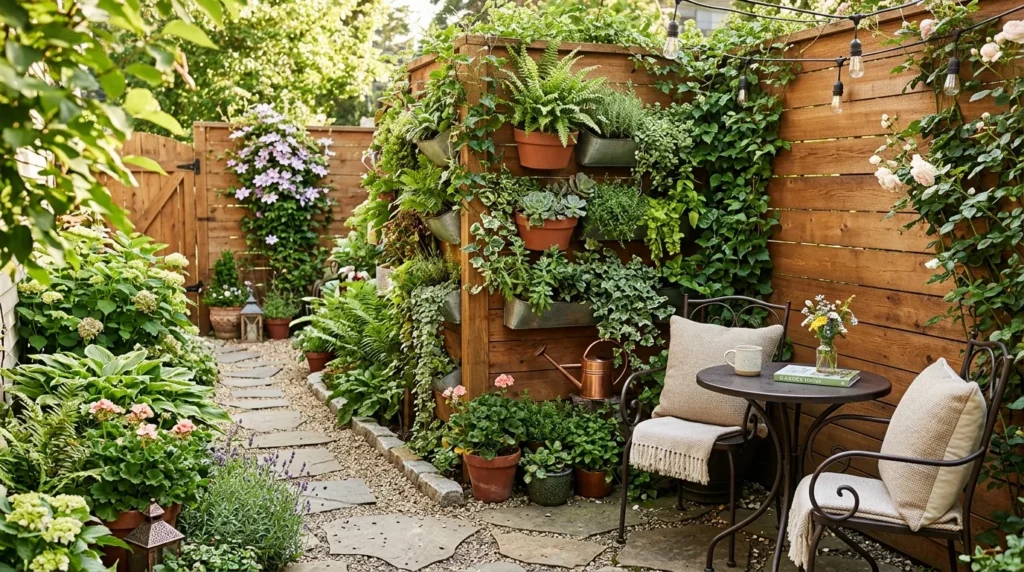
When floor space is limited, look upward. Walls, fences, trellises, and vertical structures can provide valuable growing and decorating space without taking over the garden.
Vertical planting also draws the eye upward, which can make a compact outdoor area feel taller and more dimensional.
How To Style It
Use a trellis for climbing plants or install a suitable vertical planter system against a wall. You can also arrange wall-mounted pots at different heights for a more relaxed look.
Choose plants according to sunlight, climate, watering requirements, and the structure’s weight capacity. Keep the arrangement edited rather than covering every inch of the wall.
2. Choose Statement Planters
Quick Benefits
- Adds instant personality
- Defines garden style
- Works in small spaces
- Makes plants decorative
- Creates visual focal points
Why It Works
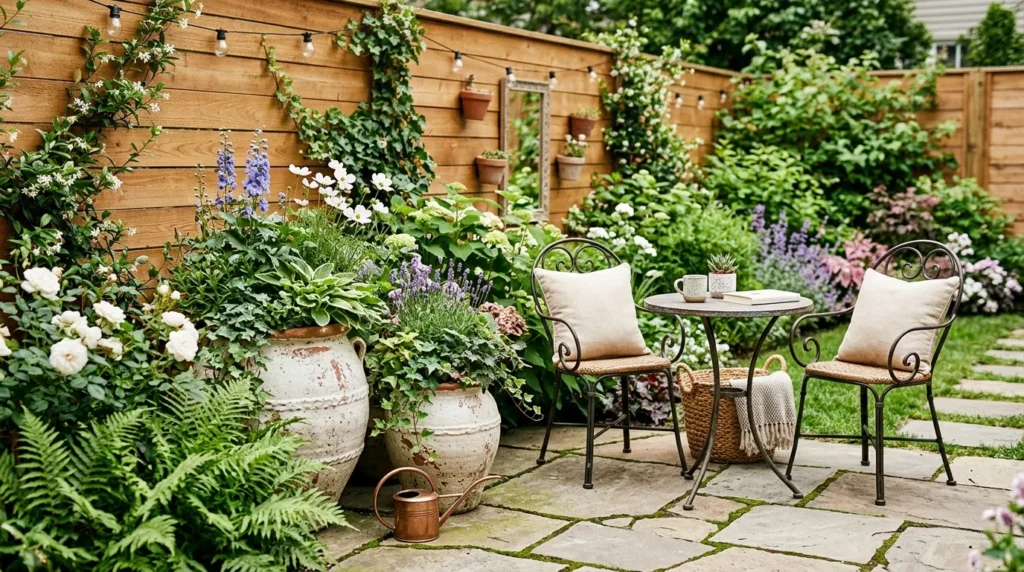
In a small garden, containers are both functional and decorative. A beautiful planter can become a design feature rather than simply a place to grow a plant.
Large containers can also provide more visual impact than many tiny pots, which may make a compact garden look cluttered.
How To Style It
Choose one or two statement planters in materials that complement your home and existing outdoor furniture.
Try ceramic for a classic look, concrete for a contemporary garden, terracotta for warmth, or textured woven-style containers for an organic feel.
Use plants with different heights and leaf shapes to create dimension.
3. Add a Compact Seating Area
Quick Benefits
- Creates a destination
- Makes the garden more useful
- Encourages relaxation
- Defines an outdoor zone
- Adds lifestyle appeal
Why It Works
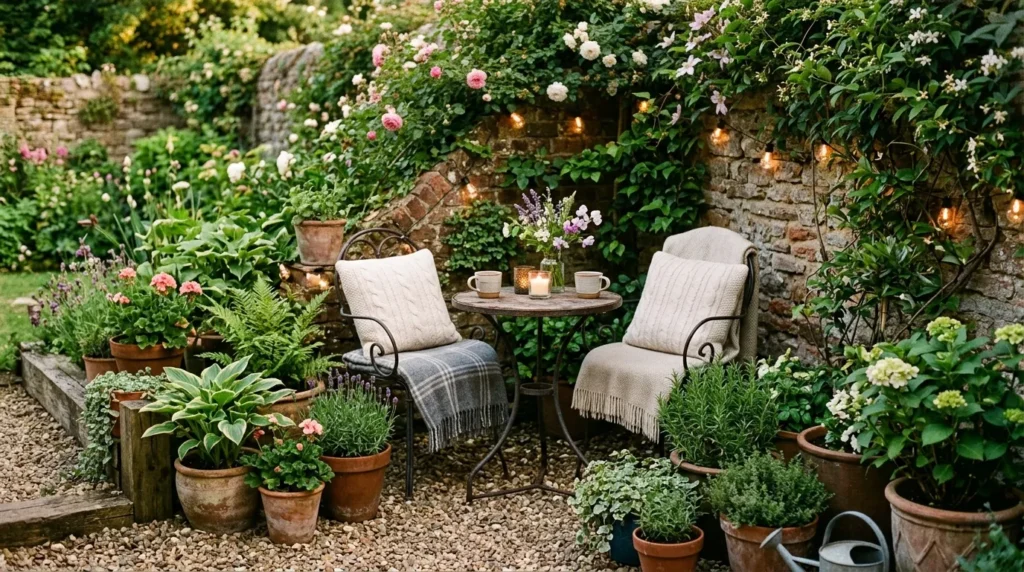
Even a very small garden benefits from having a place where you can actually sit and enjoy it. A tiny bistro table, bench, or pair of compact chairs can transform an overlooked corner into a purposeful outdoor room.
How To Style It
Choose furniture that fits the scale of the space. Avoid oversized seating that blocks pathways or makes the garden difficult to navigate.
Add one or two comfortable cushions, a small outdoor rug where appropriate, or a compact side table. Keep the surrounding décor simple so the seating area remains visually open.
4. Create a Garden Path
Quick Benefits
- Adds structure
- Makes the garden feel intentional
- Guides movement
- Creates visual depth
- Separates garden zones
Why It Works
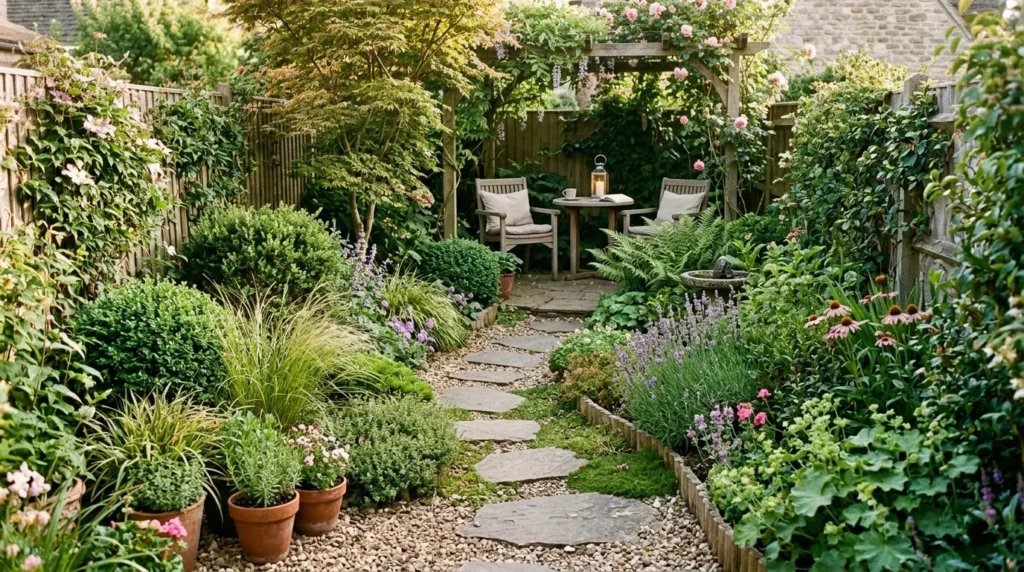
A pathway can make a small garden feel more interesting by creating a sense of progression. Instead of seeing the entire space at once, the eye follows the path toward another feature.
This can create the impression of a larger garden.
How To Style It
A narrow gravel path, stepping stones, brick walkway, or appropriately sized pavers can work beautifully.
Avoid making the path unnecessarily wide. Let plants soften the edges while keeping enough clearance for comfortable movement.
5. Use Hanging Planters
Quick Benefits
- Saves floor space
- Adds vertical layers
- Introduces color
- Works on balconies and patios
- Creates visual movement
Why It Works
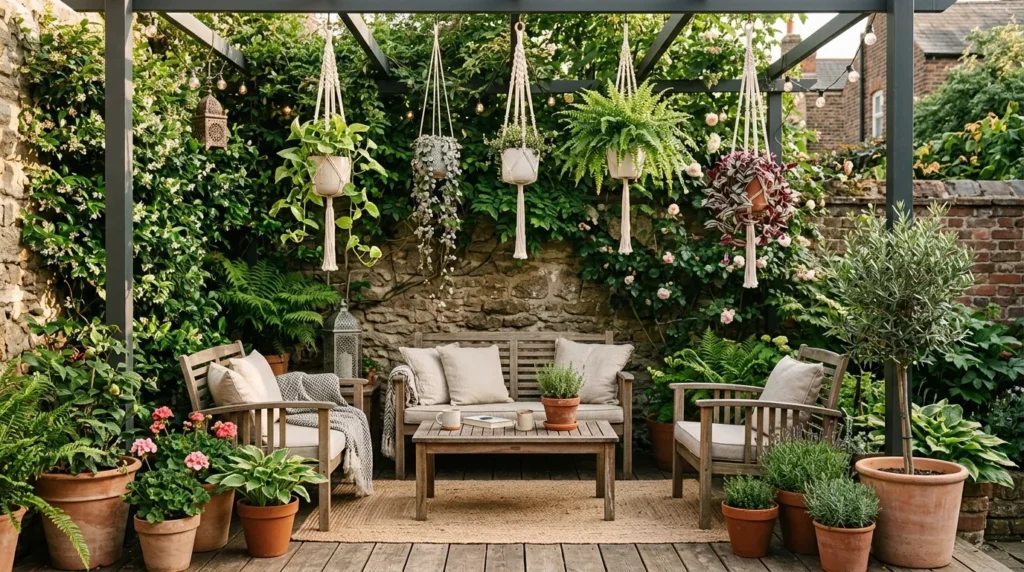
Hanging planters are especially valuable when every square foot matters. They add greenery at eye level and above while leaving the floor available for seating and circulation.
Different hanging heights can also create a layered garden effect.
How To Style It
Group a small number of hanging planters rather than creating a crowded display. Combine trailing plants with upright foliage for contrast.
Make sure hanging containers are securely installed and appropriate for the structure supporting them, especially on balconies or exterior walls.
6. Install a Small Water Feature
Quick Benefits
- Creates soothing sound
- Adds movement
- Becomes a focal point
- Enhances relaxation
- Works in compact gardens
Why It Works
Water can make even a small garden feel more atmospheric. You don’t need a large pond to introduce the sensory qualities of water.
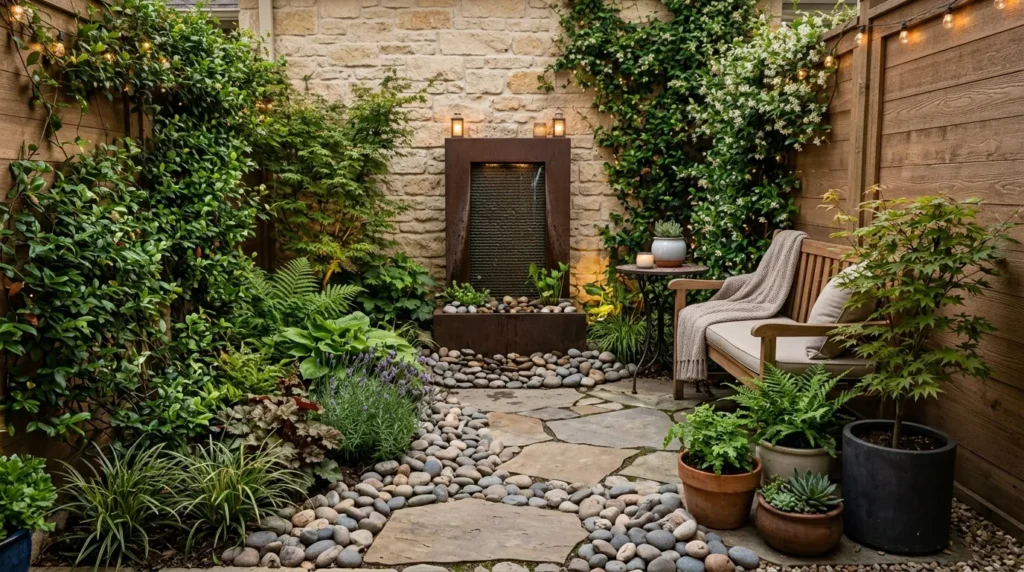
A compact fountain or wall-mounted feature can provide sound and movement without consuming much space.
How To Style It
Choose a scale-appropriate feature and place it where you can enjoy both its appearance and sound.
Surround it with a small selection of plants or decorative stones. Keep the composition simple so the water feature remains the focal point.
7. Decorate With Mirrors
Quick Benefits
- Reflects light
- Adds depth
- Creates visual interest
- Makes walls decorative
- Can make a garden feel larger
Why It Works
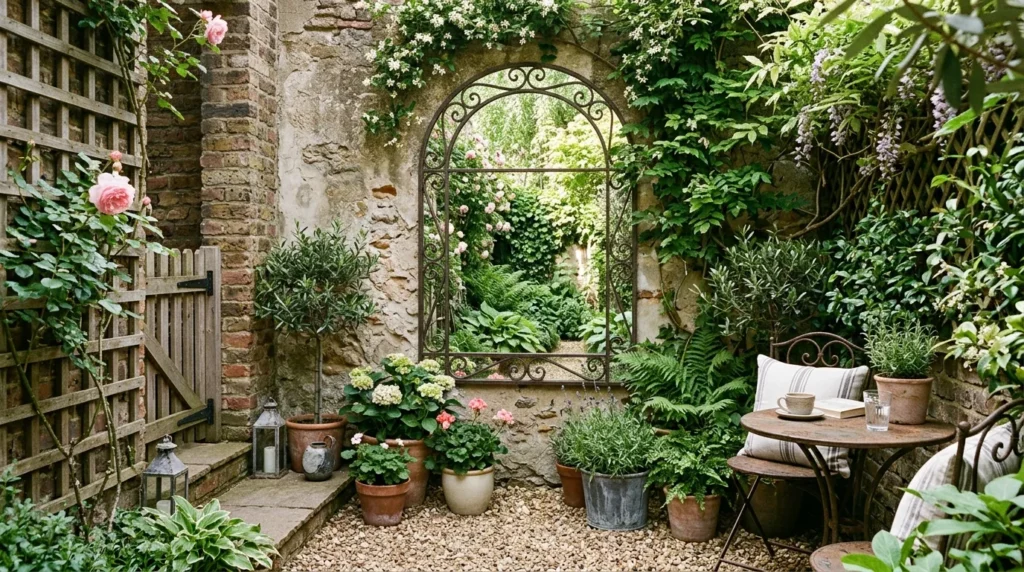
A strategically placed outdoor-appropriate mirror can reflect greenery and light, creating the visual impression of another garden area.
It can be especially effective in enclosed courtyards where tall walls make the space feel smaller.
How To Style It
Choose a mirror designed for the conditions where it will be installed and secure it appropriately.
Position it to reflect attractive plants, a pathway, or another garden feature rather than utility areas or clutter. A decorative frame can help it blend into the overall garden design.
8. Add Outdoor Lighting
Quick Benefits
- Extends evening enjoyment
- Creates atmosphere
- Highlights plants
- Improves visibility
- Adds visual depth
Why It Works
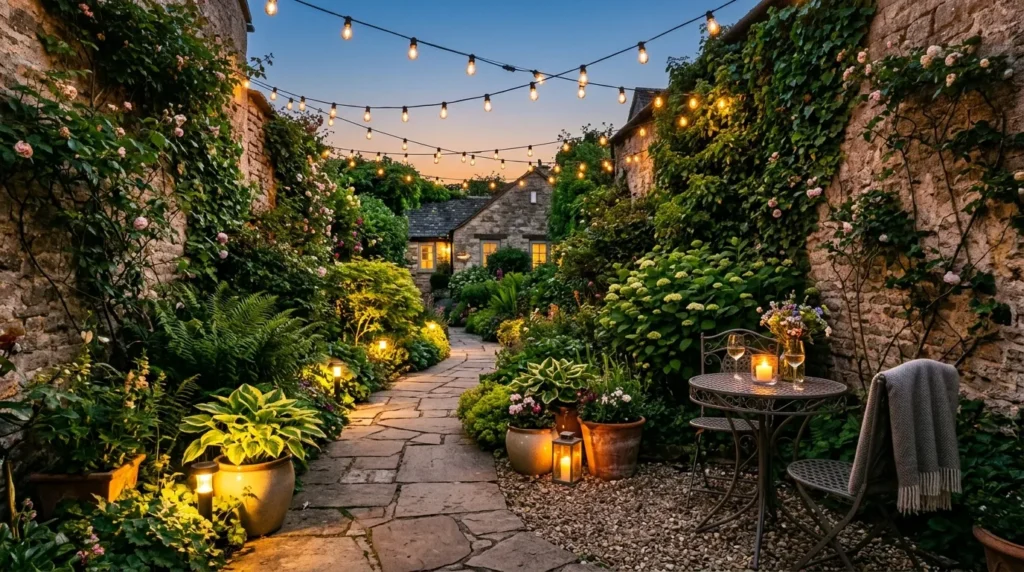
Good lighting can make a small garden feel completely different after sunset. Instead of illuminating everything equally, subtle lighting can emphasize selected plants, paths, walls, or seating areas.
This creates layers and makes the garden feel more intentional.
How To Style It
Use appropriate outdoor-rated lighting for the installation. String lights can create a relaxed atmosphere around seating areas, while pathway or accent lighting can highlight specific features.
Avoid excessive brightness. Soft, strategically placed illumination usually feels more inviting.
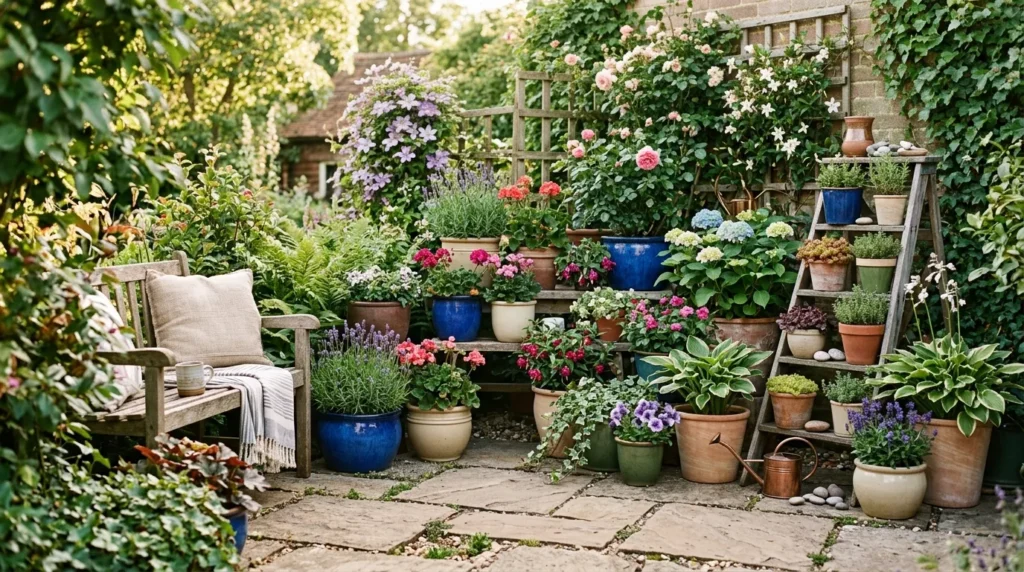
9. Create a Container Garden
Quick Benefits
- Works without traditional garden beds
- Easy to rearrange
- Adds seasonal color
- Suitable for patios
- Creates flexible décor
Why It Works
Container gardening gives small-space gardeners enormous flexibility. Pots can be moved, grouped, refreshed, or rearranged as the seasons change.
It also allows you to create distinct plant combinations without committing to permanent landscape beds.
How To Style It
Use a consistent container palette to keep the garden visually cohesive. Group containers in odd-numbered arrangements and vary their height where practical.
Combine foliage plants with flowering varieties, herbs, or other suitable plants depending on your conditions and preferences.
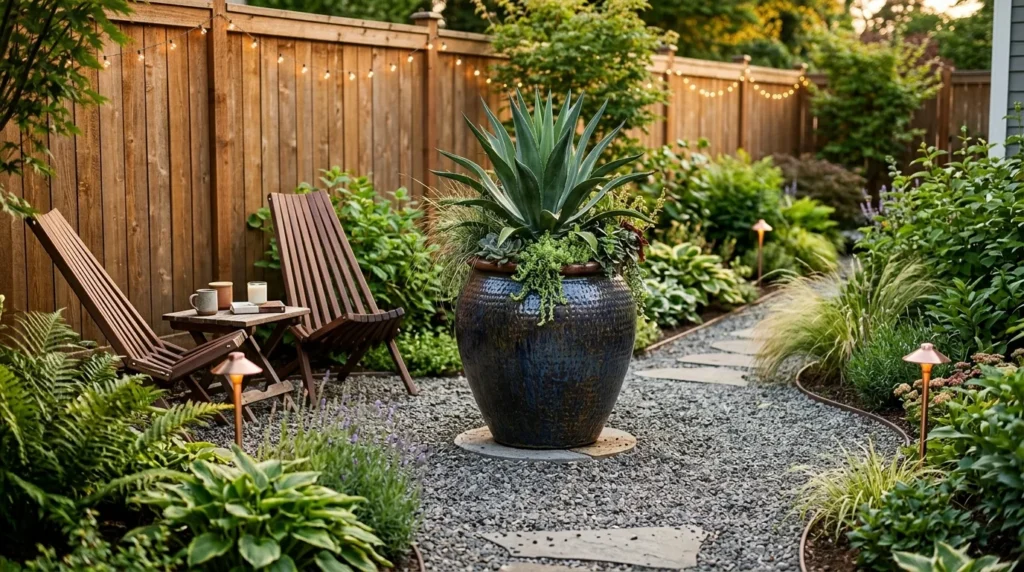
10. Choose One Focal Point
Quick Benefits
- Prevents visual clutter
- Gives the garden direction
- Creates a memorable feature
- Makes decorating easier
- Improves visual balance
Why It Works
Small gardens can become overwhelmed quickly when every corner contains a different decorative feature. Choosing one primary focal point creates a stronger sense of design.
Everything else can support that feature rather than competing with it.
How To Style It
Your focal point could be a statement planter, small fountain, sculptural tree, colorful bench, decorative wall, or compact dining area.
Once you’ve chosen it, repeat a few colors or materials from that feature throughout the rest of the garden for a cohesive appearance.
Frequently Asked Questions
How can I make a small garden look bigger?
Use vertical planting, keep pathways visually clear, choose appropriately scaled furniture, and avoid filling every available space. Mirrors, layered planting, and carefully positioned focal points can also create a stronger sense of depth.
What garden décor works best for very small spaces?
Vertical planters, hanging baskets, compact seating, wall décor, small fountains, containers, and outdoor lighting are particularly useful because they add visual interest without consuming much floor space.
How do I decorate a small garden without making it cluttered?
Start with one main focal point and limit the number of decorative materials and colors. Repeat a few elements throughout the space rather than introducing a completely different feature in every corner.
Can I have seating in a tiny garden?
Absolutely. Look for compact bistro sets, benches, folding chairs, or appropriately scaled outdoor furniture. The key is preserving enough space for comfortable movement.
Are mirrors safe to use outdoors?
Outdoor conditions can affect mirrors and their frames, so choose products designed or appropriately protected for the environment. Secure the mirror properly and consider its placement to avoid problematic reflections or excessive glare.
How can I make my small garden feel cozy at night?
Use warm, subtle outdoor lighting around seating areas, paths, plants, and architectural features. Avoid illuminating everything at maximum brightness; layered lighting creates a more intimate atmosphere.
Conclusion
Small gardens don’t need to feel limited. With thoughtful decorating, even a tiny outdoor space can become a beautiful extension of your home.
Start by looking for opportunities to use vertical space. Trellises, wall planters, hanging baskets, and decorative mirrors can make walls work harder while keeping the ground open.
Then create one clear destination, whether that’s a compact seating area, a charming fountain, or a statement planter. Once the focal point is established, use containers, pathways, textures, and lighting to support it.
Most importantly, resist the temptation to fill every empty spot. Space itself is a design element. Leaving a little breathing room allows your plants and decorative features to stand out.
A successful small garden isn’t about how much you can fit into it. It’s about how intentionally you use the space you have.
With the right combination of vertical greenery, beautiful containers, comfortable seating, and soft lighting, even the smallest garden can feel welcoming, layered, and full of personality.