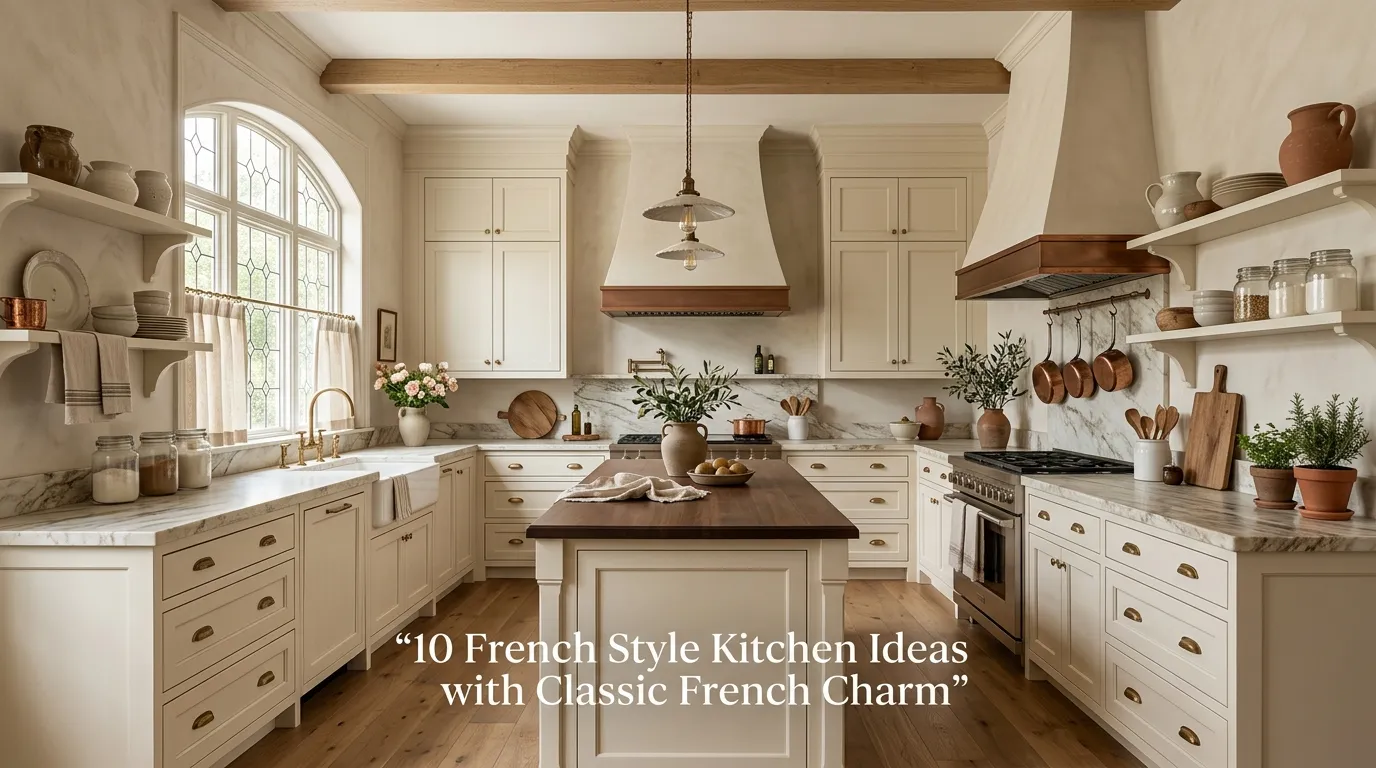
10 French Style Kitchen Ideas with Classic French Charm
French style kitchens have a way of feeling elegant without looking overly formal. They combine timeless architecture, warm natural materials, aged finishes, and practical details to create spaces that feel collected rather than perfectly coordinated.
The beauty of classic French kitchen design is that it doesn’t depend on one particular color palette. Creamy whites, warm taupes, muted greens, soft blues, natural wood, stone, and aged metals can all work beautifully when the overall look feels relaxed and layered.
In my experience, the most convincing French-inspired kitchens aren’t filled with obvious decorative clichés. Instead, the charm comes from details such as paneled cabinetry, traditional hardware, natural stone, exposed wood, vintage-inspired lighting, and a little bit of imperfection.
This style also works surprisingly well in modern homes. You don’t need a centuries-old farmhouse or ornate architectural details to capture the feeling. A simple kitchen can gain French character through a few carefully chosen elements.
The goal is to create a kitchen that feels warm enough for everyday life but refined enough to feel special. Think of it as a balance between old-world character and comfortable modern living.
Whether you’re renovating a full kitchen or simply looking for smaller decorating changes, these ideas can help you bring classic French charm into your space.
Table of Contents
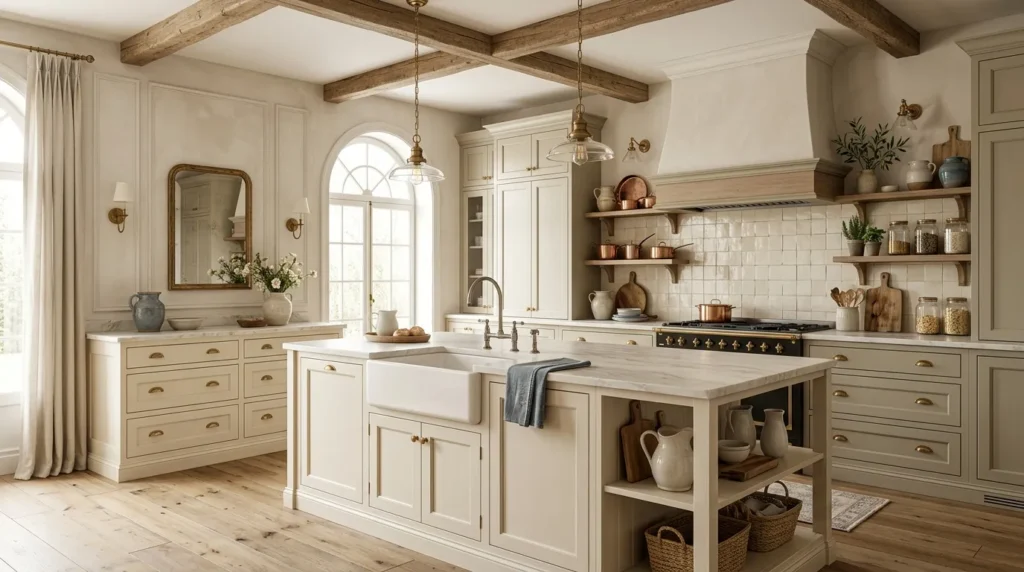
1. Choose Paneled Cabinets
Create a timeless architectural foundation.
2. Add Natural Stone
Bring authentic texture and character.
3. Use Aged Brass Hardware
Introduce subtle vintage warmth.
4. Install a Farmhouse Sink
Combine practicality with classic style.
5. Add a Statement Range Hood
Create a beautiful architectural focal point.
6. Choose Warm Wood Accents
Soften painted cabinetry.
7. Hang Vintage-Inspired Lighting
Add atmosphere and old-world character.
8. Display Open Shelving
Bring everyday pieces into the design.
9. Add French-Inspired Textiles
Introduce softness and relaxed charm.
10. Mix Old and New
Create an authentic collected look.
1. Choose Paneled Cabinets
Quick Benefits
- Creates architectural character
- Works with traditional homes
- Adds visual detail
- Provides a timeless foundation
- Complements modern appliances
Why It Works
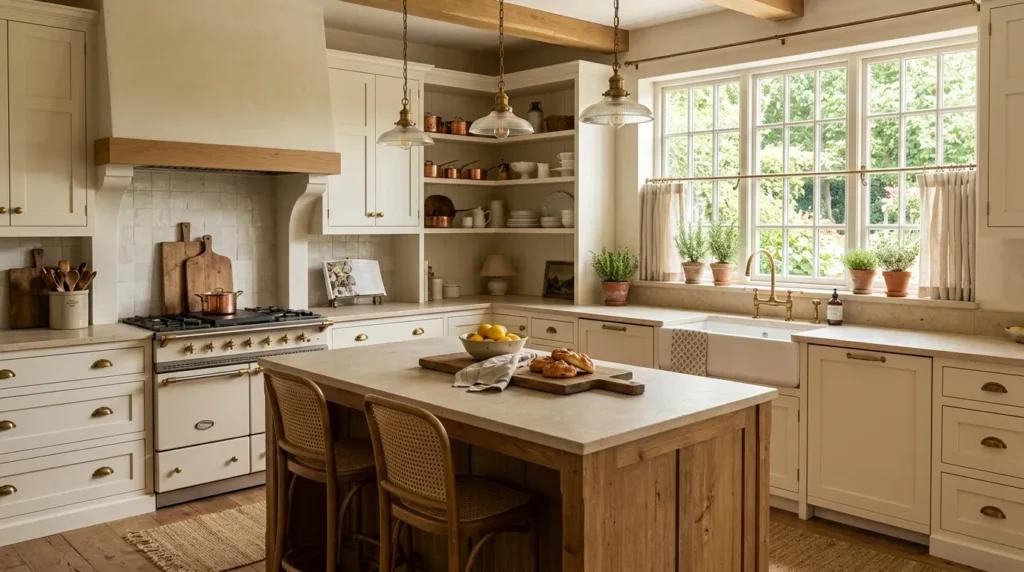
Cabinetry is one of the largest visual elements in a kitchen, making it one of the easiest places to establish French-inspired character. Raised or recessed panels add dimension that flat-front cabinetry often lacks.
The style feels especially authentic when the cabinetry looks substantial but not overly ornate.
How To Style It
Choose simple shaker, inset, or traditionally inspired cabinet profiles. Cream, warm white, muted sage, soft gray, and dusty blue can all work beautifully.
Pair the cabinetry with understated hardware and natural materials. Avoid combining too many decorative details at once—the goal is refined character rather than excessive ornamentation.
2. Add Natural Stone
Quick Benefits
- Adds timeless texture
- Creates visual depth
- Complements traditional cabinetry
- Ages beautifully
- Feels naturally luxurious
Why It Works
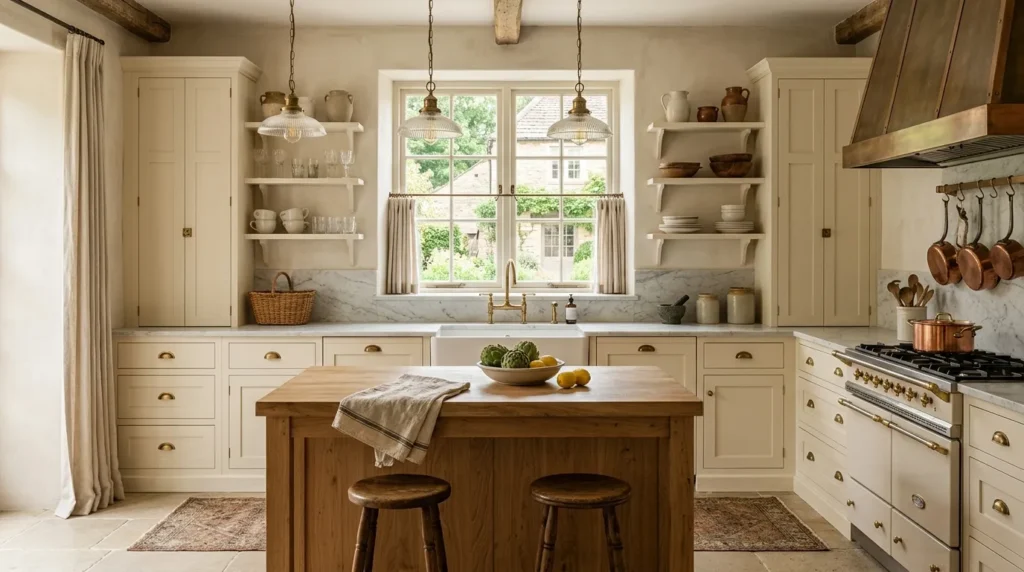
Natural stone brings an organic quality that works beautifully with French-inspired interiors. Marble, limestone, soapstone, and other appropriate stones can introduce subtle variation that manufactured materials may not replicate.
Small imperfections and natural veining can actually enhance the old-world feeling.
How To Style It
Use natural stone for countertops, backsplashes, islands, or selected accent areas. You don’t necessarily need to cover every surface.
If your stone has strong veining, balance it with quieter cabinetry and simpler accessories. If the stone is subtle, you can introduce more texture elsewhere.
3. Use Aged Brass Hardware
Quick Benefits
- Adds warmth
- Creates vintage character
- Complements neutral cabinets
- Introduces subtle contrast
- Works with traditional architecture
Why It Works
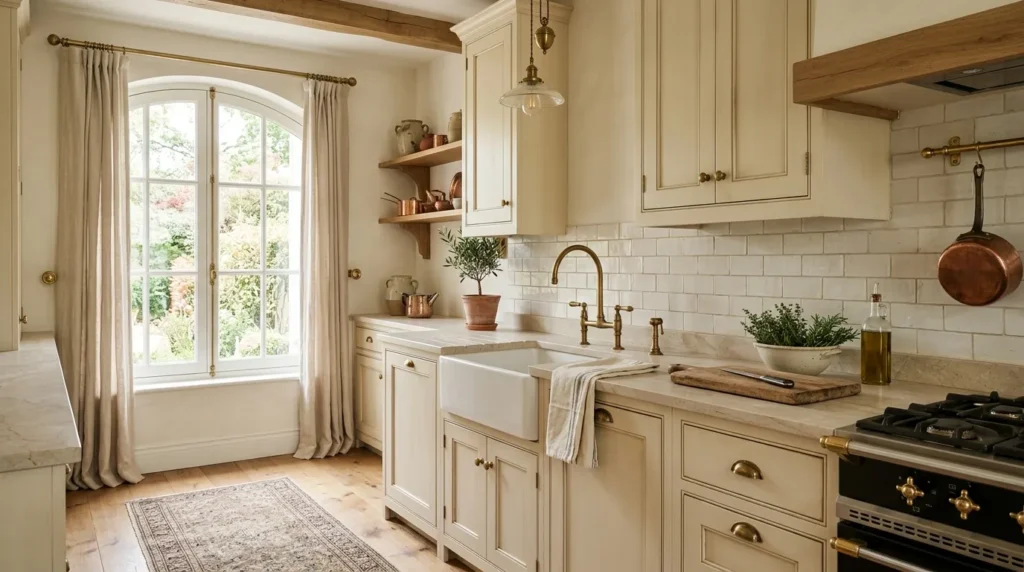
Aged or unlacquered-style brass can give a kitchen a sense of history. Rather than looking perfectly shiny and new, warmer metallic finishes can contribute to the collected appearance associated with classic European interiors.
How To Style It
Use brass thoughtfully across cabinet pulls, knobs, faucets, or lighting details.
You don’t have to make every metal element identical. Mixing a small amount of brass with another understated metal can feel natural, especially in a kitchen designed to look collected over time.
4. Install a Farmhouse Sink
Quick Benefits
- Adds classic character
- Provides practical workspace
- Creates a strong focal point
- Complements traditional cabinetry
- Works with modern kitchens
Why It Works
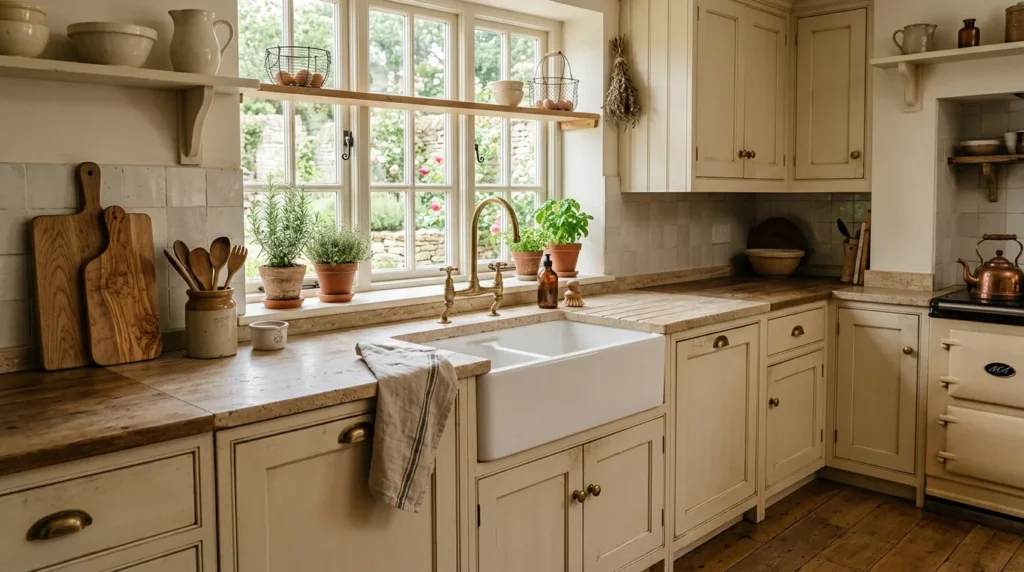
A deep apron-front sink is strongly associated with traditional European and farmhouse-inspired kitchens. Its substantial shape provides architectural presence while remaining highly practical for everyday tasks.
How To Style It
Choose a sink material appropriate for your kitchen’s use and maintenance preferences. Pair it with a traditional or bridge-style faucet if that complements the rest of the design.
Keep the area around the sink relatively simple. A small vase of greenery, wooden cutting board, or attractive dish can add personality without creating clutter.
5. Add a Statement Range Hood
Quick Benefits
- Creates a focal point
- Adds architectural detail
- Enhances traditional character
- Frames the cooking area
- Makes the kitchen feel custom
Why It Works
The range hood occupies a prominent position, so it can become one of the most important design elements in a French-inspired kitchen.
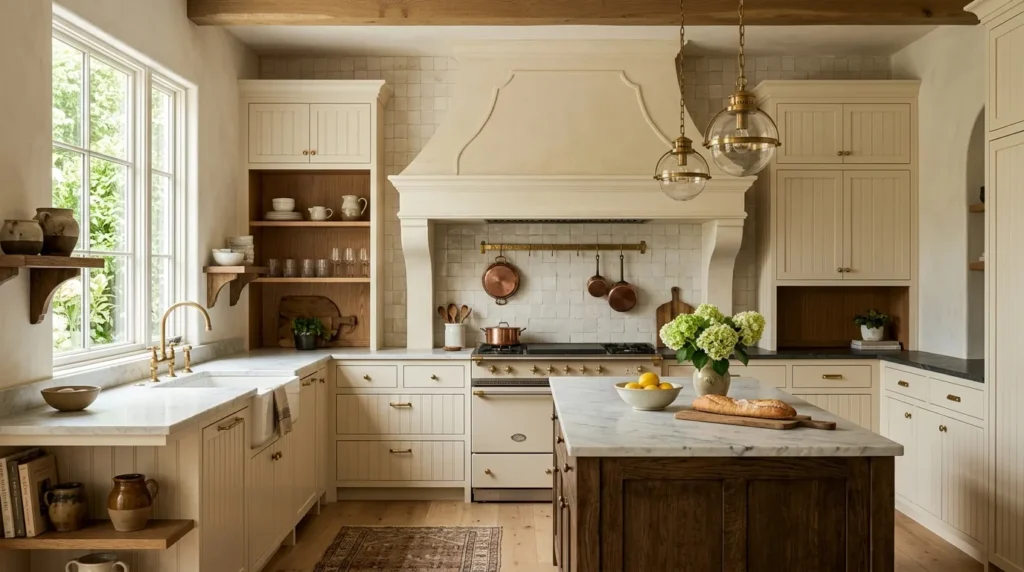
A plaster, wood, painted, or traditionally detailed hood can provide the architectural presence that helps the entire kitchen feel more established.
How To Style It
Choose a hood shape that relates to the home’s architecture. Simple curved forms can create a softer traditional appearance, while paneled or squared designs feel more tailored.
Keep the surrounding backsplash and cabinetry relatively restrained so the hood remains the focal point.
6. Choose Warm Wood Accents
Quick Benefits
- Adds natural warmth
- Balances painted cabinetry
- Creates visual contrast
- Makes the kitchen feel lived-in
- Complements stone surfaces
Why It Works
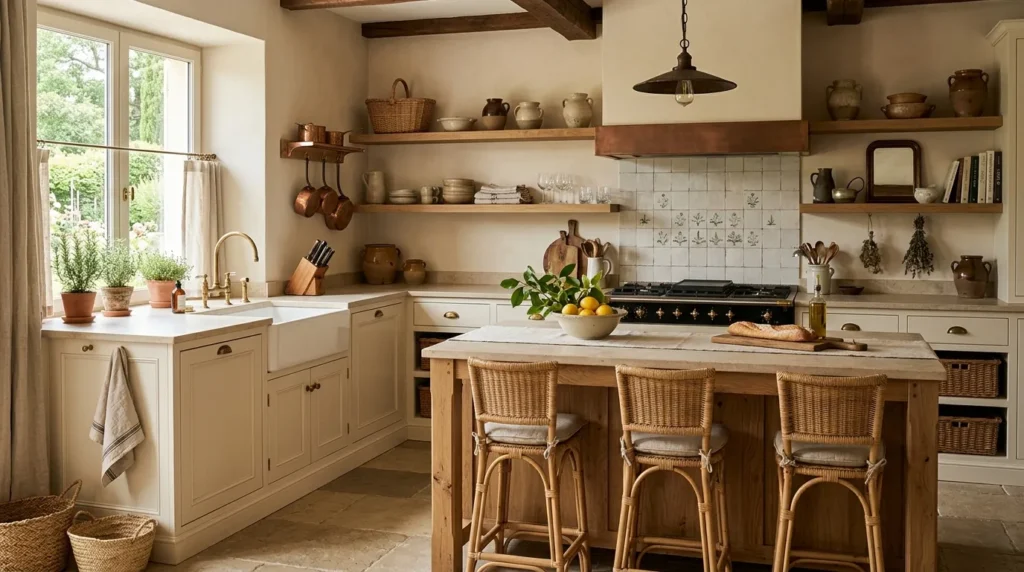
French-inspired kitchens often benefit from the contrast between painted cabinetry and natural wood. Wood introduces grain, warmth, and an organic quality that keeps the room from feeling too uniform.
How To Style It
Introduce wood through an island, open shelving, cutting boards, stools, beams, or furniture-style pieces.
Light oak can create an airy country-French feeling, while walnut and deeper woods can provide a more dramatic traditional look. Choose tones that complement rather than compete with the cabinet color.
7. Hang Vintage-Inspired Lighting
Quick Benefits
- Creates atmosphere
- Adds visual character
- Highlights the island
- Complements traditional details
- Makes the kitchen feel layered
Why It Works
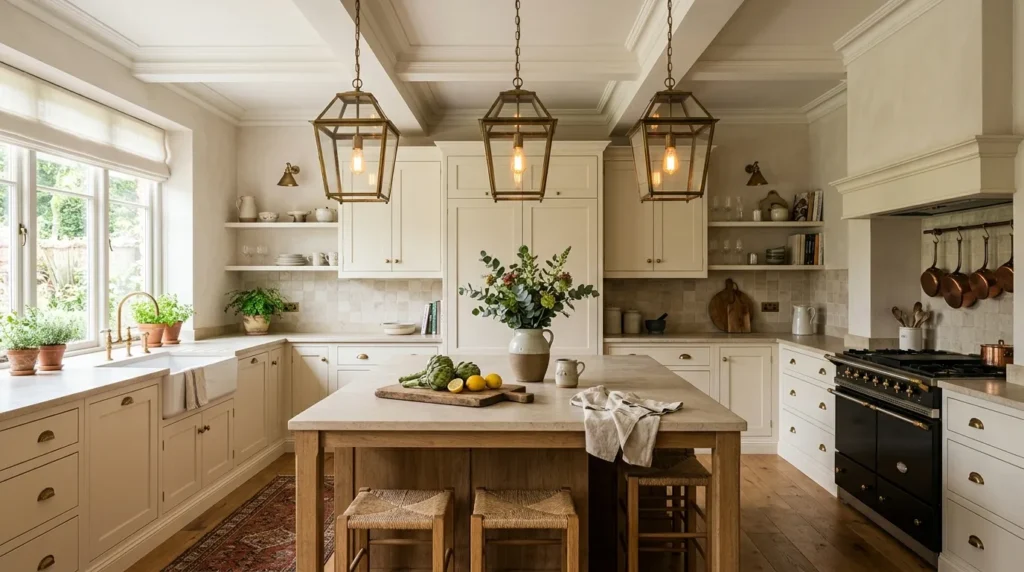
Lighting can make a major difference in how French-inspired materials are perceived. A vintage-style pendant or wall light can soften the kitchen’s modern functionality and add a sense of history.
How To Style It
Consider lantern-style pendants, aged-metal fixtures, traditional sconces, or simple glass shades.
Place lighting where it provides useful illumination while also contributing to the overall composition. Over an island or dining area is often an ideal opportunity for a statement fixture.
8. Display Open Shelving
Quick Benefits
- Adds visual openness
- Makes everyday items decorative
- Introduces wood texture
- Creates a collected appearance
- Provides accessible storage
Why It Works
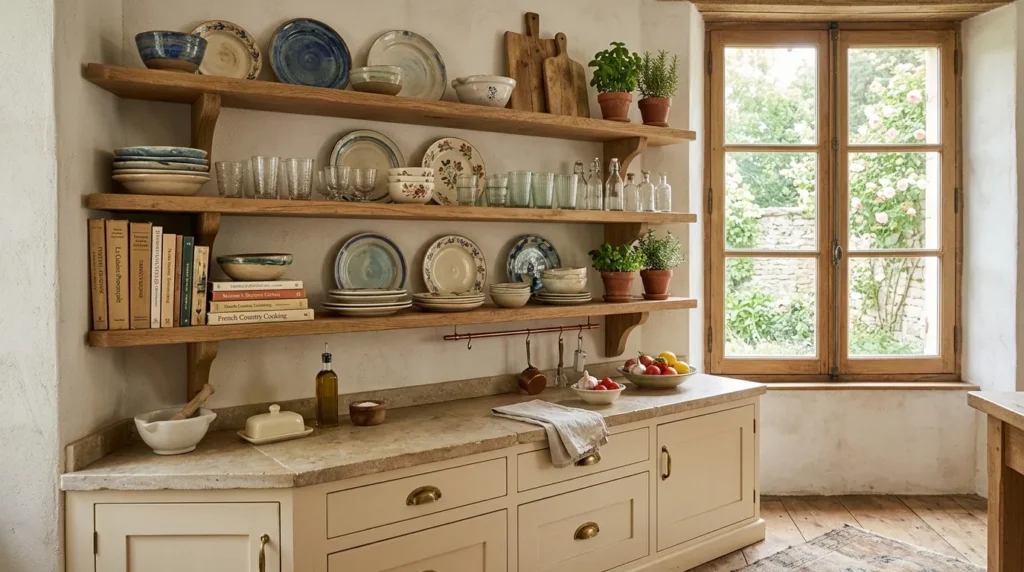
Open shelving can make a kitchen feel more relaxed and lived-in. Rather than hiding every beautiful object behind cabinet doors, you can display pieces that contribute to the room’s character.
How To Style It
Use open shelves for a carefully edited collection of ceramics, wooden boards, glassware, cookbooks, and small plants.
Leave plenty of empty space. French-inspired design generally benefits from a relaxed arrangement rather than shelves packed from edge to edge.
9. Add French-Inspired Textiles
Quick Benefits
- Softens hard surfaces
- Adds color
- Introduces pattern
- Creates warmth
- Makes the kitchen feel lived-in
Why It Works
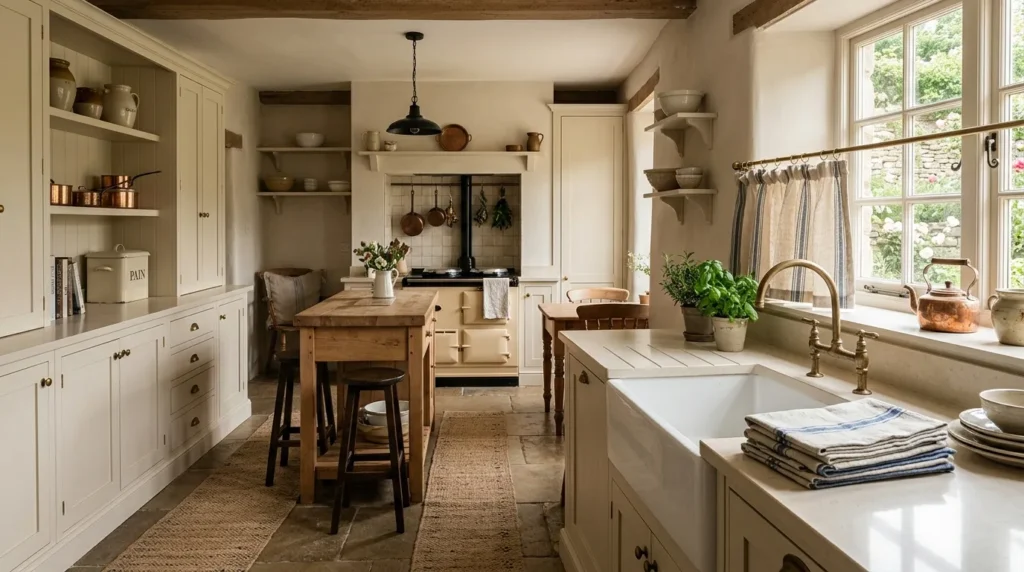
Textiles provide an easy way to introduce French country character without making permanent changes. Striped tea towels, linen café curtains, woven runners, and relaxed seat cushions can add softness and visual texture.
How To Style It
Choose natural fabrics and understated patterns. Blue-and-white stripes, muted checks, soft florals, and neutral linens can all work beautifully.
Keep the patterns connected through a shared color palette so the kitchen feels layered rather than busy.
10. Mix Old and New
Quick Benefits
- Creates authenticity
- Prevents a showroom appearance
- Adds personality
- Balances modern functionality
- Makes the kitchen feel collected
Why It Works
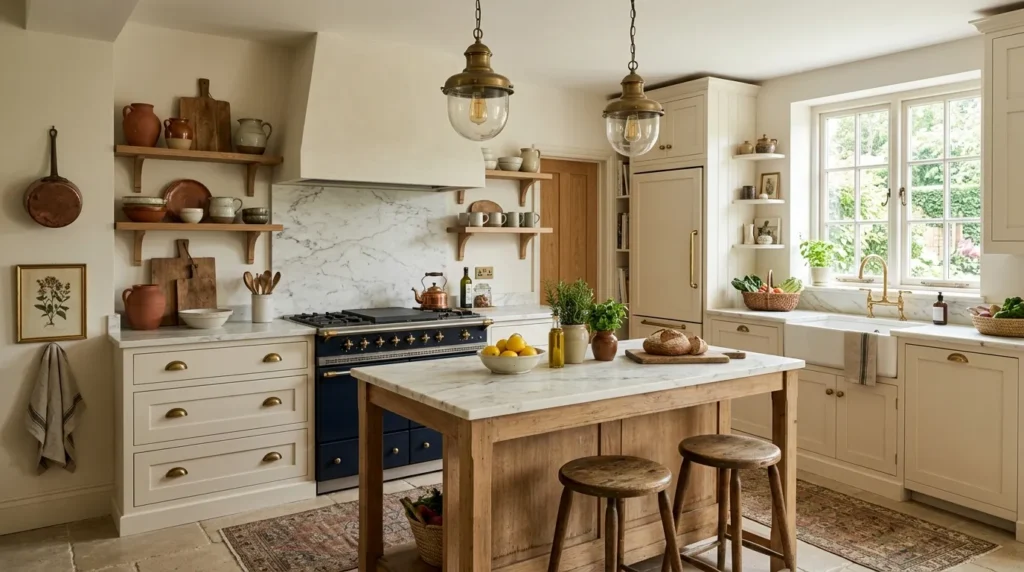
One of the biggest secrets to creating convincing French charm is avoiding an overly coordinated look. Traditional elements become more believable when they’re combined with practical modern features.
A modern refrigerator can sit comfortably beside paneled cabinetry. Contemporary appliances can coexist with vintage-inspired lighting and antique-style accessories.
How To Style It
Choose a few timeless architectural elements as your foundation, then layer in newer conveniences.
Add personality through vintage cutting boards, antique-style stools, pottery, artwork, or furniture pieces. The goal is not to make everything look old—it is to create a kitchen that feels as though it has evolved naturally over time.
Frequently Asked Questions
What colors work best in a French style kitchen?
Cream, warm white, muted sage, soft blue, taupe, pale gray, natural wood, and earthy neutrals are all excellent choices. The most important factor is choosing shades that feel soft and slightly warm rather than overly bright or saturated.
How can I make my kitchen look French without renovating it?
Start with hardware, lighting, textiles, artwork, open shelving, and accessories. Replacing cabinet pulls, adding vintage-inspired lighting, displaying ceramics, and introducing natural wood can make a noticeable difference without changing the cabinetry.
What countertop looks most French?
Natural stone is a classic choice, particularly materials with subtle variation and natural veining. Marble, limestone-inspired surfaces, and other natural stones can complement traditional cabinetry beautifully.
Do French style kitchens have to look rustic?
No. French-inspired kitchens can range from rustic country kitchens to elegant Parisian-style interiors. The common thread is usually a combination of classic architectural details, natural materials, restrained colors, and a relaxed collected feeling.
What hardware works best in a French kitchen?
Aged brass, antique brass, bronze, and other warm traditional finishes can work beautifully. Choose hardware that relates to the cabinetry and other metal details without making the entire room feel overly matched.
How do I mix modern appliances with French style?
Use modern appliances for convenience while allowing the surrounding cabinetry and architectural elements to establish the style. Paneled appliances, traditional hardware, natural stone, and vintage-inspired lighting can help modern technology blend into the overall design.
Conclusion
Classic French charm comes from balance.
It’s the combination of traditional cabinetry with practical appliances, natural stone with painted surfaces, warm metals with aged-looking accessories, and beautiful objects with everyday functionality.
You don’t need to recreate an elaborate French farmhouse to capture the feeling. Start with a few foundational elements—paneled cabinets, natural materials, warm lighting, and understated hardware—then add personality through wood, textiles, ceramics, and vintage-inspired details.
The most important thing is to avoid making everything look brand new and perfectly matched. A little variation gives the kitchen character.
Let some materials show their natural texture. Mix old-looking elements with modern conveniences. Display pieces you genuinely enjoy using.
When these details come together, the kitchen becomes more than a collection of beautiful finishes. It feels warm, lived-in, timeless, and welcoming—the qualities that make French-inspired interiors so enduring.