
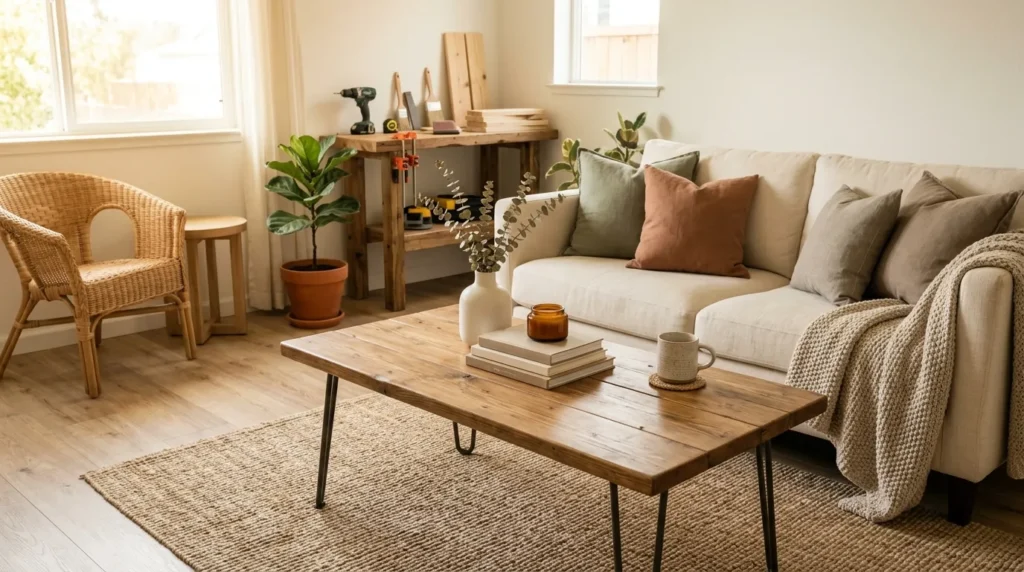
10 DIY Coffee Tables That Save You Money
A coffee table can be one of the most useful pieces in a living room, but it doesn’t have to be one of the most expensive. With the right materials and a little creativity, you can build a stylish centerpiece that fits your room, matches your decorating style, and costs considerably less than many ready-made options.
The best DIY coffee tables aren’t necessarily complicated. Some use basic lumber, reclaimed wood, crates, or affordable tabletop materials. Others simply repurpose something you already have and give it a completely new purpose.
In my experience, the most successful DIY furniture projects start with the room rather than the project itself. Before buying materials, consider the sofa’s height, the available walking space, the shape of the room, and how you actually use the table. A beautiful table that is too large or too low will quickly become frustrating.
It’s also worth spending time on the finish. Sanding rough edges, choosing appropriate hardware, protecting the surface, and giving the table a cohesive finish can make an inexpensive project look surprisingly polished.
These ideas range from beginner-friendly builds to more creative furniture transformations. Whether you love farmhouse style, modern interiors, rustic décor, or simple minimalist design, there’s an option here that can help you create a beautiful coffee table without paying designer-furniture prices.
Always use appropriate tools, protective equipment, structurally sound materials, and safe construction methods for your particular project.
Table of Contents
1. Build a Simple Wood Slab Table
Create a classic centerpiece from basic lumber.
2. Make a Crate Coffee Table
Turn inexpensive crates into useful storage.
3. Create a Hairpin Leg Table
Get a modern look for less.
4. Build a Rustic Farmhouse Table
Add warmth with natural wood.
5. Make a Pallet-Style Coffee Table
Repurpose wood into a casual centerpiece.
6. Create a Storage Ottoman Table
Combine seating, storage, and function.
7. Build a Round Pedestal Table
Add softness to a boxy room.
8. Repurpose an Old Door
Turn architectural salvage into furniture.
9. Make a Minimalist Platform Table
Keep the design clean and contemporary.
10. Create a Two-Tier Coffee Table
Add extra storage without extra clutter.
1. Build a Simple Wood Slab Table
Quick Benefits
- Affordable materials
- Easy to customize
- Works with many styles
- Durable when properly built
- Can be stained or painted
Why It Works
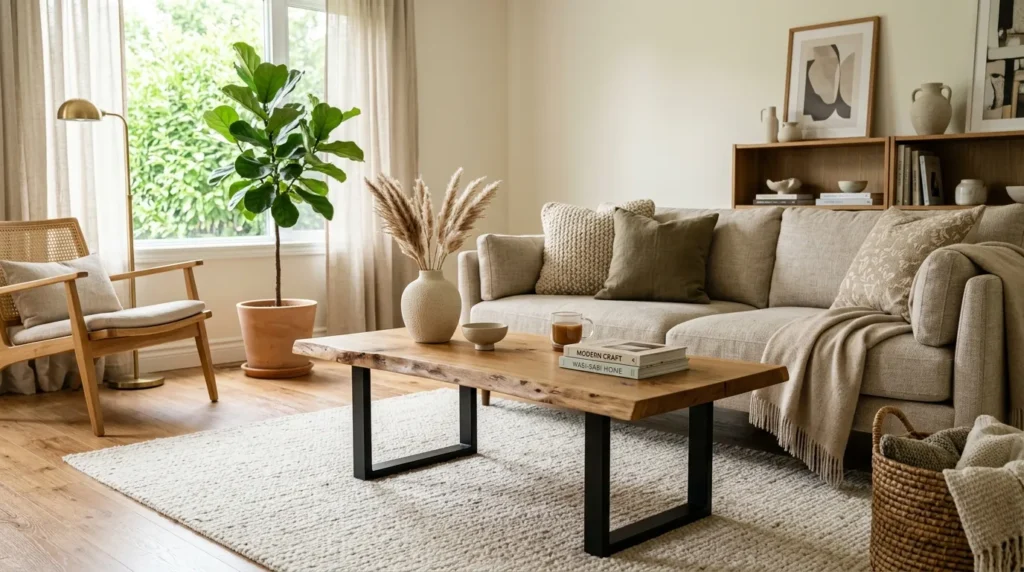
A simple wood tabletop paired with sturdy legs can create the foundation for an attractive coffee table without complicated joinery. The simplicity also makes the project easy to customize for your room.
You can choose the dimensions, wood tone, leg style, and finish to create something that feels intentionally designed rather than generic.
How To Style It
Select properly dried, structurally sound lumber and build a stable base. Sand the surface thoroughly and soften sharp edges before applying an appropriate finish.
For a warm modern look, combine natural wood with simple black or neutral-toned legs. Add a tray, a small plant, and a few books while leaving enough surface area for everyday use.
2. Make a Crate Coffee Table
Quick Benefits
- Adds built-in storage
- Uses affordable materials
- Beginner-friendly concept
- Creates rustic character
- Can be customized
Why It Works
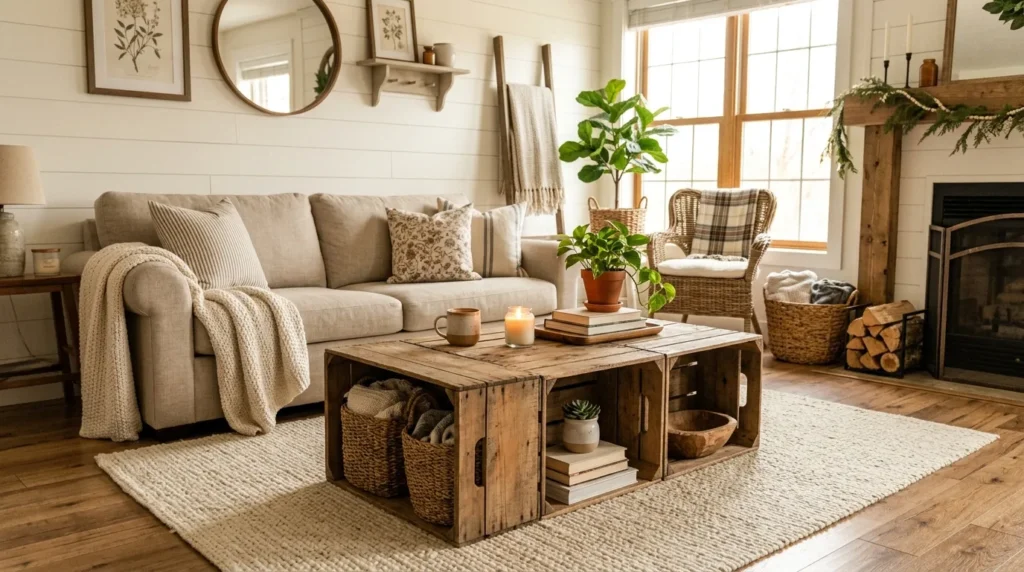
Wooden crates can provide both a tabletop structure and convenient storage. Their open compartments are useful for books, blankets, baskets, games, or decorative objects.
The result can feel especially charming in casual farmhouse, cottage, or rustic interiors.
How To Style It
Use structurally sound crates and secure them properly rather than relying on loose stacking. Add a suitable tabletop or carefully construct a stable top surface.
Sand rough areas and finish the wood according to your preferred look. Use baskets inside open compartments if you want a cleaner appearance.
3. Create a Hairpin Leg Table
Quick Benefits
- Simple silhouette
- Modern appearance
- Relatively easy construction
- Uses fewer materials
- Works in small rooms
Why It Works
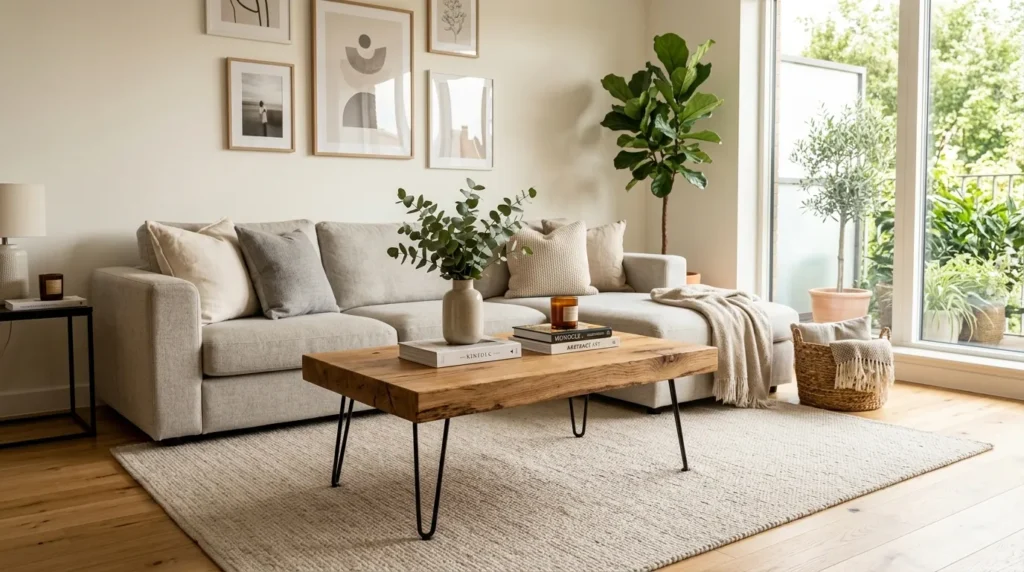
Hairpin legs create a lightweight visual appearance while supporting a variety of tabletop styles. Their slim profile allows more of the floor to remain visible, which can help a small living room feel less crowded.
How To Style It
Pair the legs with a wood tabletop for warmth or a suitable painted surface for a cleaner modern look.
Keep the rest of the table simple. A low-profile tray, coffee table books, and one decorative object are often enough.
4. Build a Rustic Farmhouse Table
Quick Benefits
- Warm appearance
- Classic style
- Easy to customize
- Works with neutral décor
- Adds natural texture
Why It Works
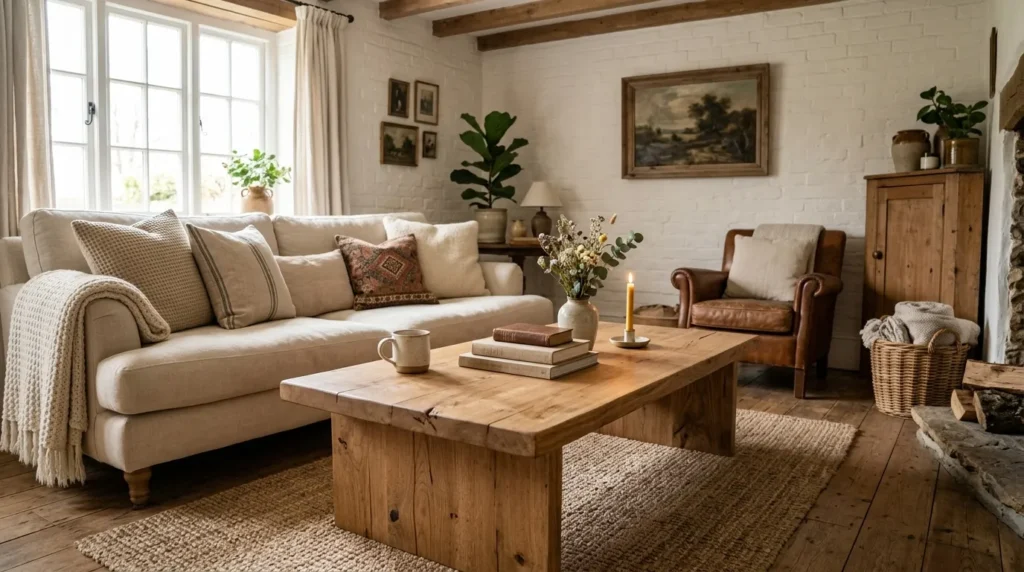
Farmhouse-style furniture often relies on straightforward construction, natural materials, and a slightly relaxed finish. That makes it particularly approachable for DIY projects.
A sturdy wood table can become a long-lasting living room centerpiece while adding warmth to neutral interiors.
How To Style It
Use wood with visible grain and choose a finish that complements your existing furniture. A medium natural stain can create warmth, while a soft painted base can produce a more traditional farmhouse appearance.
Avoid making the finish artificially distressed unless that look genuinely suits your room.
5. Make a Pallet-Style Coffee Table
Quick Benefits
- Repurposes materials
- Can be inexpensive
- Creates casual character
- Offers customization
- Works in relaxed interiors
Why It Works
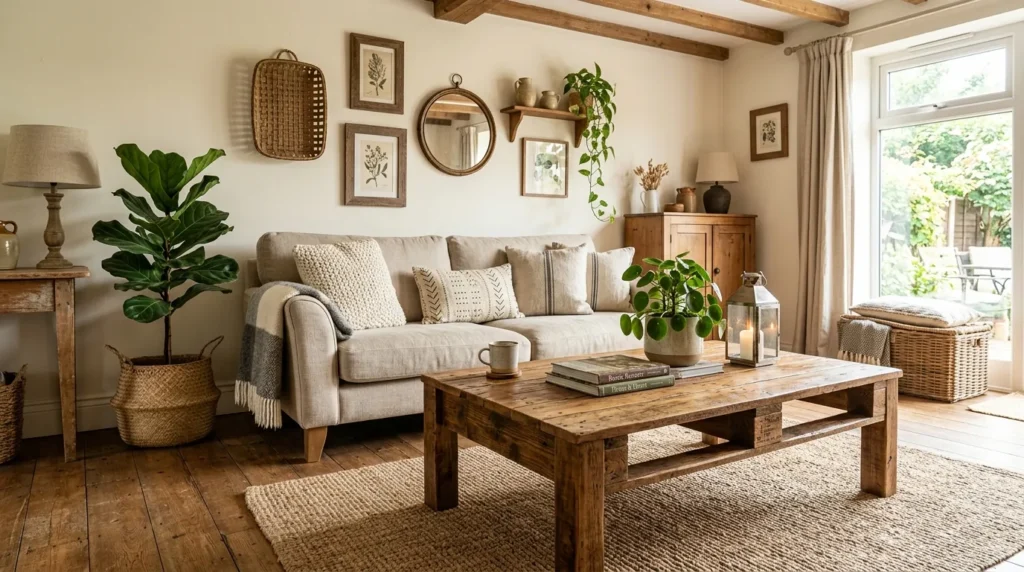
Reclaimed or pallet-inspired designs can give a living room a casual, collected feeling. The varied wood tones and simple construction create natural texture.
However, not every pallet is appropriate for indoor furniture, so materials should be selected carefully.
How To Style It
Use only wood that is appropriate for your intended application and inspect it carefully for damage, contamination, nails, and structural problems.
Add sturdy legs or casters only when they are suitable for the table’s weight and construction. Finish the surface smoothly so it is practical for everyday use.
6. Create a Storage Ottoman Table
Quick Benefits
- Provides hidden storage
- Can double as seating
- Softens the living room
- Maximizes functionality
- Works in family spaces
Why It Works
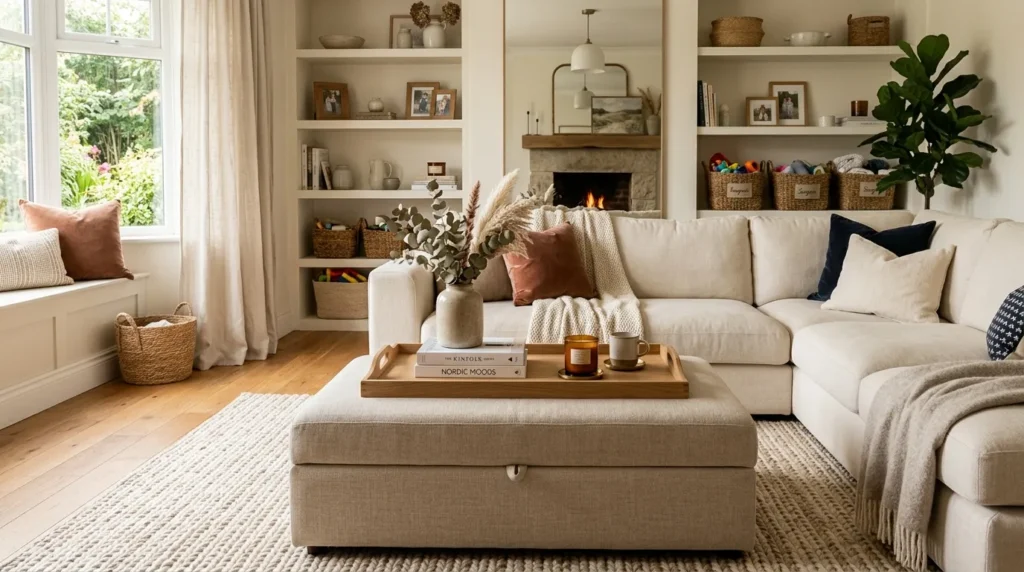
A traditional hard coffee table isn’t always the best choice for a busy household. An upholstered ottoman-style table can provide a softer surface while also serving as extra seating and storage.
This is especially useful in smaller living rooms where every piece needs to perform multiple functions.
How To Style It
Choose a sturdy frame and appropriate upholstery materials. Add a removable tray on top if you want a firm surface for drinks and decorative objects.
Use neutral upholstery for versatility or select a subtle pattern to make the table a stronger design feature.
7. Build a Round Pedestal Table
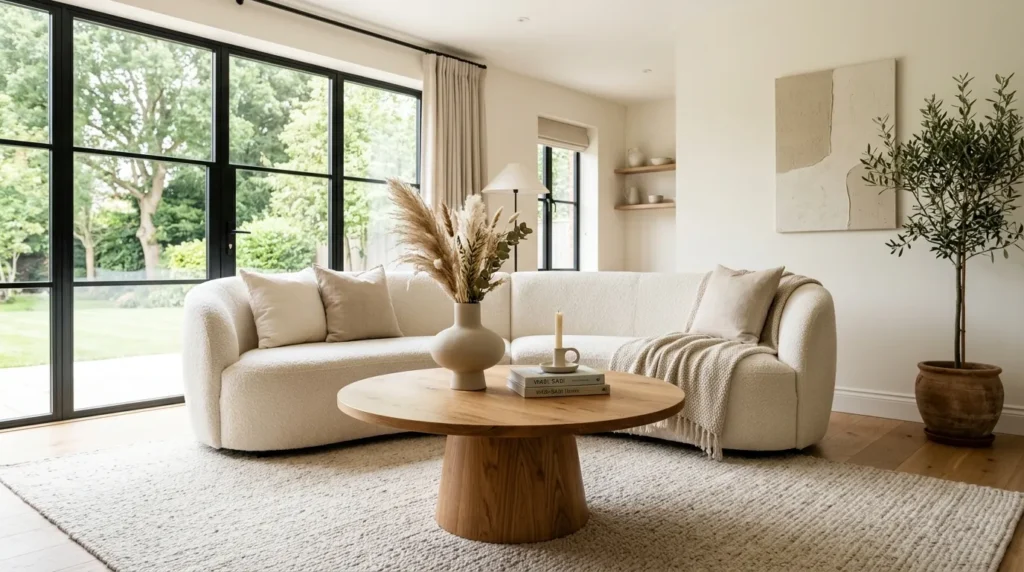
Quick Benefits
- Softens square furniture
- Improves visual flow
- Works in compact rooms
- Creates a classic silhouette
- Offers easy movement around the table
Why It Works
Round coffee tables can be particularly useful when a living room contains many rectangular shapes. Their curved silhouette creates contrast and can make circulation around the seating area feel more natural.
A pedestal base also eliminates the visual clutter of four separate legs.
How To Style It
Choose a tabletop diameter that fits comfortably within the seating arrangement. Make sure the pedestal base is stable and properly supports the tabletop.
Natural wood, painted finishes, and stone-look surfaces can all work depending on your interior style.
8. Repurpose an Old Door
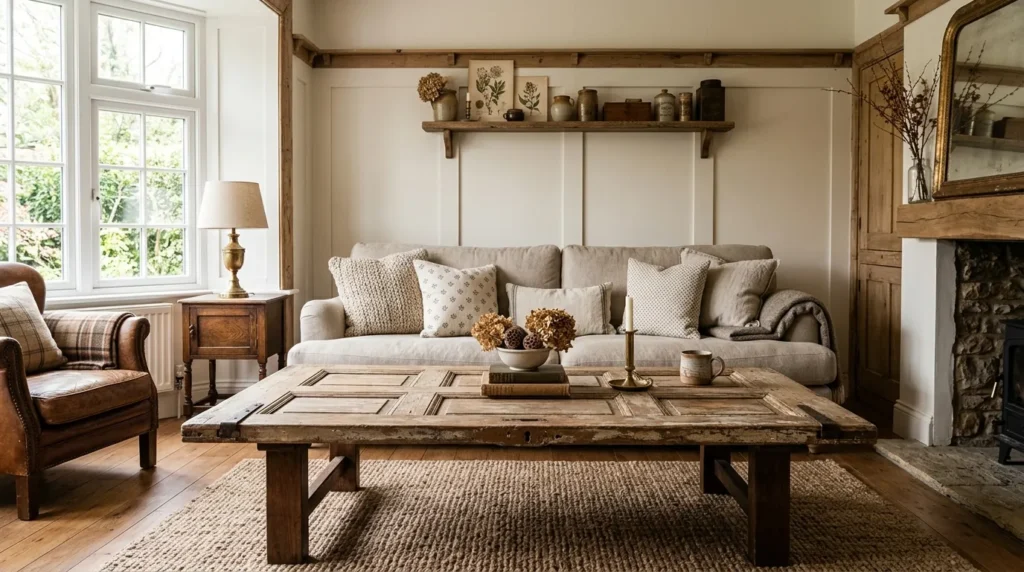
Quick Benefits
- Gives old materials new life
- Creates a unique piece
- Adds architectural character
- Can save on materials
- Works with rustic interiors
Why It Works
An old interior door can become an unexpectedly beautiful tabletop because it may already contain panels, texture, or interesting architectural details.
This is a great approach if you want a coffee table that doesn’t look like something purchased from a mass-market furniture store.
How To Style It
Inspect the door carefully and make sure it is appropriate for reuse. Remove or secure any hardware that could create a hazard, then clean, repair, sand, and finish the surface appropriately.
Pair it with a simple sturdy base so the tabletop remains the visual star.
9. Make a Minimalist Platform Table
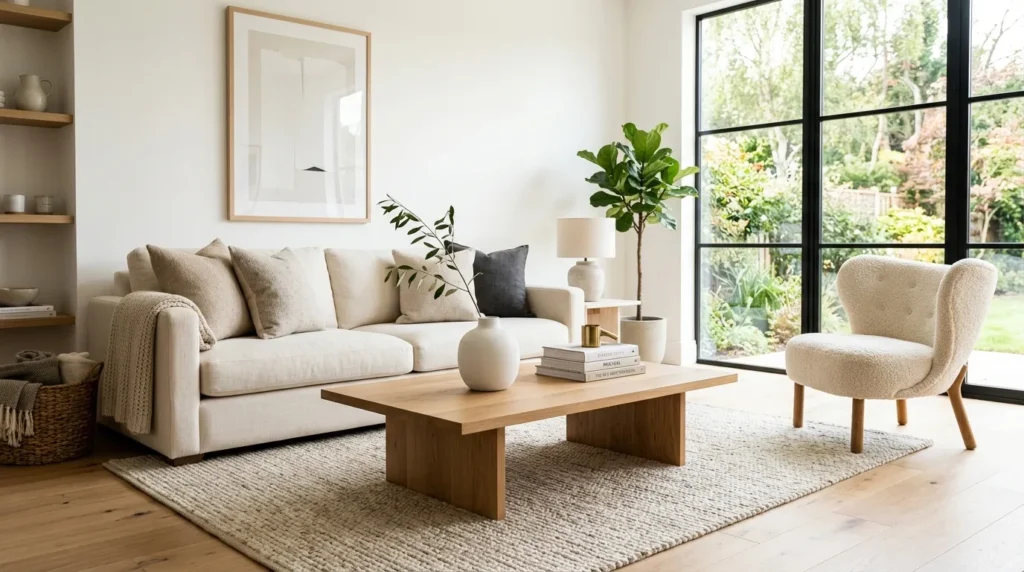
Quick Benefits
- Clean appearance
- Uses simple geometry
- Works with modern décor
- Can be customized
- Creates a high-end look
Why It Works
Minimalist furniture often looks expensive because of its simplicity. A platform-style coffee table can use straightforward lines and a limited material palette to create a sophisticated centerpiece.
How To Style It
Choose one primary material and keep the shape clean. Natural oak, painted wood, or another suitable finish can create different effects.
Avoid adding unnecessary decorative details. Let the proportions and material quality carry the design.
10. Create a Two-Tier Coffee Table
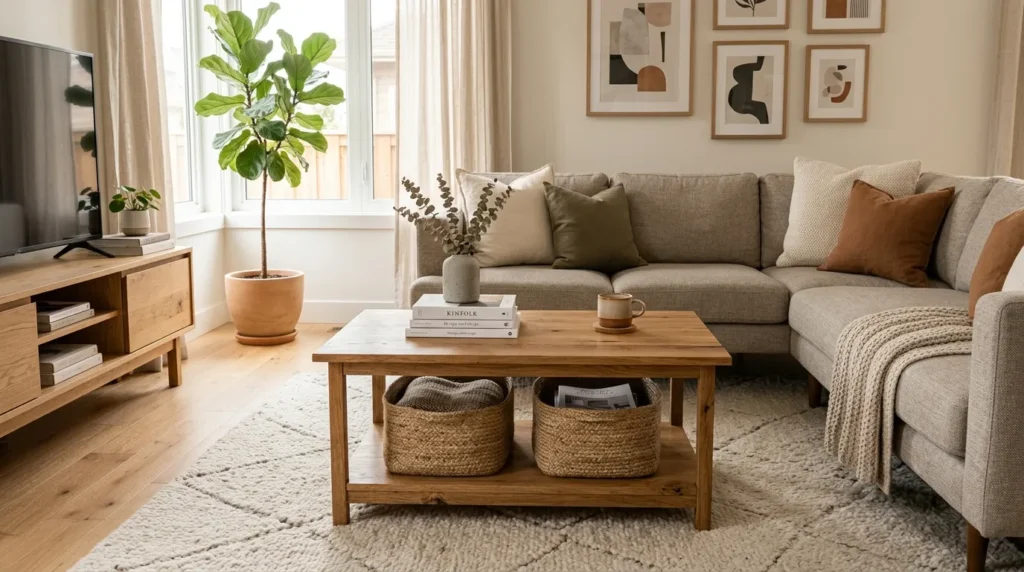
Quick Benefits
- Adds storage
- Maximizes surface area
- Keeps the top organized
- Works in family rooms
- Creates visual dimension
Why It Works
A second shelf creates a convenient place for books, baskets, blankets, or decorative objects without filling the main tabletop.
This is particularly helpful when the coffee table needs to function as both furniture and storage.
How To Style It
Keep the upper surface relatively uncluttered. Use baskets or boxes on the lower shelf to hide everyday items.
Choose finishes that coordinate with nearby furniture so the two-tier structure feels intentional rather than visually heavy.
Frequently Asked Questions
Is it cheaper to build your own coffee table?
It can be, particularly when you choose affordable materials, reuse suitable items, or already own some of the necessary tools. However, the total cost depends on lumber, hardware, finishes, tools, and your construction method.
What is the easiest DIY coffee table?
A basic tabletop with a simple leg system is usually one of the most approachable designs. Crate-based tables and simple platform designs can also be beginner-friendly when constructed safely and securely.
What wood is best for a DIY coffee table?
The best choice depends on your budget, tools, desired appearance, and intended use. Pine can be affordable and easy to work with, while hardwoods such as oak can provide greater durability and a different appearance.
How do I make a DIY coffee table look expensive?
Pay attention to proportions, sanding, edges, hardware, and finishing. A simple design made carefully often looks better than a complicated project with rough construction.
How high should a coffee table be?
A coffee table is typically most comfortable when its height relates closely to the surrounding seating, but exact dimensions depend on your sofa and personal preferences. Measure your existing furniture before building.
How can I add storage to a DIY coffee table?
Consider a lower shelf, drawers, crates, baskets, lift-top construction, or a storage ottoman design. Choose the option that fits both your storage needs and the amount of visual openness you want.
Conclusion
A stylish coffee table doesn’t have to consume a large portion of your furniture budget.
DIY construction gives you the opportunity to control the size, materials, finish, and overall style while creating something specifically suited to your living room.
If you’re new to furniture building, start simple. A basic wood tabletop with sturdy legs can be surprisingly beautiful. If you need storage, consider crates, a lower shelf, or a two-tier design. For something more distinctive, repurposing an old door or creating a sculptural pedestal table can produce a one-of-a-kind result.
The most important part is not how complicated the project looks. It’s how carefully the final piece is constructed.
Smooth surfaces, clean edges, stable joints, appropriate hardware, and a thoughtful finish can make affordable materials look significantly more polished.
And because you’re building it yourself, you don’t have to compromise on size or style.
Create the dimensions your room actually needs, choose materials that fit your budget, and finish the piece with care. The result can be a coffee table that saves money while looking like it was made specifically for your home.