
Why Do Pocket Door Privacy Latches Fail to Catch the Strike Plate?
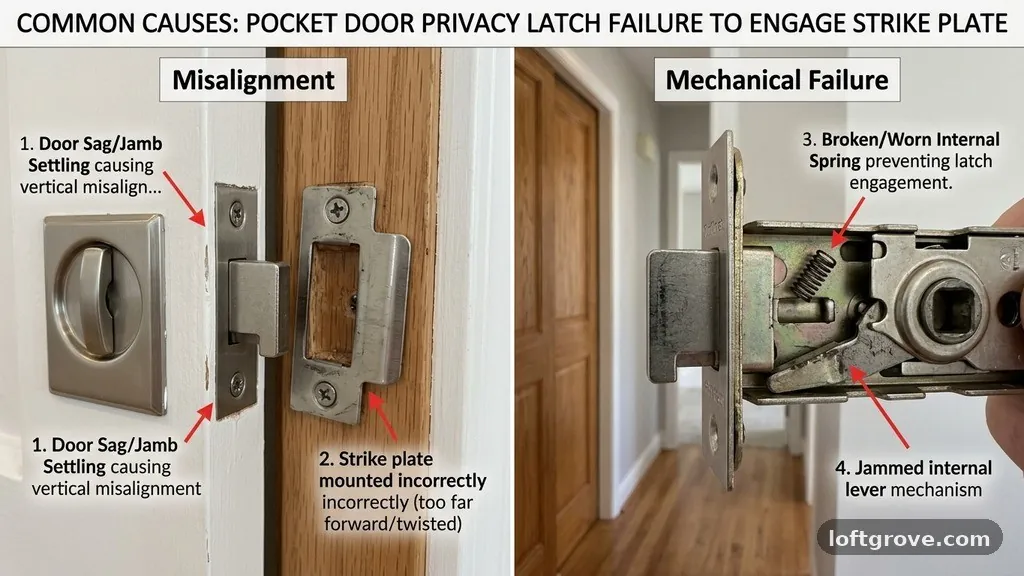
When you find that your pocket door privacy latches fail to catch the strike plate, it usually points to a subtle misalignment between the door panel and the door frame. These specialized locking systems rely on precise positioning, as the hook mechanism must travel into a very specific pocket within the strike plate to engage securely. If the door sagged over time or the internal rollers shifted, the hook will miss its mark entirely.
You can often troubleshoot these issues by examining the door’s vertical alignment and the physical condition of the hardware. Understanding these mechanical relationships allows you to restore functionality without needing to replace the entire assembly.
The Mechanics of Pocket Door Privacy Latches
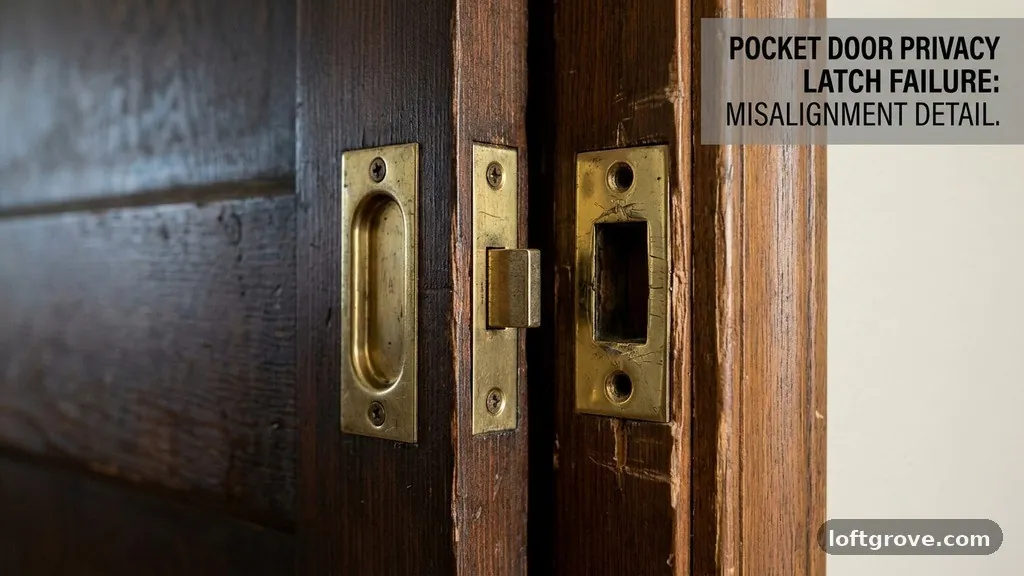
A privacy latch on a sliding door operates differently than a standard passage set. Instead of a beveled spring latch that clicks into a strike plate, it uses a hook-shaped bolt that extends outward when the thumb turn is rotated. This hook must clear the edge of the strike plate and nestle behind the inner metal lip to lock the door in place.
Because pocket doors slide into a cavity within the wall, the tolerances for this hook are incredibly tight. If the door is even a few millimeters off-center, the hook will strike the metal faceplate instead of entering the opening.
The design relies on the door being perfectly plumb and square within the opening. If the sliding track at the top of the frame becomes loose, the entire door panel can tilt or swing slightly. This subtle movement is often invisible to the naked eye but is enough to prevent the lock from engaging.
You should look at the gap between the door and the jamb when the door is in the closed position. If the gap is wider at the top than at the bottom, the door is hanging at an angle, forcing the latch mechanism out of alignment.
Common Alignment Issues
The most frequent reason for a failed latch is the gradual shifting of the door hardware over time. Heavy solid-core doors put significant strain on the top track and the hanger wheels. If the wheels are not adjusted correctly, the door will sit too low, causing the strike plate to be positioned incorrectly relative to the latch.
You must verify that the door is hanging straight by checking the clearance along the entire vertical edge where it meets the strike plate. A door that drags on the floor or hits the top track will never align with its locking hardware.
Another major culprit is the expansion or contraction of the wood frame due to humidity. Since most pocket doors are installed in wooden stud walls, the door frame can warp slightly during seasonal changes. Even a small shift in the wall structure can move the strike plate away from the door panel.
When the distance between the latch and the strike plate increases, the hook simply cannot reach far enough to catch. You might notice the door feels loose or rattles when closed, which is a telltale sign that the strike plate needs to be shimmed or repositioned.
Checking the Hanger Wheel Adjustment
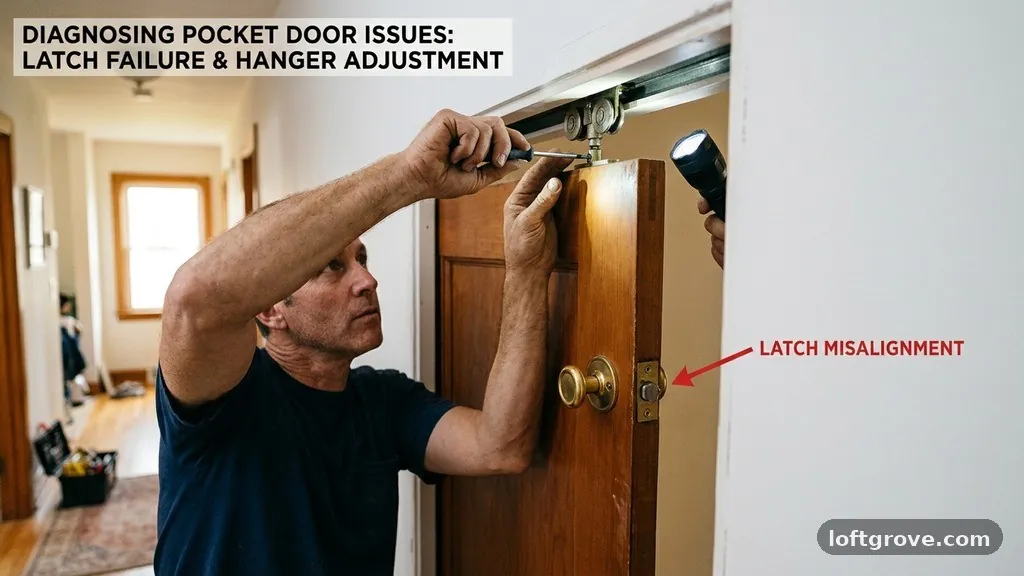
Most pocket door systems include adjustment nuts on the hanger brackets located at the top of the door. These nuts allow you to raise or lower the door panel to ensure it slides smoothly and sits level. If the door is too low, the latch will strike the bottom of the strike plate rather than entering the designated slot.
You will need to access the top of the door, which often requires removing the trim or header cover. Once you have access, use a wrench to turn the adjustment nut to lift the door panel slightly.
You should perform this adjustment in small increments while checking the lock operation frequently. It is easy to overcompensate and raise the door too high, which then causes the top of the door to bind against the head jamb.
If you are unsure about the specific adjustment mechanism, consult the International Association of Certified Home Inspectors for general guidelines on door installation and maintenance standards. Keeping the door at the correct height is the most effective way to ensure the mechanical lock functions as intended.
Hardware Wear and Fatigue
Mechanical parts inside a privacy lock are subject to wear after years of daily operation. The spring mechanism that drives the hook can lose its tension, or the internal gears might become stripped.
If you rotate the thumb turn and the hook feels “mushy” or does not extend fully, the internal components have likely failed. In these cases, no amount of alignment will fix the problem because the hardware itself is no longer capable of throwing the bolt to the required depth.
You should also examine the strike plate for signs of damage or debris. Sometimes a small piece of wood chip or dried paint can obstruct the opening, preventing the hook from seating fully. If the metal strike plate itself is bent or distorted, the hook might catch on the edge rather than sliding into the hole.
A simple test is to use a screwdriver to gently clear any obstructions from the strike plate cavity. If the latch works while the door is held in place by hand, the issue is purely one of alignment rather than a broken lock.
The Role of the Door Bumper
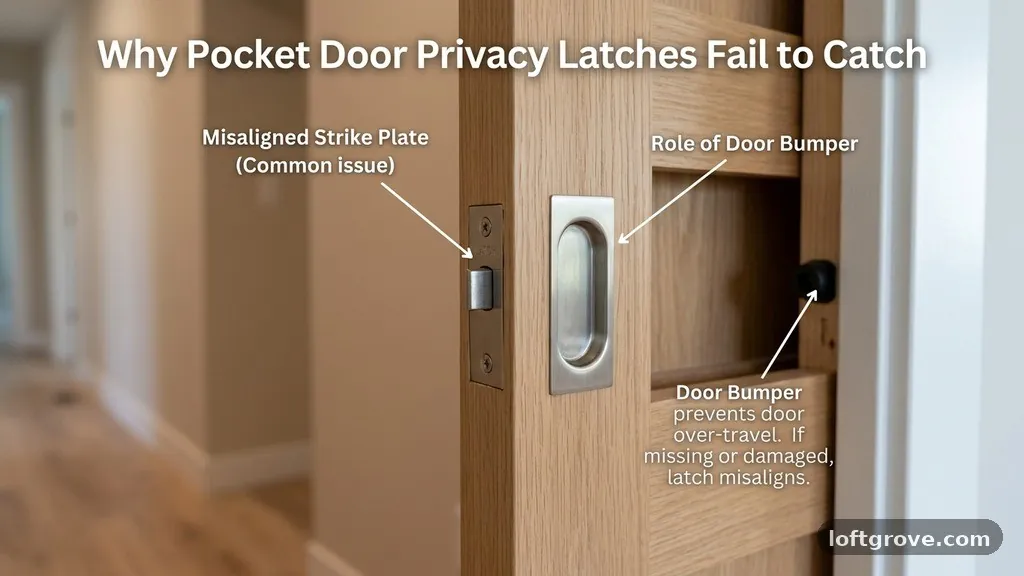
Most pocket doors feature a rubber bumper or a soft-close mechanism that stops the door at the exact point of closure. If this bumper is missing or has compressed over time, the door might travel too far into the pocket.
When the door goes past the strike plate, the latch misses the catch entirely and hits the wood trim behind the plate. You can often fix this by installing a new bumper or adjusting the existing stop to ensure the door rests exactly where it should.
Conversely, if the bumper is too thick, the door won’t reach the strike plate. This results in the latch failing to engage because the hook never makes it to the opening. Testing the door’s “stop point” is a simple process of trial and error.
You can use thin adhesive-backed felt pads to experiment with the stopping distance until you find the perfect position. Once the door stops at the exact alignment point, the latch should engage with minimal effort.
Troubleshooting with a Simple Test
To determine exactly where the misalignment is, you can use the “lip test” on the strike plate. Take a piece of masking tape and place it over the strike plate opening, then lightly coat the end of the latch hook with lipstick or chalk.
Close the door and operate the lock, then open the door and look at the mark left on the tape. This will show you exactly where the hook is hitting in relation to the strike plate opening.
If the mark is above the opening, the door is too low; if it is below, the door is too high. If the mark is to the left or right, the door is either not closing far enough or is closing too far.
This visual feedback is much more accurate than guessing based on how the door feels. It removes the guesswork and allows you to make precise adjustments to the hanger wheels or the stop bumper.
Comparing Common Latch Failures
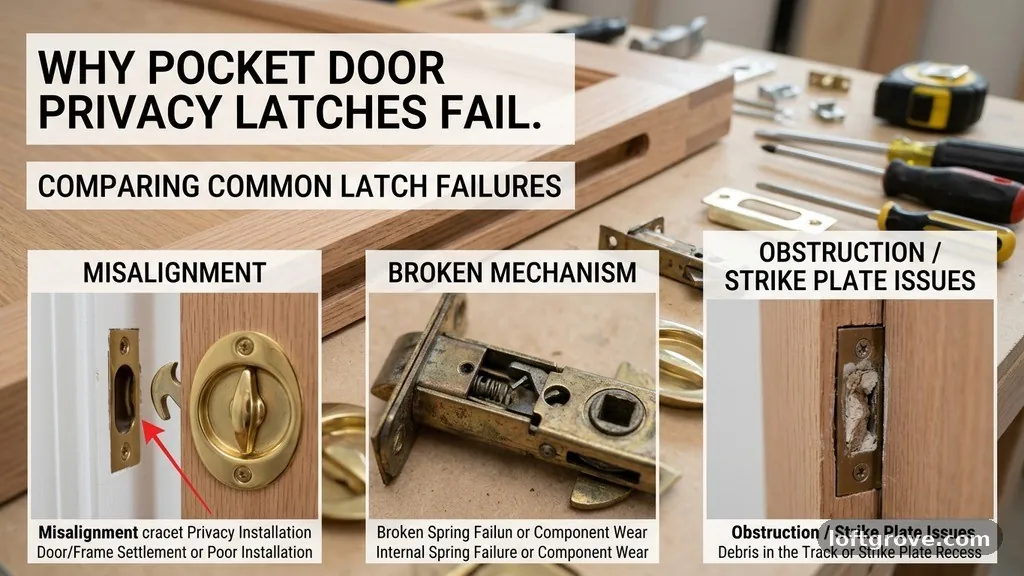
Understanding why specific types of failures occur helps in selecting the right repair strategy. The following table illustrates common symptoms and their likely causes.
| Symptom | Primary Cause | Recommended Fix |
|---|---|---|
| Hook hits the faceplate | Vertical misalignment | Adjust hanger wheels |
| Hook extends but doesn’t catch | Gap is too wide | Shim the strike plate |
| Latch feels loose/mushy | Internal spring failure | Replace the lockset |
| Door stops before reaching plate | Obstructed track | Clean debris from track |
When to Replace the Hardware
Sometimes, the most efficient solution is to replace the entire privacy latch assembly. Older hardware often lacks the precision of modern designs, making it prone to these specific failures.
If you find that the internal mechanism is worn out, or if the finish has corroded to the point where the parts are binding, replacing it is worth the effort. Modern kits are designed to be more forgiving, often featuring adjustable strike plates that allow for easier fine-tuning.
Before buying new hardware, measure the thickness of your door and the depth of the pocket cavity. Pocket door locks come in specific sizes, and a mismatch will lead to even more frustration.
You should look for models that offer a “floating” or adjustable strike plate, as these provide the most flexibility for older houses where the door frame might not be perfectly square. Always keep the original cutout dimensions in mind, as modifying a door panel to fit a larger lock can be difficult and time-consuming.
Professional Installation Considerations
If you have tried adjusting the door height and the stop bumper without success, the problem might be structural. In some homes, the wall cavity itself is not plumb, meaning the door will never hang perfectly straight.
A professional carpenter can assess the wall structure and determine if the track needs to be re-leveled. This is a significant task that involves removing the wall casing and potentially the header, so it should be a last resort.
If you decide to hire a professional, ask them to check the “pocket” integrity. Sometimes the internal floor guide is missing, allowing the bottom of the door to swing freely. A missing floor guide can cause the door to move away from the strike plate every time you try to lock it.
Fixing the bottom guide is often a simple task that restores the lateral stability of the door. A stable door is almost always a functional door.
Preventative Maintenance Tips
To keep your pocket door privacy latches from failing, you should incorporate simple maintenance into your household routine. Here are a few steps to ensure long-term reliability:
- Periodically vacuum the floor track to prevent debris buildup.
- Check the hanger adjustment nuts once a year to ensure the door hasn’t sagged.
- Apply a light silicone-based lubricant to the track wheels for smoother operation.
- Tighten the screws on the strike plate and the door handle assembly.
- Inspect the rubber bumper for wear and replace it if it becomes compressed.
Following these steps will prevent the most common mechanical issues. By addressing minor alignment problems before they become major binding issues, you save yourself significant time and effort. Keeping the door operating smoothly is the best way to ensure the locking hook always finds its target.
Frequently Asked Questions
Why does my pocket door lock only work when I lift the handle?
This is a classic sign that the door has sagged on its track. When you lift the handle, you are manually forcing the door into the correct alignment so the hook can clear the strike plate. You need to adjust the hanger wheels at the top of the door to raise the panel to its proper height.
Can I move the strike plate to fix the alignment?
Yes, you can often move the strike plate, but it is usually better to adjust the door first. If you move the strike plate, you will have to fill the old screw holes and potentially chisel out a new recess in the wood. Only move the strike plate if the door itself is perfectly level and the hook still misses the opening.
What should I do if the hook hits the wood instead of the plate?
This indicates that the door is closing too far into the pocket. You need to install a thicker bumper or adjust the existing door stop. If the door goes past the strike plate, the hook will strike the wood trim behind the door frame, which will eventually damage the finish and the wood.
Are all pocket door privacy locks the same size?
No, there is no universal standard for pocket door hardware dimensions. You must measure the cutout in your door panel before purchasing a replacement. Always look for the technical specifications or a template provided by the manufacturer to ensure the new lock will fit the existing hole.
Is it normal for a pocket door to rattle when locked?
A slight amount of movement is common, but it should not rattle significantly. If it does, the hook is likely not seating deeply enough behind the strike plate lip. This usually means the gap between the door and the jamb is too large, which can be fixed by shimming the strike plate toward the door.
Conclusion
Addressing why pocket door privacy latches fail to catch the strike plate requires a systematic approach to identifying alignment issues. Most problems stem from the door sagging on its track or the internal bumper failing to stop the door at the correct position. By using simple diagnostic tests like the lipstick or chalk method, you can pinpoint exactly where the hook is missing its mark.
Once you understand the relationship between the door’s vertical position and the strike plate’s location, you can make the necessary adjustments to restore full functionality. Regular maintenance and periodic checks of the hanger hardware will help prevent these issues from returning, ensuring your privacy remains secure whenever you need it.