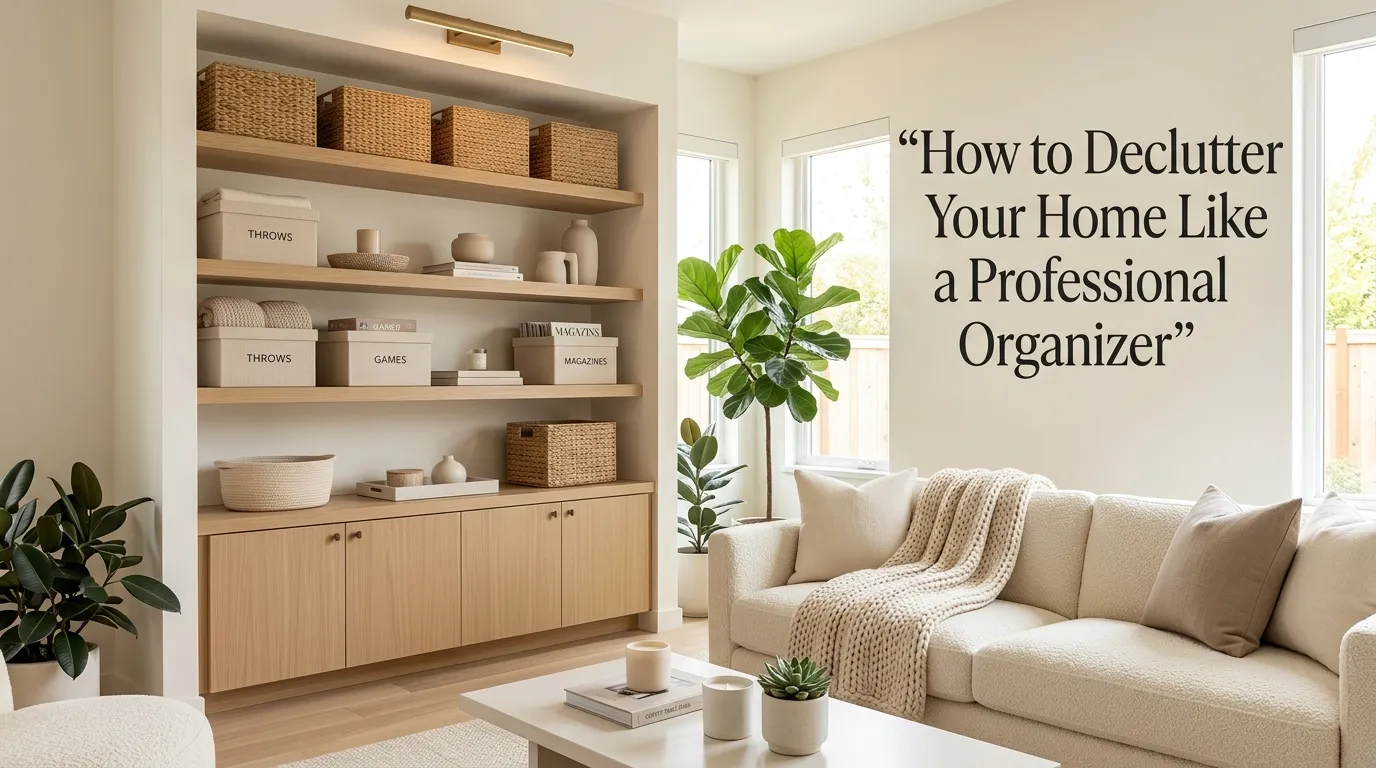
How to Declutter Your Home Like a Professional Organizer
Decluttering your home can feel overwhelming when every room seems to contain too many things. The hardest part isn’t always deciding what to throw away. It’s knowing where to start, what to keep, and how to prevent the clutter from returning.
Professional organizers approach clutter differently. Instead of trying to clean everything at once, they create a system for making decisions, grouping belongings, assigning homes, and maintaining the results.
The good news is that you can use many of the same principles in your own home without buying expensive organizing products.
In my experience, the biggest breakthrough happens when you stop thinking of decluttering as a giant cleaning project and start treating it as a series of small decisions. A kitchen drawer, bathroom cabinet, closet shelf, or entryway basket can be completed in a short session.
It’s also important to avoid organizing things you don’t actually need. Beautiful containers won’t solve the underlying problem if they’re simply holding items you rarely use. Decluttering comes before organizing.
A professional-looking home doesn’t have to be perfectly minimalist. The goal is to create a home where the things you use and love are easy to find, easy to put away, and not buried beneath unnecessary belongings.
These practical strategies can help you work through your home systematically, make confident decisions, and create a clutter-free environment that is easier to maintain.
Table of Contents
1. Start With One Small Area
Build momentum without feeling overwhelmed.
2. Create Four Sorting Categories
Make decisions faster and more consistently.
3. Remove Items You Never Use
Focus on usefulness rather than guilt.
4. Declutter by Category
See how much you actually own.
5. Give Everything a Home
Make putting things away easier.
6. Use the Container Principle
Prevent storage spaces from overflowing.
7. Tackle High-Clutter Zones
Focus your energy where it matters most.
8. Create a Paperwork System
Reduce everyday paper buildup.
9. Finish With a Donation Box
Make unwanted items leave the house.
10. Build a Simple Maintenance Routine
Keep clutter from returning.
1. Start With One Small Area
Quick Benefits
- Reduces overwhelm
- Creates quick progress
- Builds confidence
- Makes decisions easier
- Prevents unfinished projects
Why It Works
One of the biggest mistakes people make when decluttering is trying to tackle an entire home at once.
Pulling everything out of multiple rooms can create more mess than you started with. Professional-style decluttering works better when you create a defined area and finish it before moving on.
How To Style It
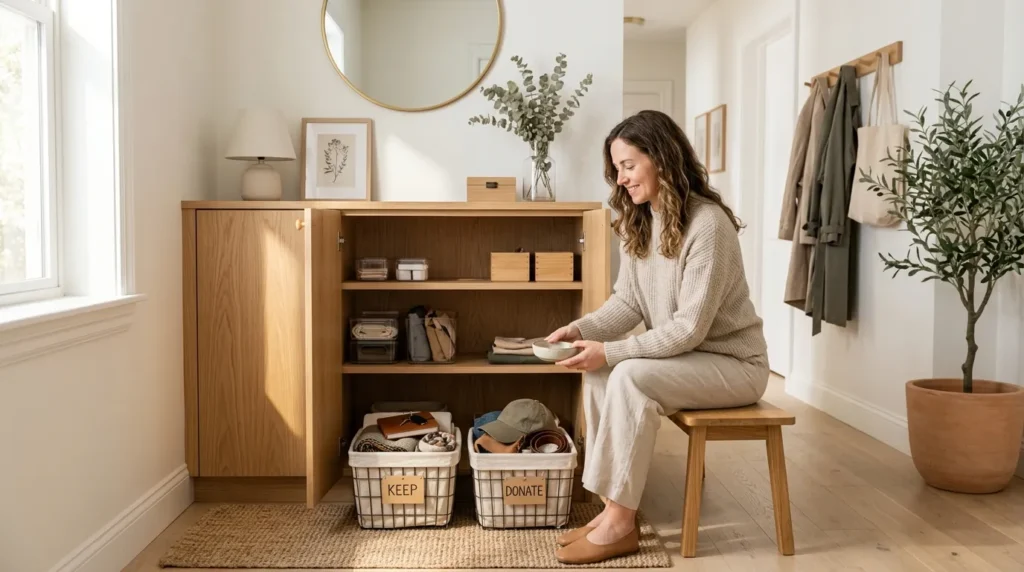
Choose something small enough to complete in one session: a bathroom drawer, nightstand, kitchen cabinet, entryway shelf, or one section of a closet.
Remove the items, clean the space, sort them, and put back only what belongs there. Finishing one small area gives you a visible result and creates momentum for the next project.
2. Create Four Sorting Categories
Quick Benefits
- Simplifies decisions
- Creates a clear workflow
- Prevents random piles
- Makes progress visible
- Helps organize donations
Why It Works
Decluttering becomes much easier when every item has somewhere to go. Instead of creating an undefined “maybe” pile that lasts for weeks, use a simple sorting system.
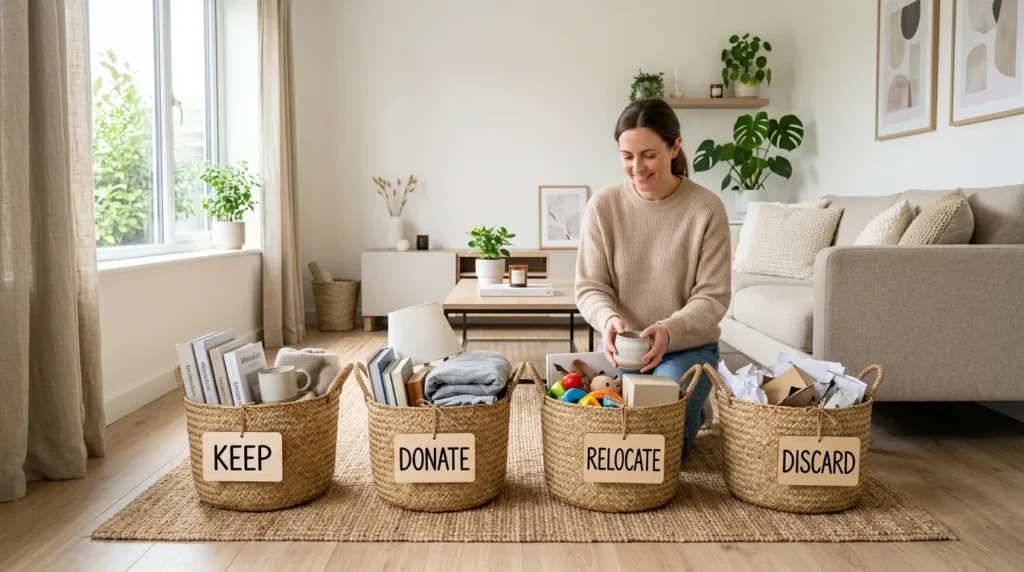
Four useful categories are keep, donate, relocate, and discard.
How To Style It
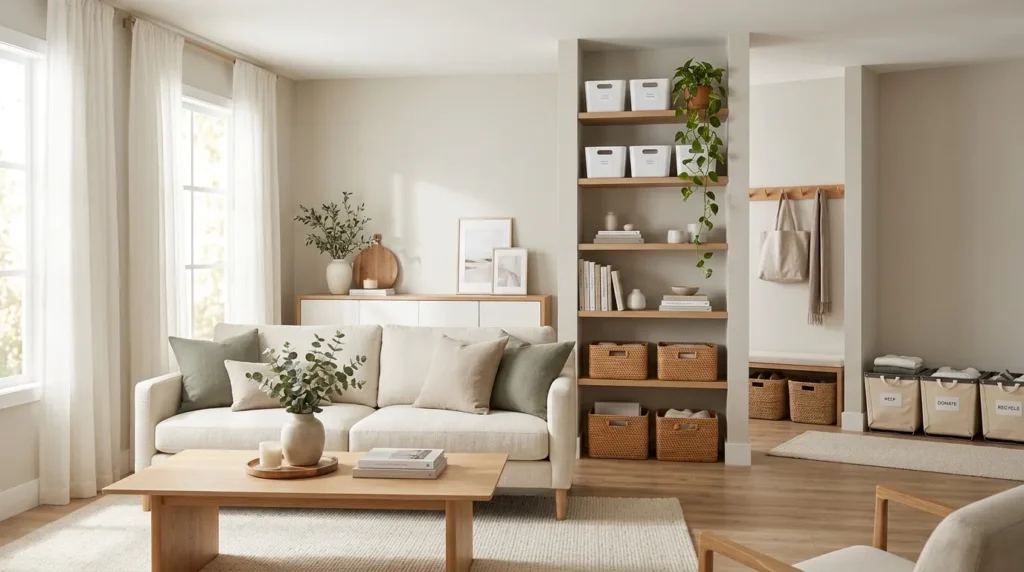
Use clearly marked boxes, bags, or designated areas for each category.
“Keep” items remain in the space, “donate” items leave your home, “relocate” items belong somewhere else, and “discard” items are no longer usable.
Try to make the decision before placing an item into a category. Avoid creating an enormous pile that you promise to sort later.
3. Remove Items You Never Use
Quick Benefits
- Creates more space
- Reduces visual clutter
- Makes storage easier
- Simplifies cleaning
- Makes useful belongings easier to find
Why It Works
Decluttering isn’t about throwing away everything you don’t use every day. Some seasonal, sentimental, or occasional items are worth keeping.
The problem is keeping large quantities of things that no longer serve a purpose.
How To Style It
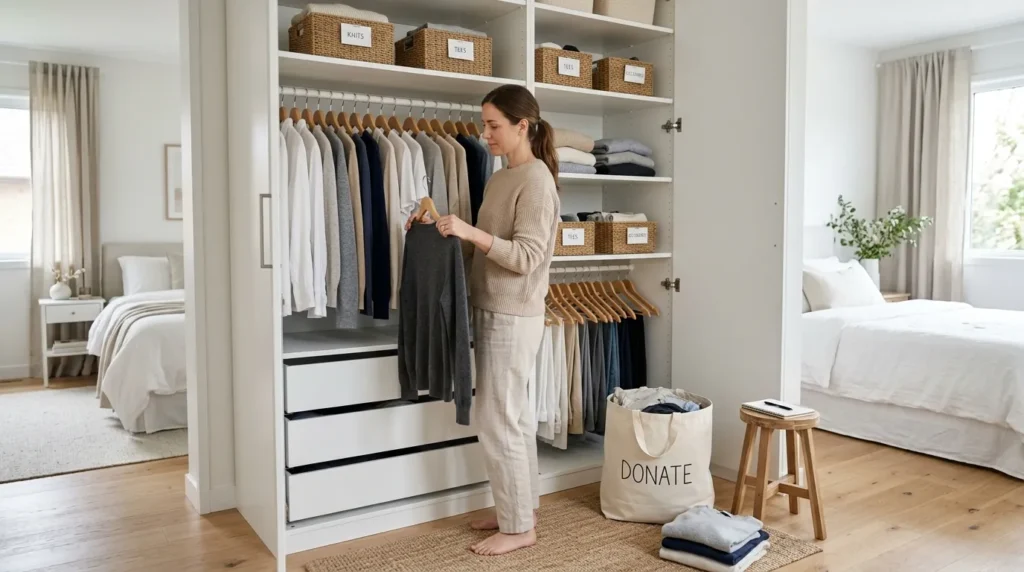
Ask yourself practical questions:
Do I use this?
Would I buy it again today?
Does it work properly?
Do I have something else that performs the same job?
Would I miss it if it were gone?
Be particularly careful with duplicates. Keeping one or two useful versions is often enough when you have accumulated many similar items.
4. Declutter by Category
Quick Benefits
- Reveals duplicates
- Makes comparison easier
- Creates better decisions
- Works throughout the house
- Reduces hidden clutter
Why It Works
Sometimes clutter remains invisible because similar items are scattered throughout different rooms.
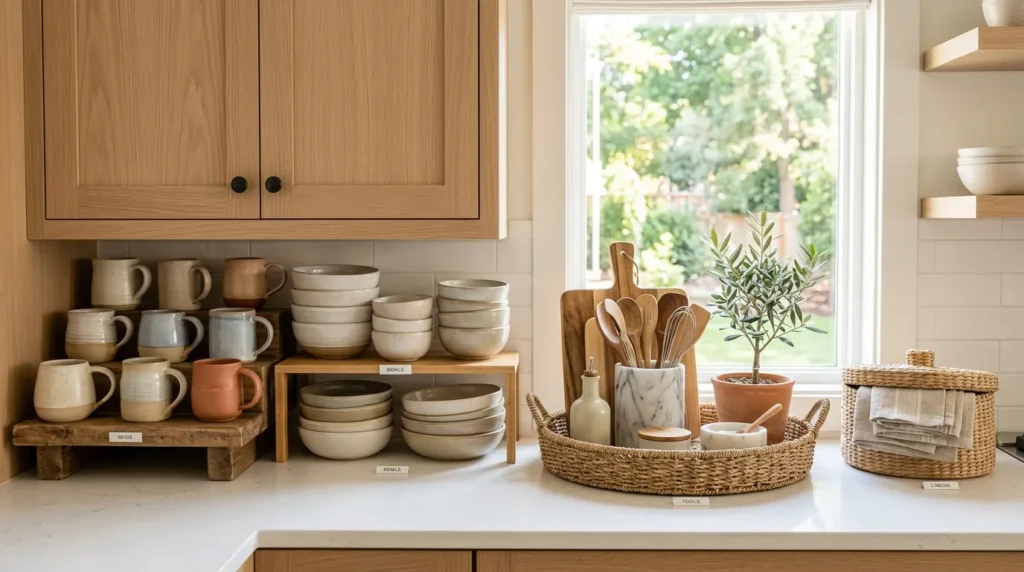
You might not realize you have too many candles, mugs, blankets, cleaning products, or tote bags until you see them together.
How To Style It
Instead of immediately cleaning one entire room, choose a category.
Gather similar belongings together and compare them. Keep the versions you genuinely prefer and need.
For larger categories, work in stages so the process remains manageable.
5. Give Everything a Home
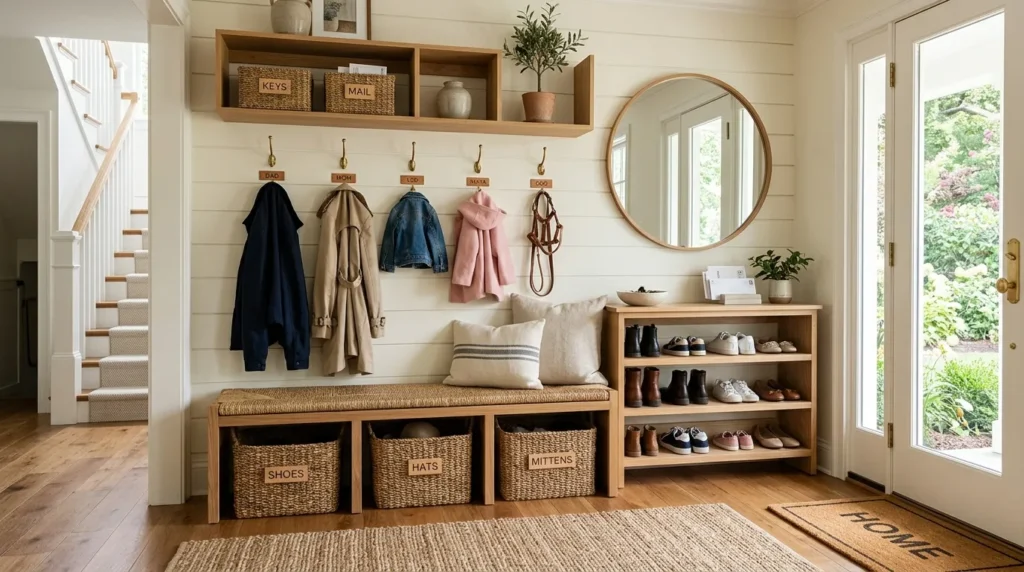
Quick Benefits
- Makes cleanup easier
- Reduces misplaced items
- Creates consistent routines
- Saves time
- Keeps surfaces clearer
Why It Works
Clutter often returns because items don’t have a logical place to go.
If something is difficult to put away, it’s likely to end up on a counter, chair, table, or floor.
How To Style It
Assign belongings based on how frequently and where you use them.
Everyday items should be easy to reach. Less frequently used belongings can go into higher cabinets, closets, or storage areas.
The best storage location is usually the one that makes putting something away almost effortless.
6. Use the Container Principle
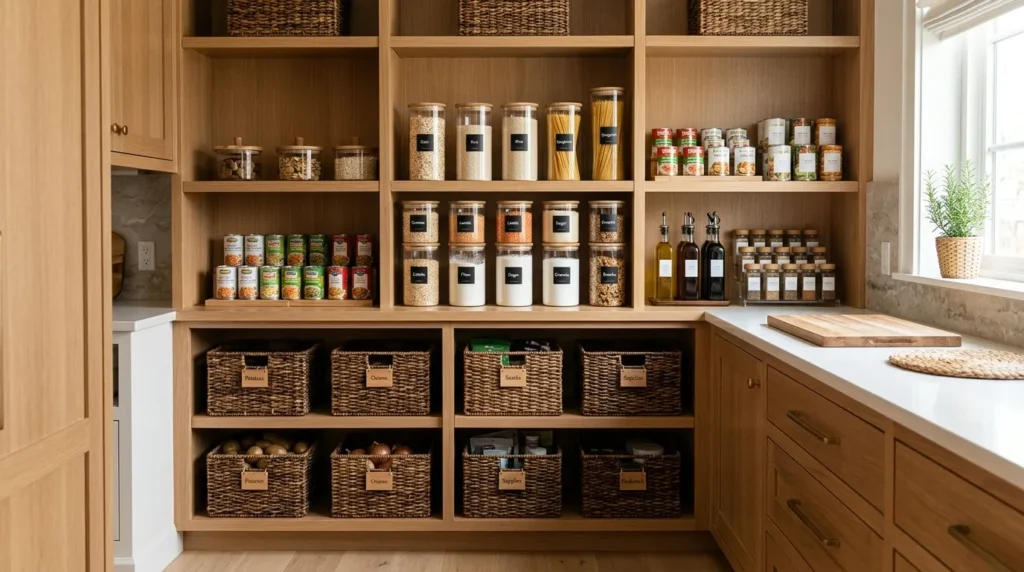
Quick Benefits
- Limits accumulation
- Makes storage predictable
- Prevents overflowing spaces
- Simplifies organizing
- Helps maintain boundaries
Why It Works
A container can act as a physical limit. Instead of allowing a category to expand indefinitely, you decide how much space it deserves.
For example, one basket can hold scarves, one drawer can hold kitchen towels, or one shelf can hold your collection of everyday mugs.
How To Style It
Choose the storage container after decluttering rather than before.
If the belongings don’t fit comfortably, don’t automatically buy a larger container. Reassess the quantity first.
This approach prevents the common cycle of purchasing more storage to accommodate more clutter.
7. Tackle High-Clutter Zones
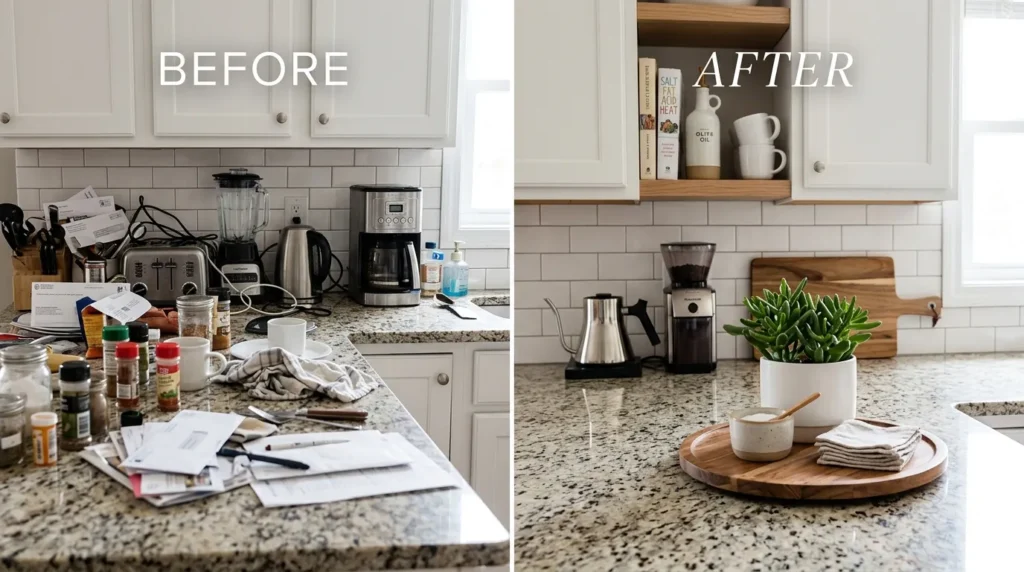
Quick Benefits
- Creates noticeable improvements
- Reduces daily frustration
- Improves household routines
- Makes the home feel calmer
- Provides quick visual results
Why It Works
Not every area deserves equal attention. Some spaces create much more daily frustration than others.
Entryways, kitchen counters, bathroom surfaces, closets, laundry areas, and junk drawers often have an outsized effect on how organized a home feels.
How To Style It
Identify the three areas that bother you most.
Start with the one that affects your daily routine the most. Once that space is functional, move to the next.
This creates practical improvements rather than simply producing a prettier storage closet.
8. Create a Paperwork System
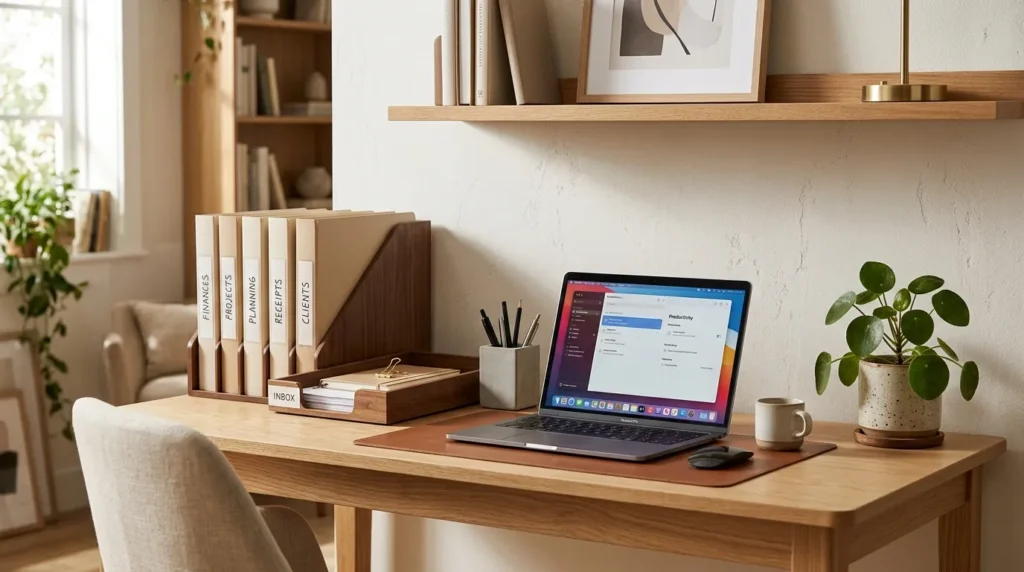
Quick Benefits
- Reduces paper piles
- Makes important documents easier to find
- Prevents duplicate paperwork
- Clears countertops
- Simplifies household administration
Why It Works
Paper clutter can accumulate quickly because individual pieces seem too small to deal with immediately.
Without a system, mail, receipts, forms, manuals, and documents can easily become one large pile.
How To Style It
Create designated categories for paperwork that you actually need to retain.
Use a simple inbox for incoming documents and process it regularly. Important records should be stored securely and according to your household’s needs.
Before keeping a paper document, ask whether the information can be accessed elsewhere or whether you genuinely need the physical copy.
9. Finish With a Donation Box
Quick Benefits
- Makes decluttering easier
- Prevents unwanted items from returning
- Creates a convenient exit system
- Encourages ongoing editing
- Keeps decisions moving
Why It Works
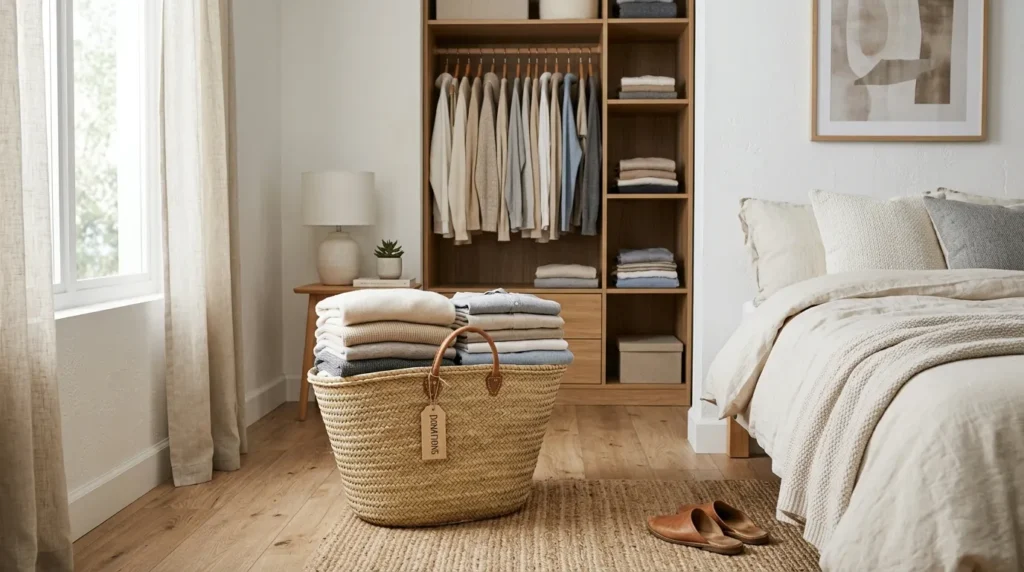
One of the biggest reasons decluttering projects stall is that unwanted belongings remain in the home after the decision has been made.
A donation box creates a temporary holding point, but the important step is actually getting those items out.
How To Style It
Keep a designated donation bag or box in an accessible location.
Whenever you discover something you no longer need, place it inside. Once the container is full, schedule a drop-off or pickup rather than allowing the box to become permanent storage.
For damaged or unusable belongings, determine the appropriate disposal or recycling option instead of automatically donating them.
10. Build a Simple Maintenance Routine
Quick Benefits
- Prevents major clutter buildup
- Takes less time
- Creates consistency
- Makes cleaning easier
- Reduces future decluttering sessions
Why It Works
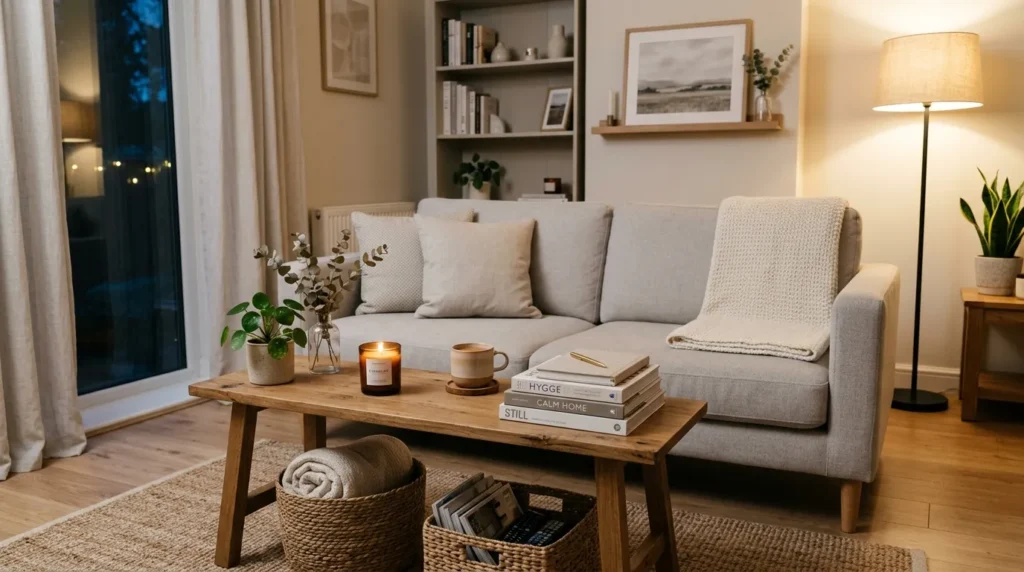
Decluttering once can make your home look fantastic, but maintaining that result is what makes the biggest difference.
A simple routine prevents small amounts of clutter from becoming another overwhelming project.
How To Style It
Spend a few minutes each day returning misplaced items to their homes.
Once a week, reset the highest-traffic areas. Every few months, quickly review categories that tend to accumulate, such as clothing, paperwork, pantry items, bathroom products, and children’s belongings.
Think of decluttering as ongoing editing rather than a one-time event.
Frequently Asked Questions
What is the best way to start decluttering a home?
Start with one small, defined area rather than an entire room. A drawer, shelf, cabinet, or nightstand can give you a quick win and help build momentum.
What should I get rid of first when decluttering?
Start with obvious trash, broken items, expired products, unusable belongings, and duplicates. These decisions are usually easier than sentimental categories.
Should I organize or declutter first?
Declutter first. Organizing belongings you don’t actually need simply creates a more attractive storage system for clutter.
How do professional organizers decide what to keep?
They typically focus on usefulness, frequency of use, available space, sentimental value, and whether an item genuinely supports the household. The exact decision depends on the individual and the purpose of the belongings.
How do I declutter without getting overwhelmed?
Work in short, focused sessions and choose one small area at a time. Avoid emptying multiple rooms simultaneously, and create clear categories for everything you remove.
How often should I declutter my home?
There is no universal schedule. A quick daily reset, weekly maintenance, and occasionalcategory reviews can prevent clutter from becoming overwhelming.
Conclusion
Decluttering your home like a professional organizer isn’t about creating an empty house.
It’s about making thoughtful decisions about what deserves your space.
Start small. Sort belongings into clear categories. Remove what is broken, unused, duplicated, or no longer appropriate for your life. Then give the things you keep a logical home.
One of the most useful lessons is to declutter before buying storage. Containers can help maintain an organized home, but they can’t solve an excess-of-stuff problem.
Focus your energy on the areas that affect your daily life most. A clear kitchen counter, organized entryway, manageable closet, or tidy bathroom can make your entire home feel calmer.
And remember that organization isn’t a finish line.
Homes naturally accumulate mail, purchases, laundry, toys, paperwork, and everyday belongings. The goal isn’t permanent perfection. It’s creating simple systems that make it easier to reset your home when life gets busy.
With a little consistency, decluttering becomes less of a massive project and more of a normal part of caring for your home.