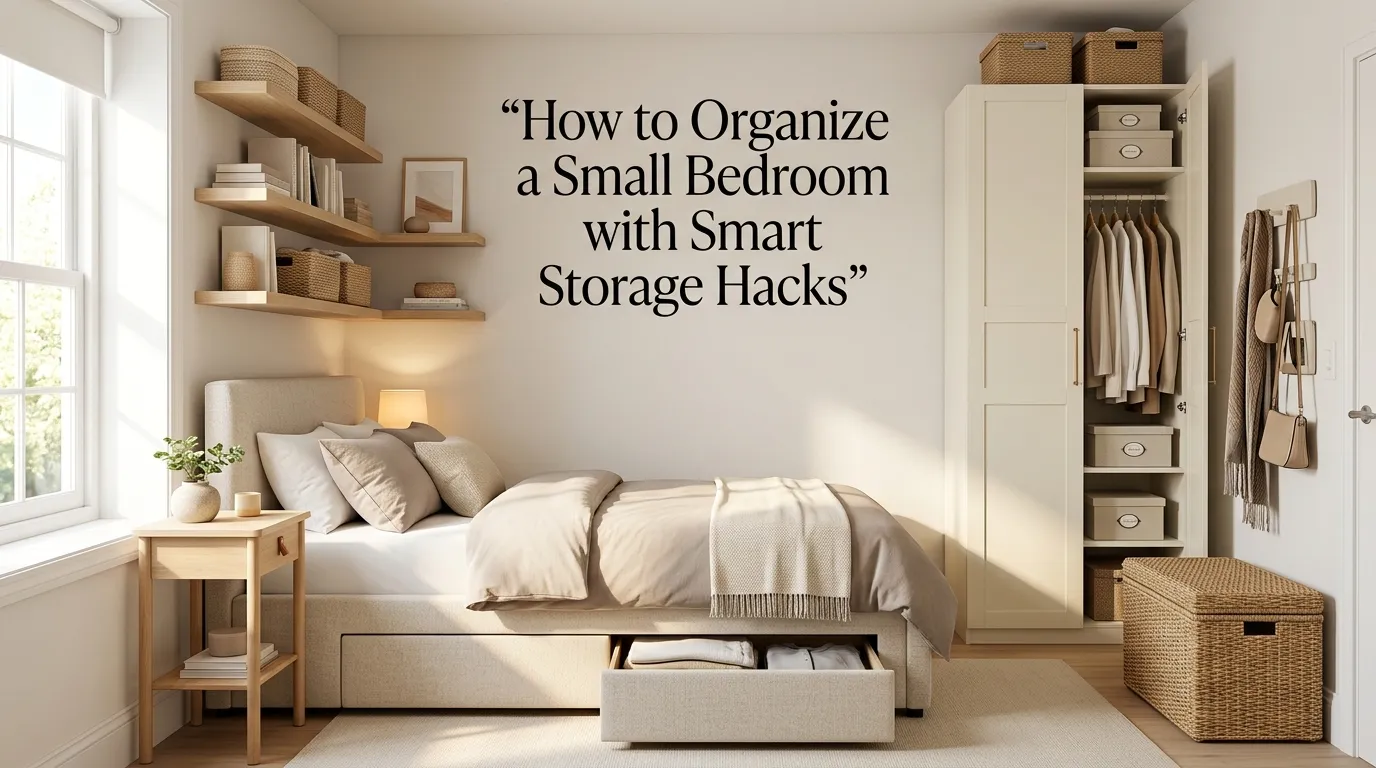
How to Organize a Small Bedroom with Smart Storage Hacks
A small bedroom can become cluttered quickly. When floor space is limited, even a few extra clothes, books, shoes, or everyday items can make the entire room feel crowded.
The solution isn’t necessarily adding more furniture. In a compact bedroom, smart storage is about using the space you already have more efficiently.
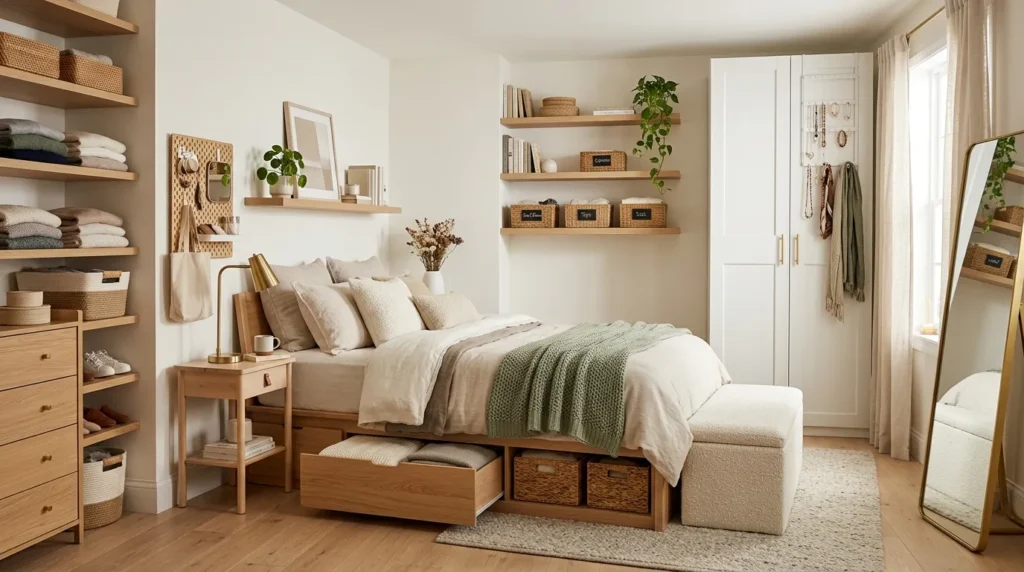
Think vertically. Use the backs of doors, the space beneath the bed, empty wall areas, and overlooked corners. Choose furniture that performs more than one job, and keep everyday belongings within easy reach while moving less frequently used items into harder-to-access storage.
In my experience, the biggest improvement comes from combining decluttering with intentional storage. Buying containers before deciding what you actually need can make a small bedroom even more crowded. First edit your belongings, then choose storage solutions based on what remains.
It’s also important to make the room feel visually calm. Open shelving can be useful, but too many visible objects create visual noise. Closed baskets, under-bed containers, and coordinated storage can help keep necessary belongings organized without making the bedroom feel busy.
Whether you’re working with a tiny apartment bedroom, a guest room, a narrow space, or a bedroom without a large closet, these practical storage hacks can help you make better use of every available inch.
Table of Contents
1. Use Under-Bed Storage
Turn overlooked floor space into valuable storage.
2. Add Over-the-Door Organizers
Use the back of the door for everyday items.
3. Install Floating Shelves
Use vertical space without taking up floor area.
4. Choose a Storage Bed
Combine sleeping space with hidden storage.
5. Use Slim Nightstands
Keep essentials organized in a small footprint.
6. Create a Vertical Clothing Zone
Make better use of limited closet space.
7. Add Hooks to Empty Walls
Turn unused wall space into practical storage.
8. Use Matching Storage Baskets
Hide clutter while keeping essentials accessible.
9. Maximize Closet Corners
Turn awkward areas into functional storage.
10. Keep a Clutter-Free System
Make organization easier to maintain.
1. Use Under-Bed Storage
Quick Benefits
- Uses otherwise wasted space
- Keeps seasonal items contained
- Doesn’t reduce walking space
- Works in rental bedrooms
- Helps organize bulky belongings
Why It Works
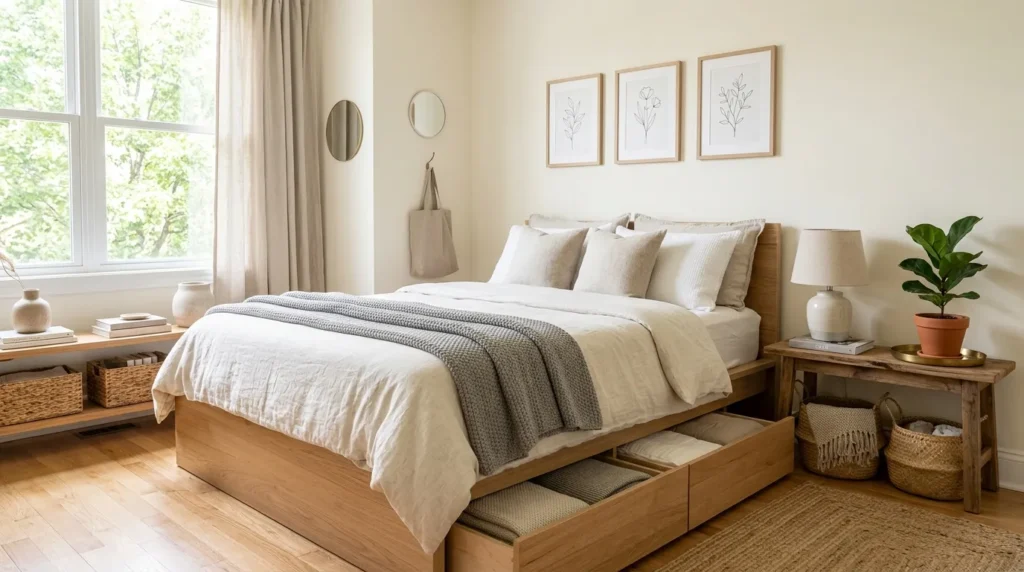
The area beneath your bed is often one of the largest unused storage zones in a small bedroom. Instead of allowing dust and miscellaneous items to collect there, turn the space into a deliberate storage area.
It’s especially useful for belongings you don’t need every day.
How To Style It
Use low-profile containers, zippered storage bags, or purpose-built under-bed drawers that fit your bed frame.
Store seasonal clothing, extra bedding, shoes, luggage, or other occasional-use belongings. Label containers so you don’t have to pull everything out when searching for one item.
2. Add Over-the-Door Organizers
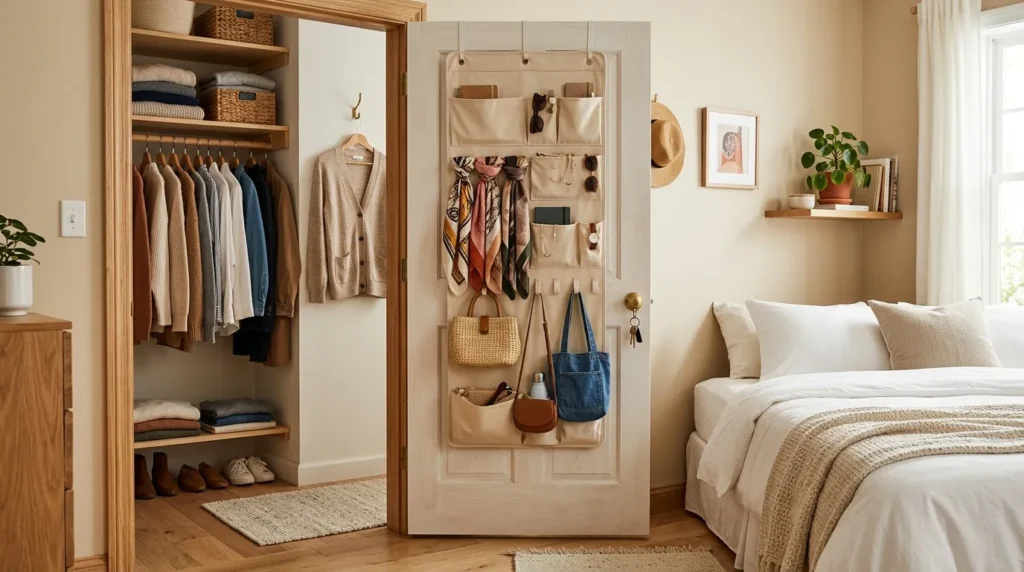
Quick Benefits
- Uses overlooked space
- Doesn’t require floor area
- Great for accessories
- Easy to access
- Helpful in small closets
Why It Works
The back of a bedroom door provides vertical space that is frequently ignored.
An over-the-door organizer can hold accessories, shoes, hair tools, small bags, cleaning supplies, or other lightweight belongings.
How To Style It
Choose an organizer that suits the door and the items you’re storing. Keep heavier belongings within the manufacturer’s recommended weight limits.
For a calmer appearance, use an organizer with pockets or compartments that keep small items contained rather than displaying everything openly.
3. Install Floating Shelves
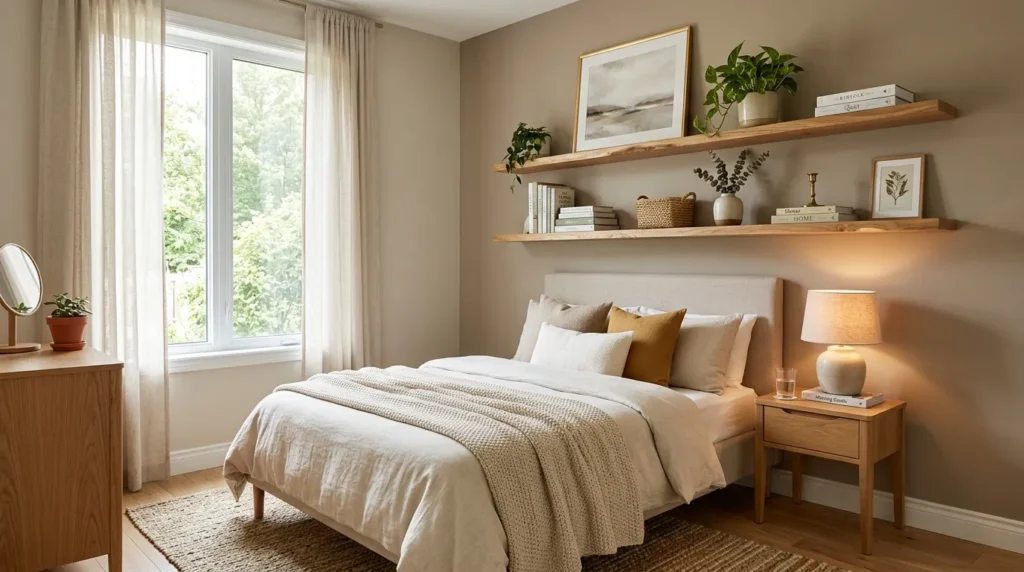
Quick Benefits
- Saves floor space
- Adds vertical storage
- Works beside beds
- Creates display space
- Useful for small rooms
Why It Works
Floating shelves provide storage without the footprint of a traditional bookcase or cabinet.
They can be installed above a desk, beside a bed, above a dresser, or in an empty wall corner.
How To Style It
Use shelves for books, small baskets, framed artwork, plants, and everyday accessories.
Avoid filling every inch. Leaving some empty space keeps the room feeling lighter and makes the storage look intentional.
Always use appropriate mounting hardware for the wall type and expected load.
4. Choose a Storage Bed
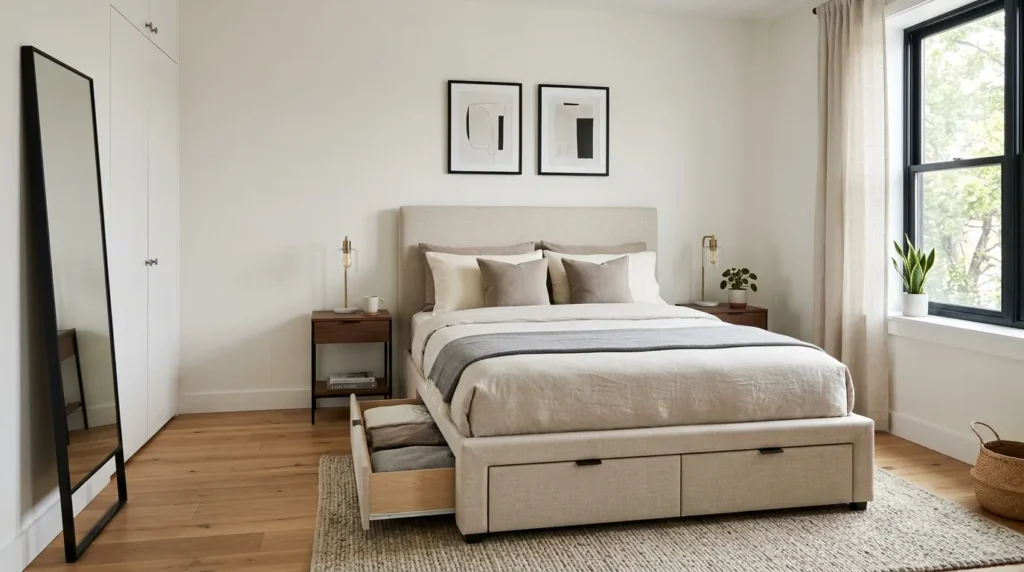
Quick Benefits
- Combines furniture functions
- Provides hidden storage
- Reduces the need for extra cabinets
- Keeps belongings contained
- Works especially well in tiny rooms
Why It Works
When floor space is limited, multifunctional furniture can make a major difference.
A bed with built-in drawers or a properly designed lift-up storage compartment can replace separate storage furniture.
How To Style It
Choose a storage bed that fits the room’s proportions. Drawer-style storage works particularly well when there is enough clearance beside the bed, while lift-up systems can provide access to a larger storage area.
Keep frequently used items elsewhere and reserve the bed storage for seasonal or occasional belongings when practical.
5. Use Slim Nightstands
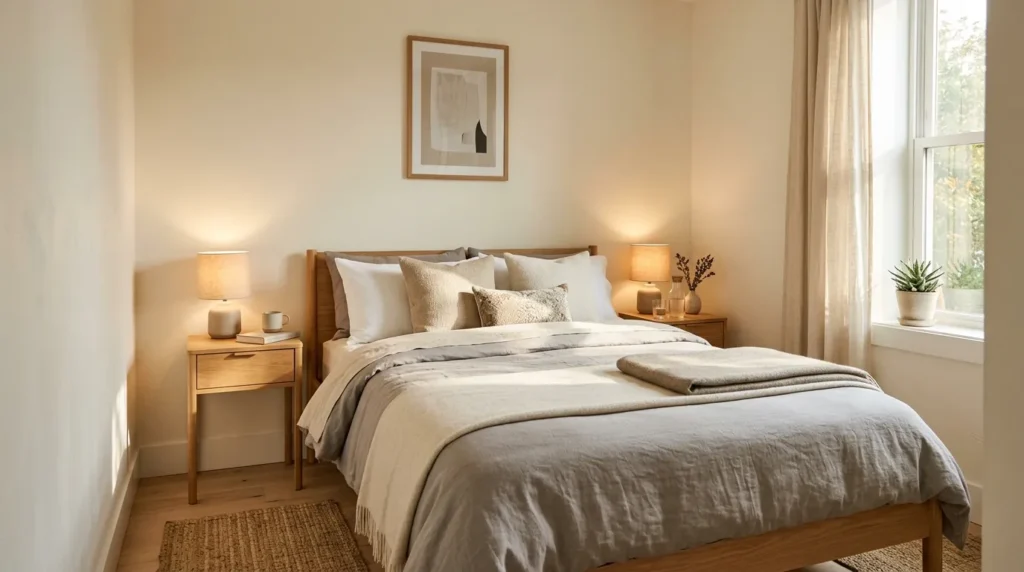
Quick Benefits
- Saves floor space
- Keeps essentials nearby
- Provides hidden storage
- Creates visual balance
- Works in narrow rooms
Why It Works
A bulky nightstand can consume valuable floor space in a small bedroom. A narrow bedside table or wall-mounted nightstand can provide the essentials without overwhelming the room.
How To Style It
Choose a compact nightstand with at least one drawer or shelf if you need concealed storage.
Keep only essentials on top: perhaps a lamp, book, small plant, or water glass. Store chargers, medications, and personal items inside rather than creating a crowded surface.
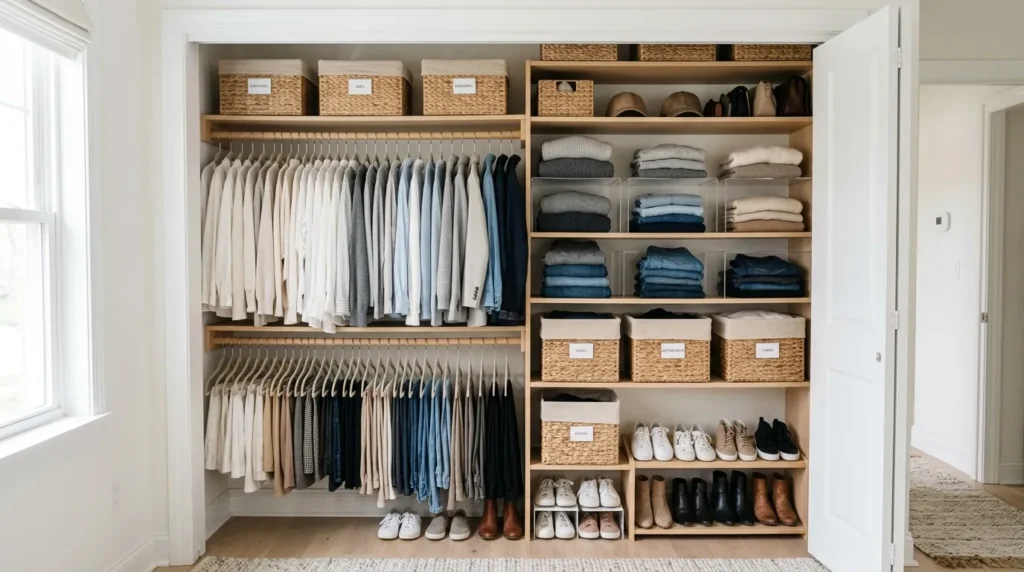
6. Create a Vertical Clothing Zone
Quick Benefits
- Maximizes closet capacity
- Uses vertical space
- Makes clothing easier to see
- Reduces floor clutter
- Helps organize accessories
Why It Works
Closets often contain unused vertical space above hanging clothing or beneath shelves.
Using that space can significantly increase storage without expanding the closet itself.
How To Style It
Use shelf dividers, stackable bins, hanging organizers, or additional hanging rods where appropriate.
Group clothing by type or frequency of use. Keep everyday pieces at the easiest height to reach and place seasonal items higher up.
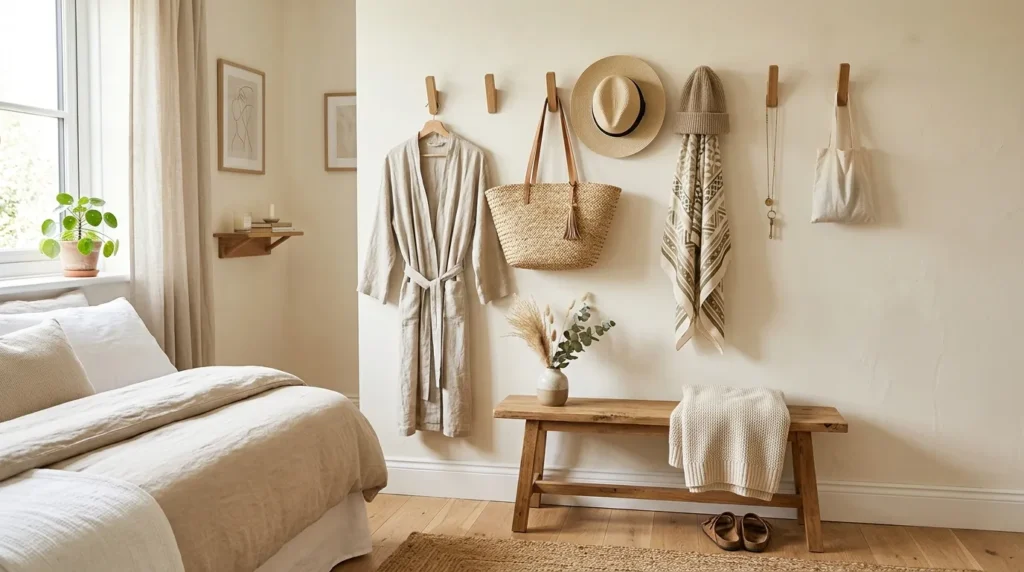
7. Add Hooks to Empty Walls
Quick Benefits
- Uses vertical space
- Keeps items off the floor
- Easy access
- Works in tiny bedrooms
- Inexpensive solution
Why It Works
Hooks are simple, but they’re incredibly effective in small rooms.
They can hold hats, robes, handbags, scarves, jewelry, headphones, or frequently used clothing.
How To Style It
Create a small hook zone near the closet, dresser, or bedroom door.
For a more intentional appearance, use matching hooks and keep the number limited. Avoid turning the wall into a permanent pile of clothing.
If you’re renting, use an appropriate removable solution only when it is actually rated for the wall surface and item weight.
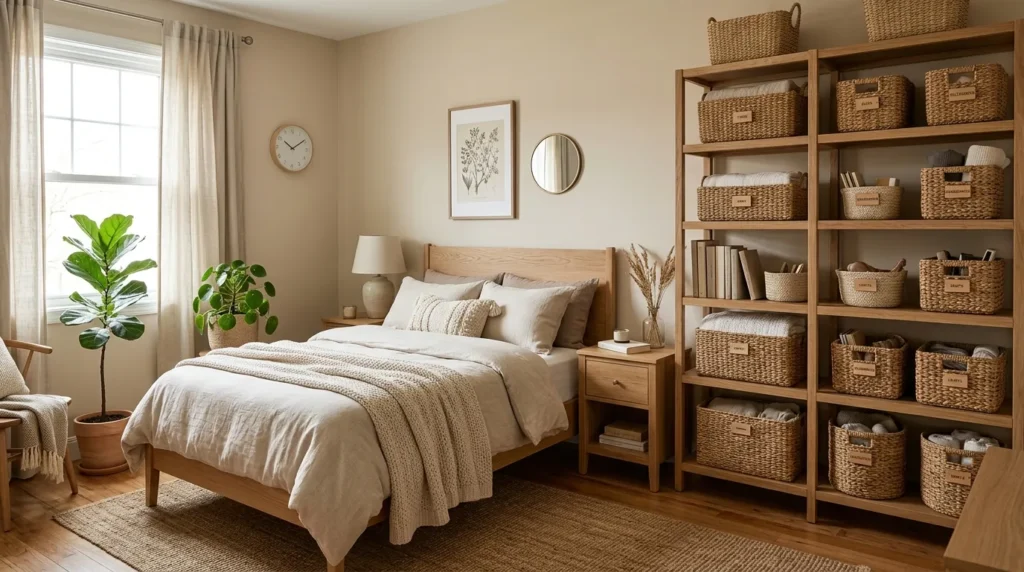
8. Use Matching Storage Baskets
Quick Benefits
- Conceals clutter
- Creates visual consistency
- Makes shelves easier to maintain
- Adds texture
- Works throughout the room
Why It Works
Open storage can make a small bedroom look cluttered even when everything is technically organized.
Baskets provide a simple way to hide smaller belongings while keeping them accessible.
How To Style It
Use similar baskets in a consistent color or material to create a calmer appearance.
Label them if necessary, especially when storing items that aren’t used every day. Place the baskets on shelves, inside closets, beneath desks, or beside furniture.
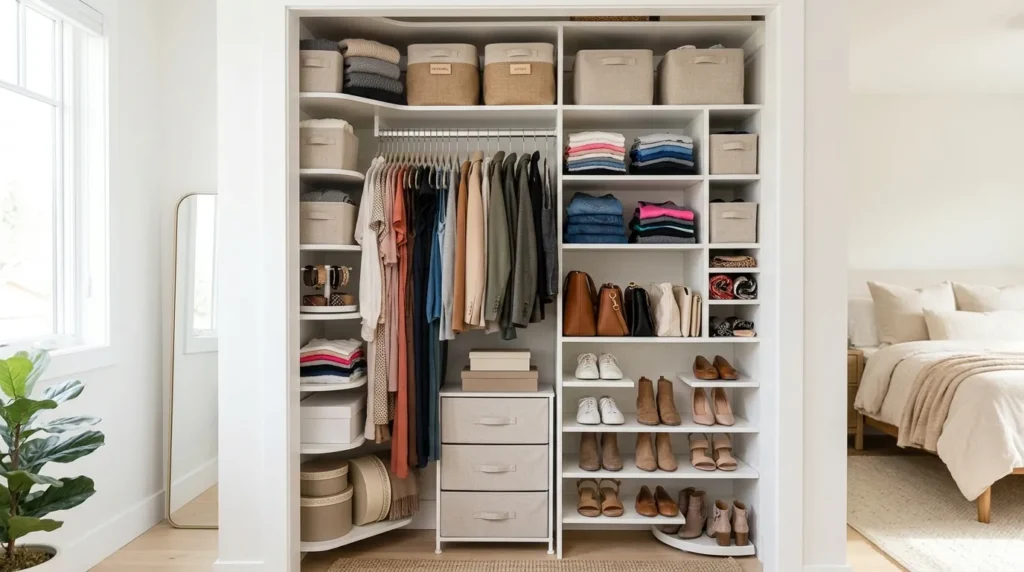
9. Maximize Closet Corners
Quick Benefits
- Uses awkward space
- Improves closet capacity
- Keeps belongings accessible
- Reduces floor clutter
- Makes small closets more functional
Why It Works
Small closets often have corners or narrow gaps that aren’t being used effectively.
A little planning can turn these spaces into useful storage for shoes, handbags, folded clothing, or accessories.
How To Style It
Use narrow shelves, corner organizers, hanging hooks, or appropriately sized bins.
Avoid forcing bulky storage into a tight area. The goal is to improve access rather than simply fill every available inch.
10. Keep a Clutter-Free System
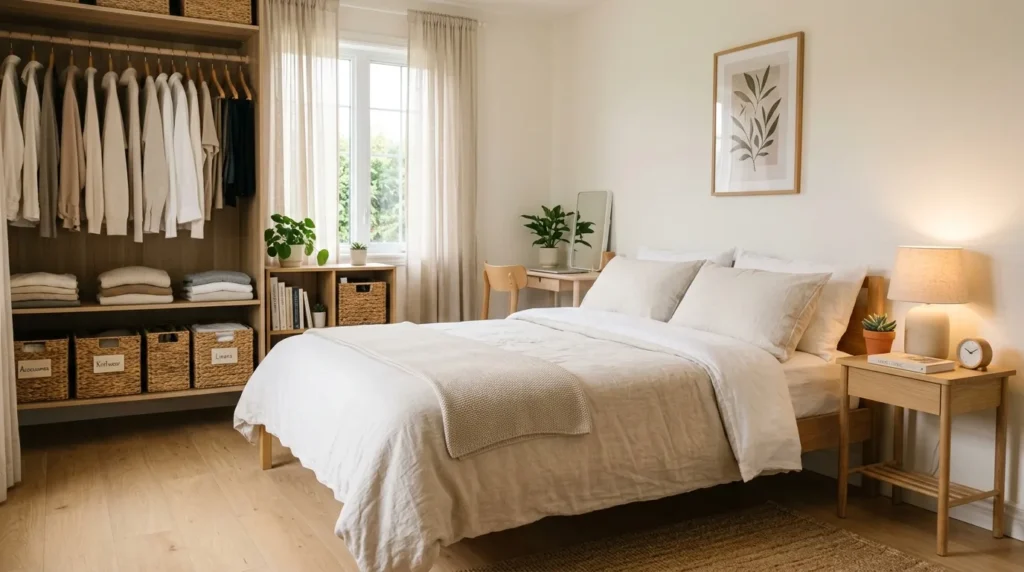
Quick Benefits
- Prevents storage from overflowing
- Makes cleaning easier
- Maintains visual calm
- Saves time
- Keeps the bedroom functional
Why It Works
The best storage system is one you can maintain.
If putting something away requires several steps, you’re more likely to leave it on the floor or furniture. Small bedrooms benefit from simple systems that make daily cleanup almost automatic.
How To Style It
Give everyday belongings a designated home and return them there regularly.
Use a small laundry basket, dedicated shoe area, bedside storage, and an easy-to-access place for frequently used accessories.
Every few months, review your storage and remove items you no longer use. Organization becomes much easier when the volume of belongings stays manageable.
Frequently Asked Questions
How do I organize a very small bedroom?
Start by decluttering items you don’t use, then prioritize vertical and hidden storage. Under-bed containers, floating shelves, hooks, slim furniture, and closet organizers can help maximize limited space.
How can I add storage without making my bedroom feel smaller?
Use storage that takes advantage of vertical or hidden areas. Floating shelves, under-bed drawers, wall hooks, and closed baskets can provide storage while keeping the floor relatively open.
What should I store under my bed?
Under-bed storage works well for seasonal clothing, extra bedding, shoes, luggage, and other items you don’t need every day. Keep items clean and protected in appropriate containers.
How do I organize a small bedroom without a big closet?
Use a combination of under-bed storage, a compact wardrobe or dresser, vertical clothing organizers, hooks, shelves, and carefully edited belongings.
Is open shelving a good idea for a small bedroom?
It can be, particularly for attractive or frequently used items. However, too many visible belongings can create visual clutter. Use baskets and containers to conceal smaller items.
How do I keep a small bedroom organized?
Give frequently used items easy-to-reach homes, return belongings after use, keep laundry contained, and regularly remove things you no longer need. A simple system is easier to maintain than a complicated one.
Conclusion
A small bedroom doesn’t need to feel cramped or chaotic.
The key is to use the space differently. Look beneath the bed, above furniture, behind doors, inside closet corners, and along empty walls. These overlooked areas can provide surprisingly valuable storage without taking away from the room’s limited floor space.
Multifunctional furniture can also make a major difference. A storage bed, slim nightstand, or compact wardrobe can perform several jobs while keeping the overall layout streamlined.
But remember that storage alone isn’t the answer.
Start by reducing what you actually need to store. Then choose organizing solutions based on your belongings rather than buying containers simply because they look attractive.
When every frequently used item has an easy-to-reach home, maintaining a small bedroom becomes much simpler.
The goal isn’t to squeeze more and more belongings into every available corner. It’s to create a room where everything you keep has a purpose and a place.