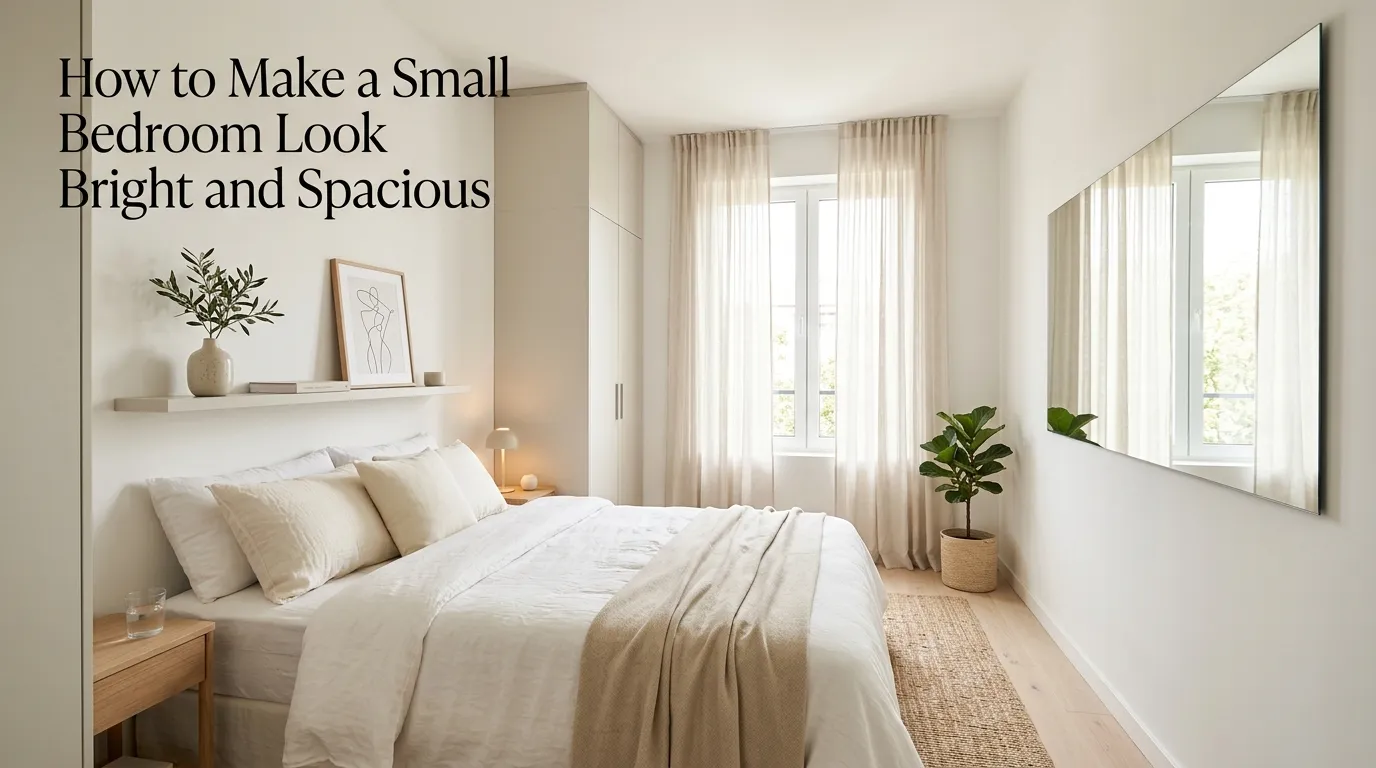
How to Make a Small Bedroom Look Bright and Spacious
A small bedroom can feel surprisingly open when you use the right colors, lighting, furniture, and layout. You don’t necessarily need to knock down walls or undertake an expensive renovation to make the room feel larger.
The key is to reduce visual weight and maximize light.
In my experience, the biggest difference often comes from a few simple changes: choosing a lighter color palette, keeping windows unobstructed, using appropriately scaled furniture, and taking advantage of vertical space. Even changing the way curtains are hung can make a small bedroom feel taller.
A bright bedroom should also feel comfortable rather than completely empty. The goal isn’t to remove everything you love. Instead, create enough visual breathing room that the furniture and décor don’t compete for attention.
Mirrors can help reflect available light, while glossy or reflective accents can add subtle brightness. Meanwhile, pale bedding, lightweight curtains, and uncluttered surfaces keep the eye moving around the room.
You can also make a small bedroom feel larger by creating consistency. When walls, bedding, curtains, and larger furniture pieces stay within a similar light color family, there are fewer visual interruptions.
Whether you’re decorating a tiny apartment bedroom, guest room, rental, or compact primary bedroom, these practical ideas can help you create a room that feels lighter, airier, and more spacious without changing its actual dimensions.
Table of Contents
1. Choose Light Wall Colors
Create a brighter visual foundation.
2. Maximize Natural Light
Make every available ray of sunlight count.
3. Hang Curtains Higher
Create the illusion of taller ceilings.
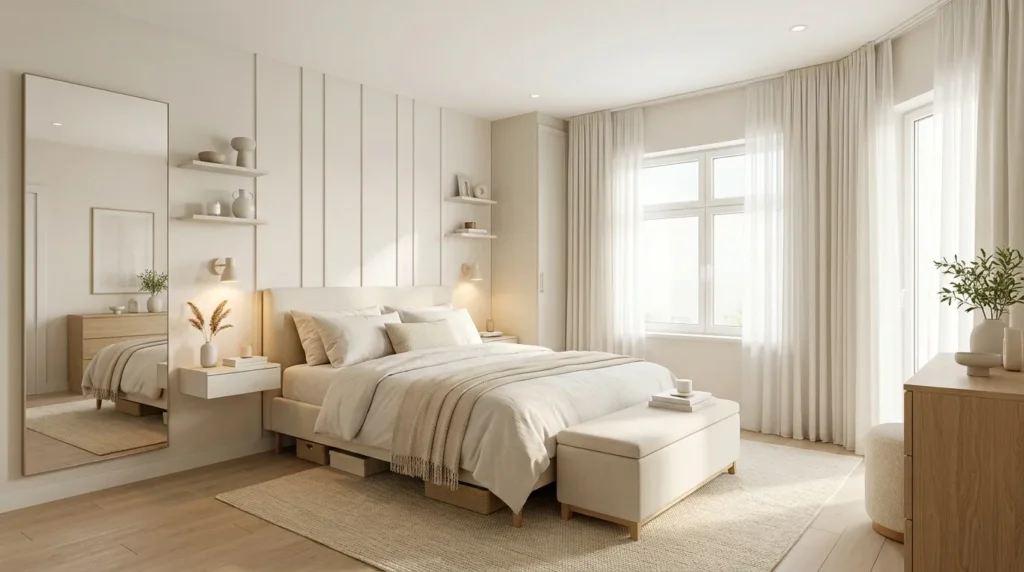
4. Add a Large Mirror
Reflect light and expand the visual space.
5. Choose Light Bedding
Keep the largest visual element feeling airy.
6. Use Slim Furniture
Protect valuable floor space.
7. Keep the Floor Visible
Make the room feel less crowded.
8. Use Vertical Storage
Move storage upward instead of outward.
9. Reduce Visual Clutter
Create breathing room throughout the bedroom.
10. Layer Soft Lighting
Keep the room bright after sunset.
1. Choose Light Wall Colors
Quick Benefits
- Reflects more available light
- Creates visual openness
- Makes the room feel calmer
- Works with many decorating styles
- Provides a versatile backdrop
Why It Works
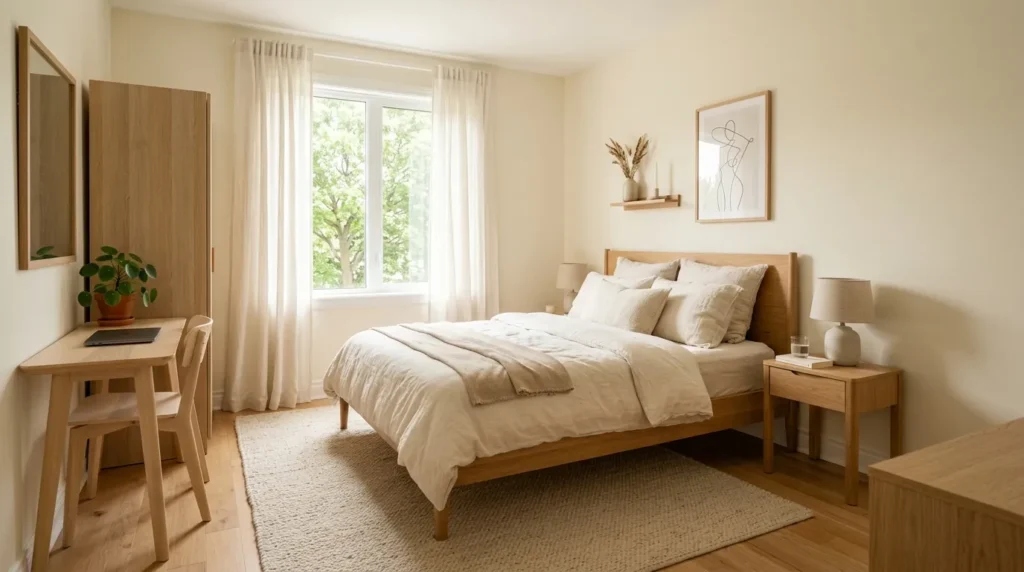
Wall color has a major influence on how spacious a bedroom feels. Lighter colors generally reflect more light and create fewer visual boundaries, especially when the room doesn’t receive much natural sunlight.
White isn’t the only option. Warm ivory, pale beige, soft greige, light taupe, and very subtle pastels can create a bright atmosphere without feeling stark.
How To Style It
Choose a light wall color that works with your natural lighting. In a north-facing or naturally darker bedroom, a warm undertone can prevent the space from feeling cold.
For an especially seamless look, coordinate the walls with light bedding and curtains rather than creating strong contrast between every surface.
2. Maximize Natural Light
Quick Benefits
- Makes the room feel brighter
- Creates visual depth
- Highlights light colors
- Improves the atmosphere
- Costs little or nothing
Why It Works
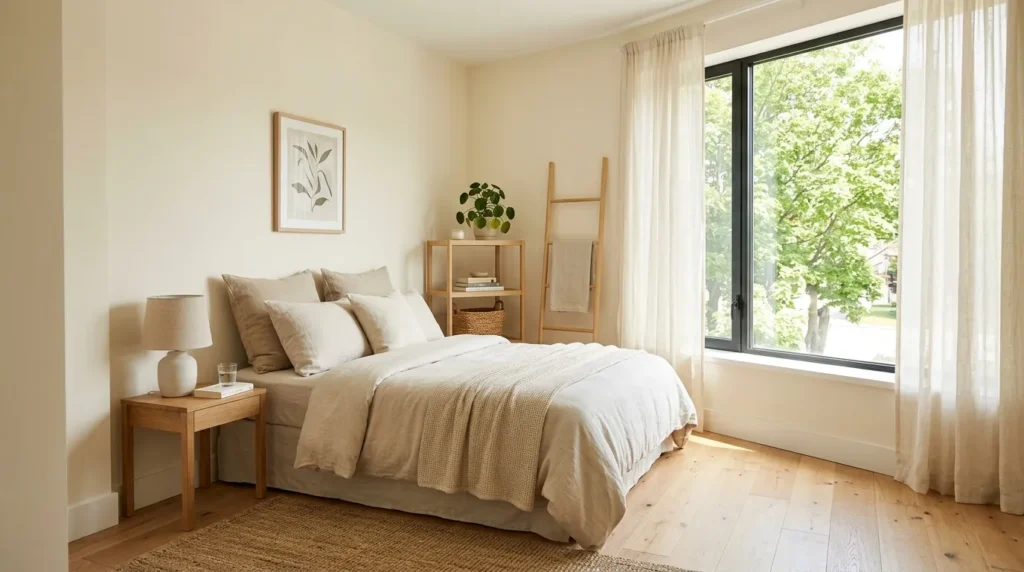
Natural light is one of the most effective tools for making a small room feel spacious.
Heavy curtains, bulky furniture, and objects placed directly in front of windows can block light and make the room feel darker.
How To Style It
Keep the area around the window relatively open. Choose lightweight curtains that allow daylight through while still providing privacy.
Clean the window regularly and avoid placing tall furniture where it blocks incoming light. If privacy allows, leave curtains open during the brightest parts of the day.
3. Hang Curtains Higher
Quick Benefits
- Makes ceilings appear taller
- Creates a more elegant look
- Adds softness
- Emphasizes vertical lines
- Helps windows feel larger
Why It Works
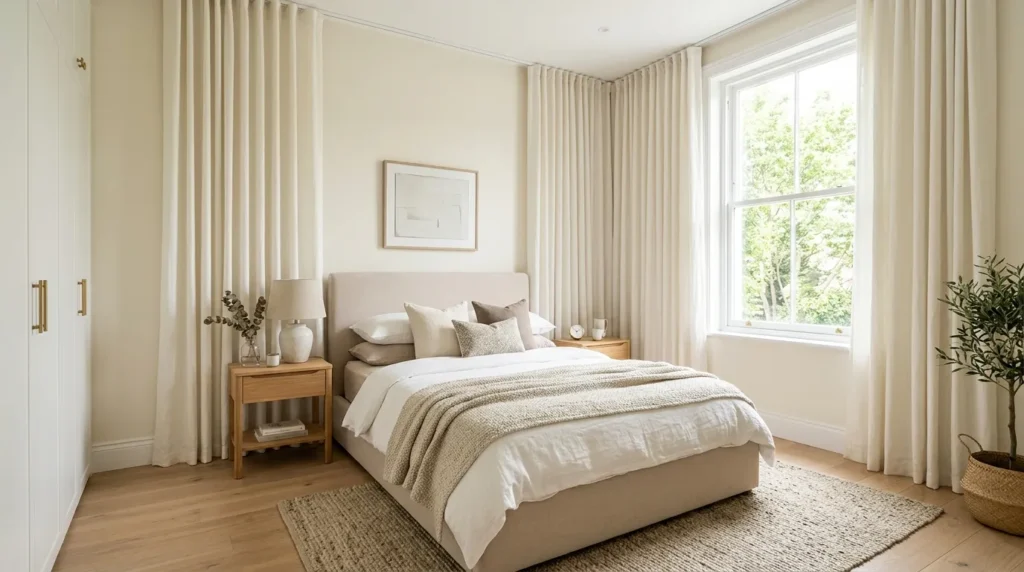
Curtain placement can change how you perceive the proportions of a bedroom.
Mounting the rod higher than the top of the window and allowing the fabric to extend toward the floor draws the eye upward.
How To Style It
Choose curtains that reach close to the floor and extend beyond the window frame where practical.
Lightweight linen-look or sheer fabrics can preserve brightness while adding softness. Avoid extremely heavy fabrics if your main goal is maximizing light.
4. Add a Large Mirror
Quick Benefits
- Reflects natural light
- Adds depth
- Makes walls feel more expansive
- Creates a decorative focal point
- Works in small rooms
Why It Works
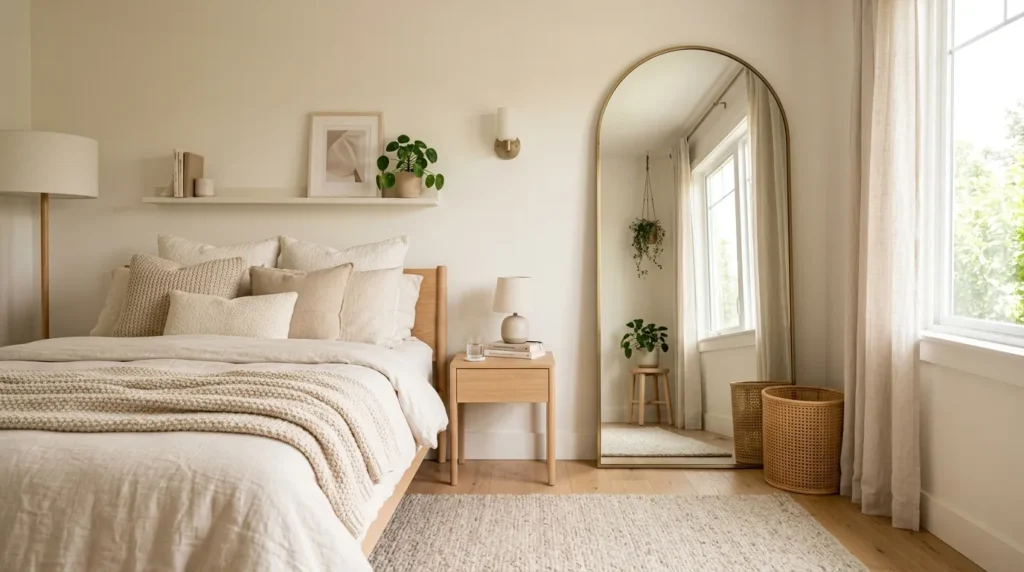
A mirror can visually extend a small bedroom by reflecting light and portions of the room.
The placement matters more than simply owning a mirror.
How To Style It
Place a mirror where it can reflect a window, light source, or visually attractive part of the room.
A tall mirror can emphasize vertical space, while a large horizontal mirror can make a narrow wall feel wider. Choose the shape based on your room’s proportions.
5. Choose Light Bedding
Quick Benefits
- Brightens the largest visual surface
- Creates a calm atmosphere
- Makes the bed feel less bulky
- Coordinates easily
- Highlights natural light
Why It Works
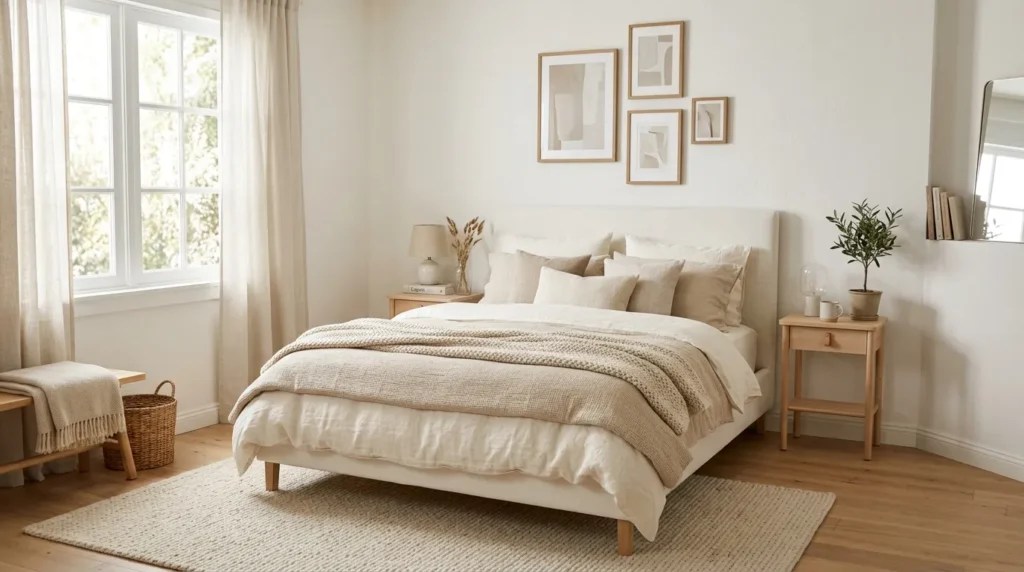
The bed is usually one of the largest objects in a bedroom, so its color can significantly affect the overall visual weight.
Dark or highly patterned bedding can make a small room feel more visually dense.
How To Style It
Try ivory, white, cream, pale beige, soft gray, or muted pastel bedding.
You can still add personality through subtle patterns and textures. Layer a lightweight throw or a few pillows without creating an oversized pile that visually overwhelms the bed.
6. Use Slim Furniture
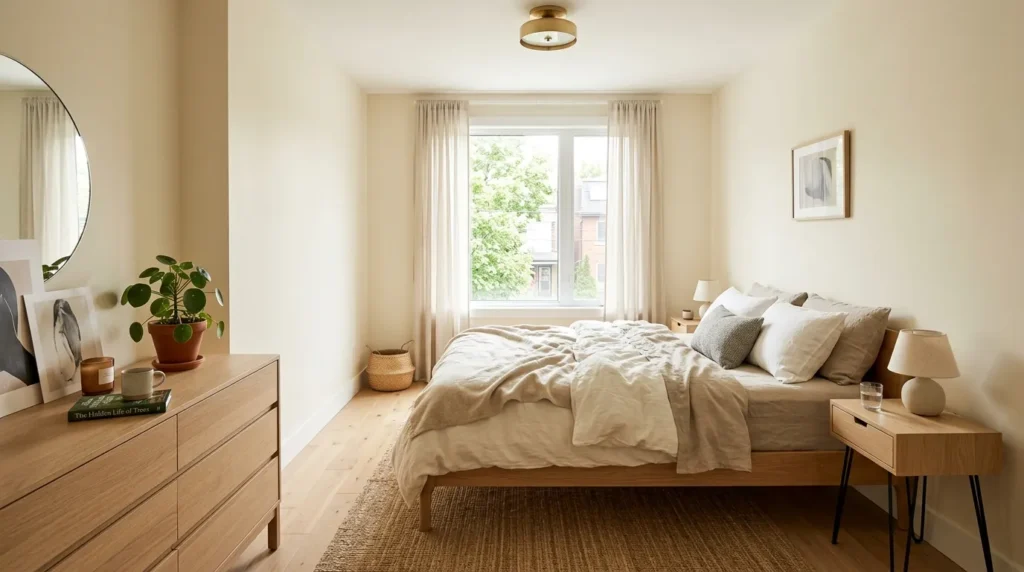
Quick Benefits
- Preserves floor space
- Improves movement
- Reduces visual bulk
- Makes the room feel more open
- Works well in narrow bedrooms
Why It Works
Furniture can consume more visual space than its actual footprint suggests.
A thick dresser or oversized nightstand may technically fit but still make the bedroom feel crowded.
How To Style It
Choose furniture with clean lines and appropriately scaled dimensions.
Consider narrow nightstands, streamlined dressers, wall-mounted shelves, or furniture with exposed legs. These designs allow more floor and wall area to remain visible.
Always measure before buying, including clearance for doors, drawers, and walking paths.
7. Keep the Floor Visible
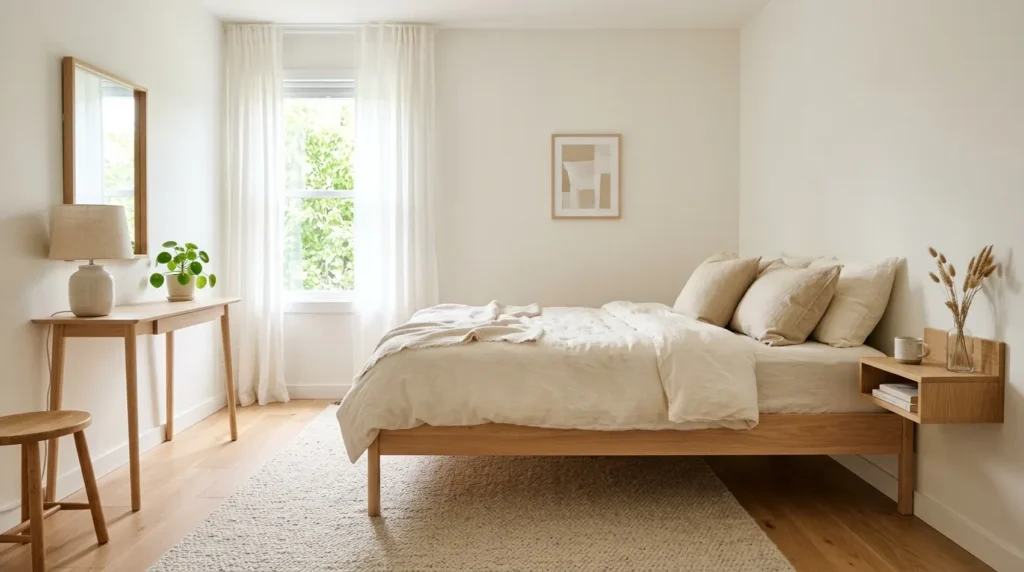
Quick Benefits
- Creates visual openness
- Improves circulation
- Makes furniture feel lighter
- Helps small rooms breathe
- Reduces clutter
Why It Works
The more visible floor you can maintain, the easier it is for the room to feel open.
Furniture that sits heavily on the floor can create a sense of visual density.
How To Style It
Choose furniture with legs when appropriate, and keep storage containers off the floor whenever possible.
Avoid allowing clothing, bags, shoes, and miscellaneous belongings to accumulate around the bed. A clear floor makes an immediate difference.
8. Use Vertical Storage
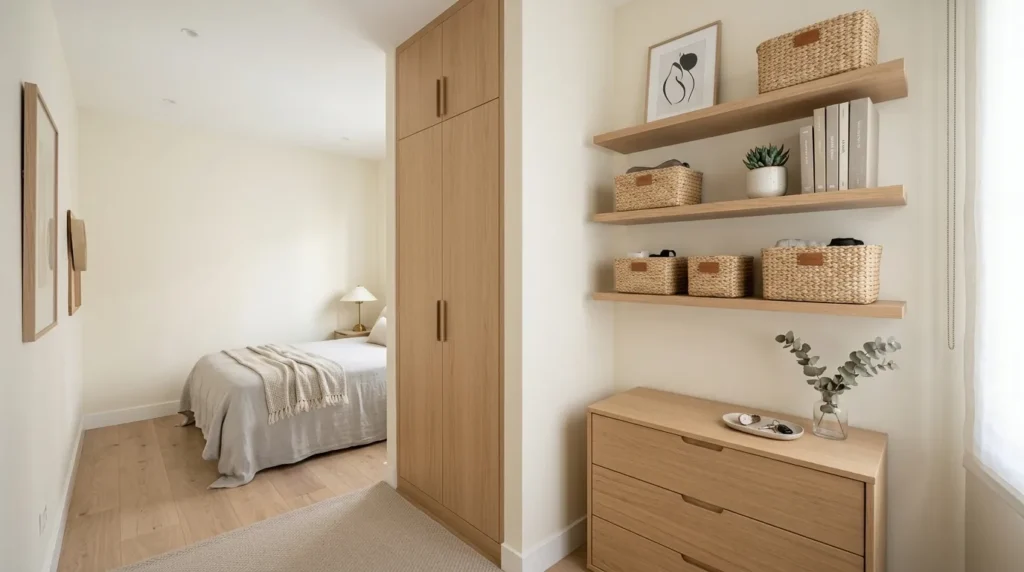
Quick Benefits
- Saves floor space
- Adds useful storage
- Draws the eye upward
- Reduces clutter
- Works in compact bedrooms
Why It Works
When floor space is limited, the walls become valuable real estate.
Tall, narrow storage often works better than wide furniture because it provides capacity without taking up as much floor area.
How To Style It
Use floating shelves, tall wardrobes, wall hooks, vertical shelving, or high closet storage.
Keep everyday items within comfortable reach and use upper storage for seasonal or occasional belongings.
For a visually lighter appearance, balance closed storage with a small amount of open space rather than filling every shelf.
9. Reduce Visual Clutter
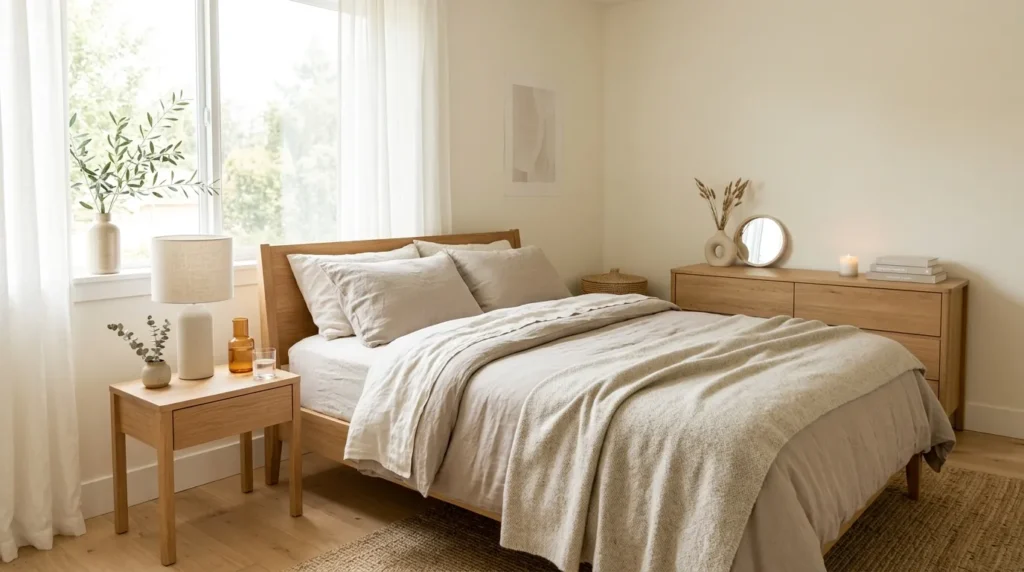
Quick Benefits
- Makes the room feel larger
- Creates visual calm
- Makes cleaning easier
- Highlights important décor
- Improves organization
Why It Works
A small bedroom has limited visual capacity. Even useful items can make the room feel crowded when too many are visible at once.
How To Style It
Start by clearing surfaces such as nightstands, dressers, shelves, and the floor.
Keep only the things you use or genuinely enjoy seeing. Store smaller belongings in drawers, baskets, or cabinets.
A useful rule is to leave some intentional empty space. You don’t need to decorate every wall or surface.
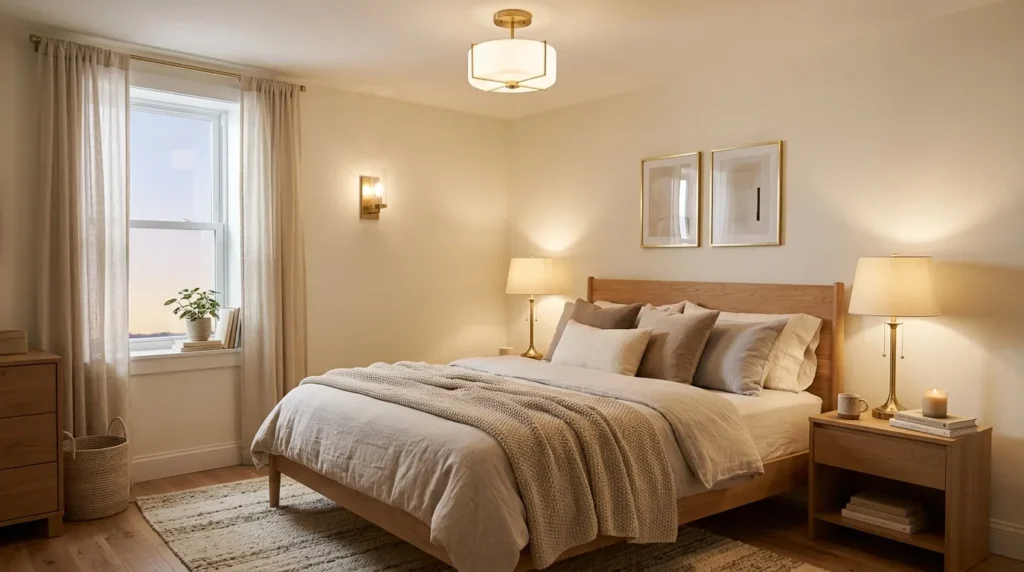
10. Layer Soft Lighting
Quick Benefits
- Keeps the room bright at night
- Adds warmth
- Creates depth
- Improves functionality
- Makes the bedroom feel inviting
Why It Works
A single ceiling light can create harsh shadows and make a small bedroom feel flat.
Multiple light sources distribute illumination more evenly and allow you to change the atmosphere depending on the time of day.
How To Style It
Combine a ceiling fixture with bedside lamps, wall sconces, or another small ambient light.
Use warm, comfortable lighting for evening relaxation while ensuring task areas have enough illumination for reading or getting dressed.
Avoid relying exclusively on very dim lighting if your goal is to make the room feel bright and spacious.
Frequently Asked Questions
What colors make a small bedroom look bigger?
Light neutrals such as white, ivory, cream, pale beige, soft greige, and light gray can help a small bedroom feel brighter and more open. Very soft muted colors can also work beautifully.
Does a mirror really make a small bedroom look bigger?
A strategically placed mirror can create the perception of additional depth and reflect available light. Positioning it opposite or near a window can be particularly effective.
Should a small bedroom always be white?
No. White can work well, but it isn’t the only option. Warm ivory, pale beige, light greige, and soft muted colors can create a similarly bright effect while adding more warmth.
How can I make a small bedroom brighter without painting?
Start with light bedding, lightweight curtains, mirrors, better lighting, uncluttered surfaces, and furniture that doesn’t block windows. These changes can make a noticeable difference without changing the walls.
Does dark furniture make a small bedroom look smaller?
It can add visual weight, particularly when there is a lot of it. However, a carefully chosen dark accent can create contrast without overwhelming the room. Balance darker furniture with lighter walls, bedding, rugs, and curtains.
How do I make a small bedroom feel spacious and cozy?
Combine a light color palette with soft textures. Use warm bedding, a comfortable rug, natural materials, layered lighting, and a few meaningful decorative pieces while keeping the layout uncluttered.
Conclusion
Making a small bedroom look bright and spacious is mostly about working with light, proportion, and visual simplicity.
Start with the largest surfaces. Light walls, pale bedding, and airy curtains can immediately reduce the visual weight of the room. Then maximize natural light by keeping windows clear and positioning mirrors where they can reflect brightness.
Furniture matters, too. Choose pieces that fit the scale of the room rather than simply filling every available space. Slim nightstands, narrow dressers, wall-mounted shelves, and furniture with visible legs can help preserve valuable floor area.
Finally, don’t underestimate decluttering.
A small room doesn’t need to be empty, but it does benefit from breathing room. Keeping surfaces edited and floors clear allows the eye to move through the space without constantly encountering visual obstacles.
The result can be a bedroom that feels lighter, taller, calmer, and more spacious—without changing its actual size.