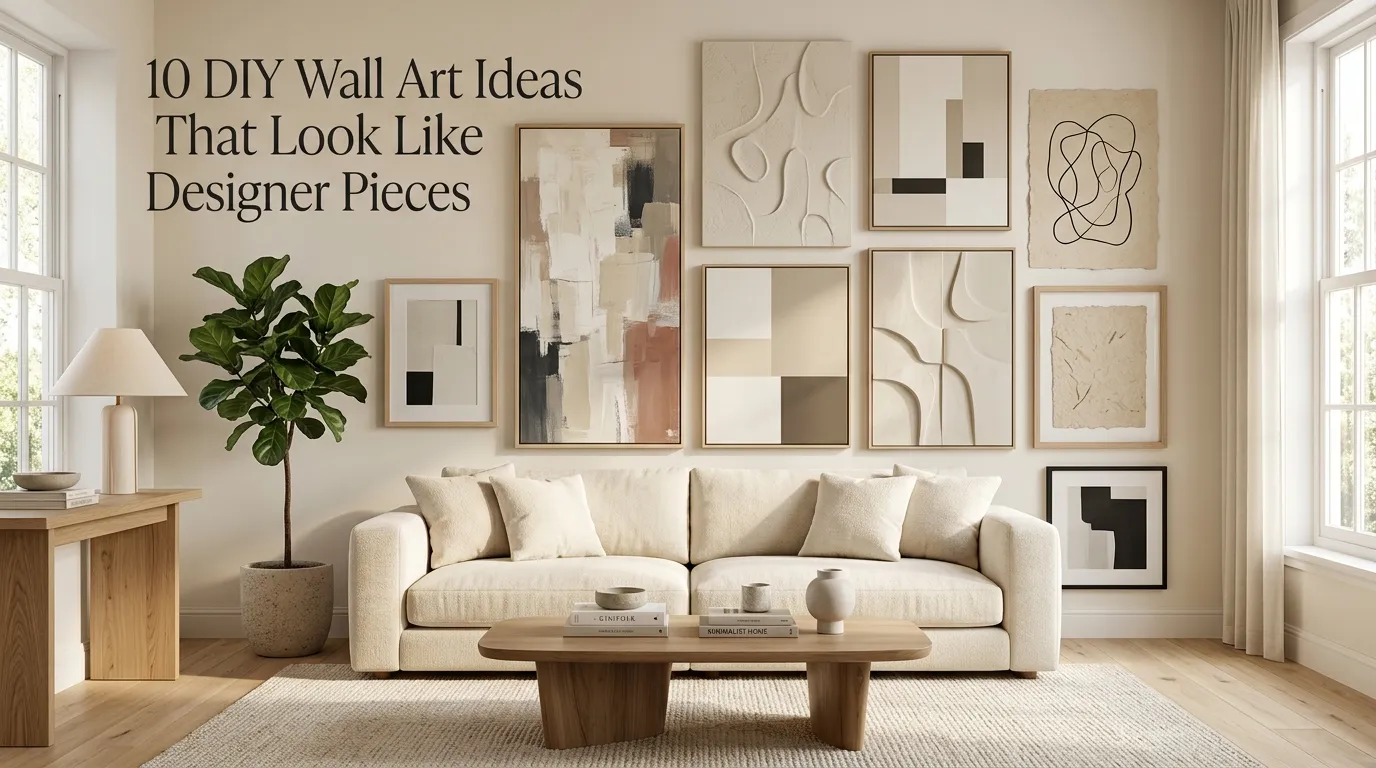
10 DIY Wall Art Ideas That Look Like Designer Pieces
Beautiful wall art can completely change the personality of a room, but statement pieces from high-end retailers can come with equally impressive price tags. The good news is that you don’t need an expensive original painting to create a sophisticated wall.
The secret to making DIY wall art look designer isn’t necessarily complicated craftsmanship. It’s scale, restraint, texture, color, and presentation. A simple canvas can look incredibly elevated when it’s oversized and framed properly. A basic abstract painting can feel intentional when its palette works with the rest of the room.
In my experience, the biggest mistake with DIY artwork is trying to make it look too perfect. Designer interiors often include pieces with subtle texture, organic shapes, imperfect brushwork, and understated color variations. Those qualities can actually make homemade art feel more authentic.
You can also create impressive results with surprisingly accessible materials: joint compound, canvas, plaster, fabric, paper, wood, paint, and even leftover materials from other home projects.
The goal isn’t to copy an expensive designer piece exactly. Instead, use high-end design principles to create something that feels personal, intentional, and polished.
From oversized textured canvases to minimalist line art and sculptural wall panels, these DIY wall art ideas can help you create artwork that looks far more expensive than it actually is.
Table of Contents
1. Create an Oversized Abstract Canvas
Make a bold statement with simple shapes.
2. Try Textured Plaster Art
Add dimensional designer-style texture.
3. Make Minimalist Line Art
Keep the look sophisticated and simple.
4. Create a Neutral Color Block
Use a restrained palette for an upscale effect.
5. Frame Oversized Fabric
Turn beautiful textiles into wall décor.
6. Build a Sculptural Wood Panel
Add warmth and architectural texture.
7. Paint an Organic Landscape
Create an artistic nature-inspired focal point.
8. Make a Diptych or Triptych
Create a custom gallery effect.
9. Add Metallic Details
Introduce subtle luxury.
10. Create a Gallery-Style Statement Wall
Make simple DIY pieces feel collected.
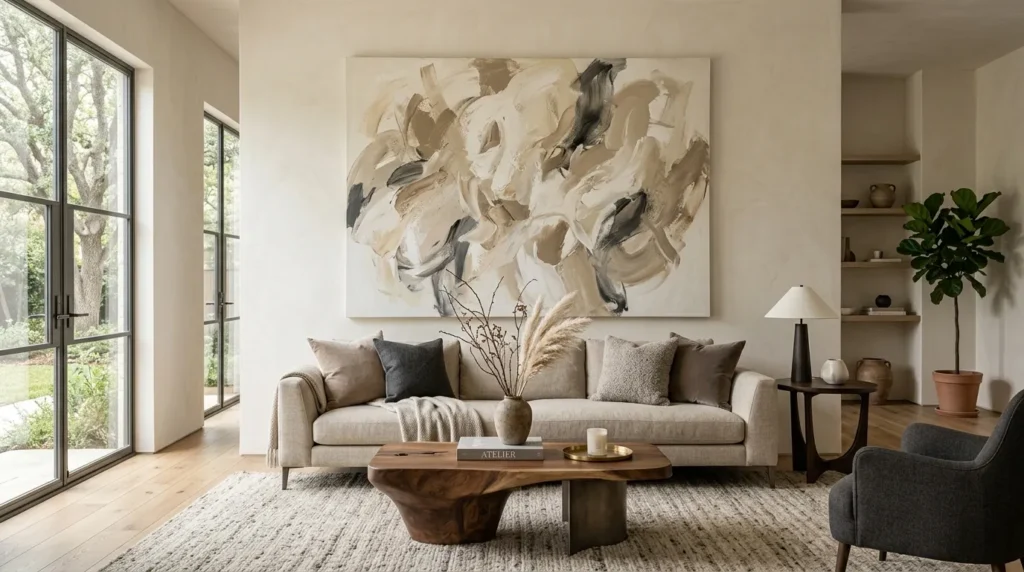
1. Create an Oversized Abstract Canvas
Quick Benefits
- Creates instant impact
- Works above large furniture
- Can match your color palette
- Requires simple techniques
- Looks custom
Why It Works
Large-scale art often has a stronger visual impact than several small pieces scattered across a wall. An oversized abstract canvas can fill an empty wall while maintaining a sophisticated, gallery-inspired appearance.
The trick is to keep the composition relatively simple. Designer artwork often relies on proportion and negative space rather than dozens of competing details.
How To Style It
Start with an oversized canvas appropriate for the wall. Choose two or three colors already present in the room.
Experiment with broad brushstrokes, soft blocks, organic shapes, or subtle washes. Don’t try to fill every part of the canvas. Leaving areas of negative space can make the finished piece feel more refined.
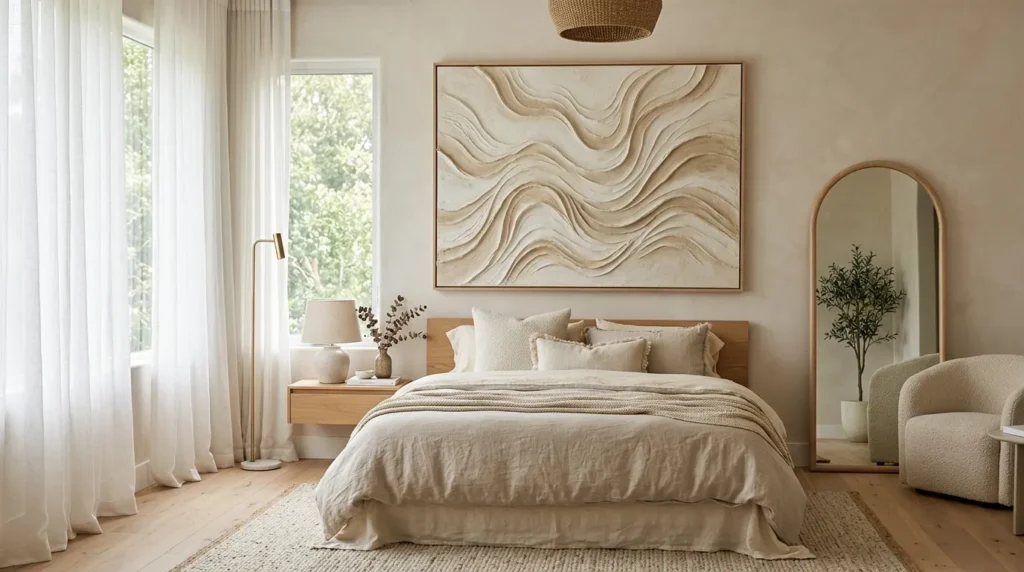
2. Try Textured Plaster Art
Quick Benefits
- Adds dimension
- Creates a handmade appearance
- Works with neutral interiors
- Feels architectural
- Can hide minor imperfections
Why It Works
Textured artwork has become popular in sophisticated interiors because it adds depth without relying on bold colors.
A neutral plaster-inspired canvas can look almost sculptural, especially when light moves across the raised surface.
How To Style It
Use a suitable textured medium and apply it to a properly prepared canvas. Create gentle waves, arches, ridges, or abstract organic forms.
Once dry, a warm white, ivory, beige, or soft taupe finish can create a sophisticated appearance. Keep the surrounding décor relatively simple so the texture remains visible.
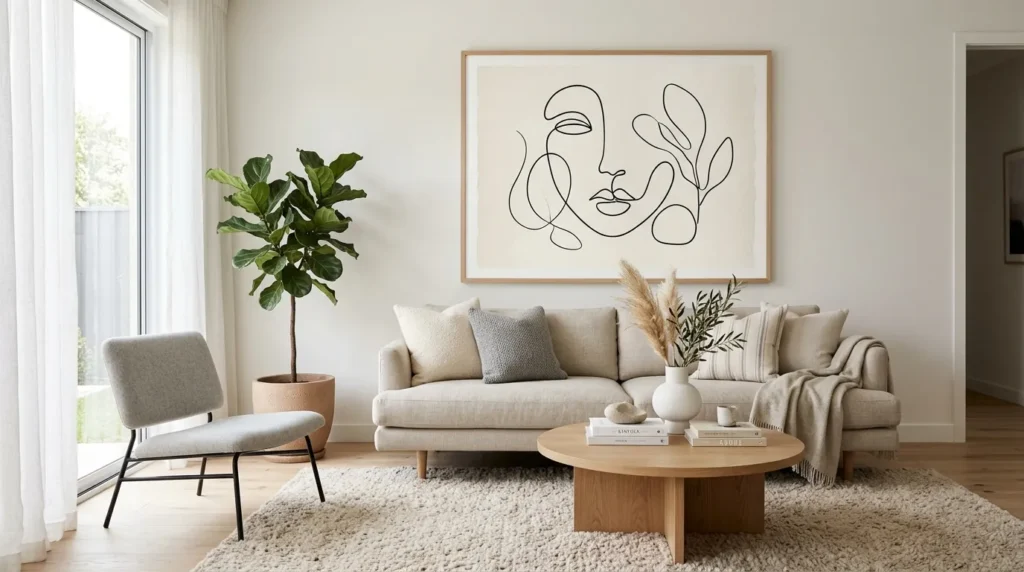
3. Make Minimalist Line Art
Quick Benefits
- Inexpensive
- Easy to customize
- Works with modern interiors
- Creates visual simplicity
- Easy to frame
Why It Works
Minimalist line drawings can make a room feel sophisticated without overwhelming it. Their simplicity works especially well in bedrooms, entryways, home offices, and modern living rooms.
How To Style It
Create a simple continuous-line drawing using black, charcoal, or another understated color on a warm white background.
Faces, botanical shapes, abstract figures, and architectural forms can all work beautifully.
Place the finished artwork inside a thin black, natural wood, or brass-toned frame for a more polished presentation.
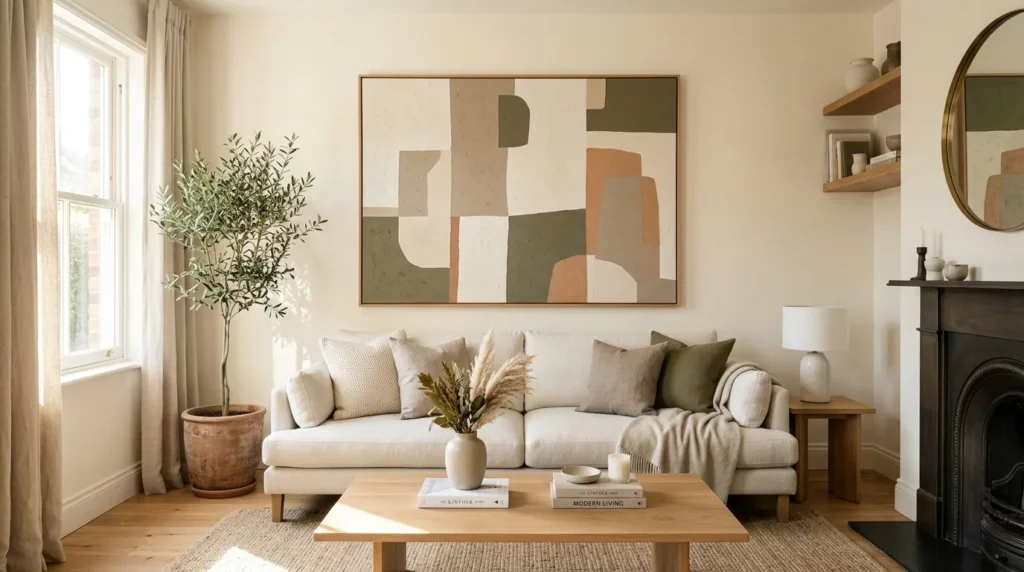
4. Create a Neutral Color Block
Quick Benefits
- Easy technique
- Looks contemporary
- Uses minimal colors
- Coordinates with existing décor
- Creates a custom piece
Why It Works
Color-block artwork can look surprisingly sophisticated when the palette is carefully chosen. Instead of using bright contrasting colors, designer-inspired interiors often benefit from muted combinations.
How To Style It
Choose three or four colors from your room. Think warm ivory, taupe, muted olive, dusty blue, charcoal, or terracotta.
Create large geometric or organic sections rather than small shapes. Slightly imperfect edges can give the artwork a more handmade quality.
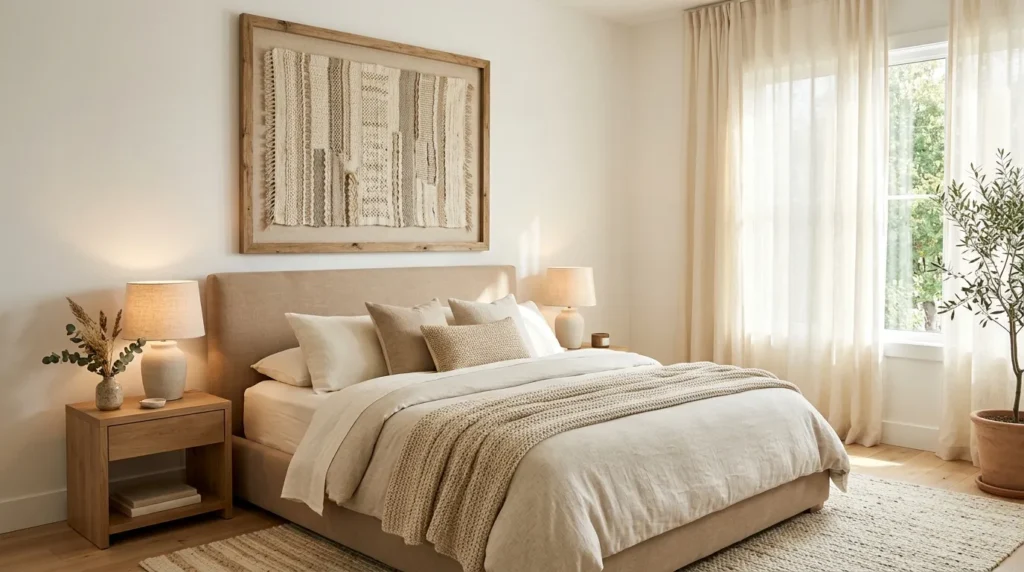
5. Frame Oversized Fabric
Quick Benefits
- Requires little painting
- Adds softness
- Introduces pattern
- Creates texture
- Can be changed seasonally
Why It Works
Beautiful textiles can become artwork when they’re displayed at a large scale. Linen, woven fabric, vintage textiles, and other decorative materials can introduce texture that a traditional painting may not provide.
How To Style It
Choose a fabric with colors that complement your interior. Stretch or mount it securely onto an appropriate backing or frame.
Keep the surrounding wall relatively simple so the textile becomes the focal point. This works especially well above a bed, sofa, console, or dining table.
6. Build a Sculptural Wood Panel
Quick Benefits
- Adds warmth
- Creates architectural interest
- Works with neutral rooms
- Provides natural texture
- Feels custom
Why It Works
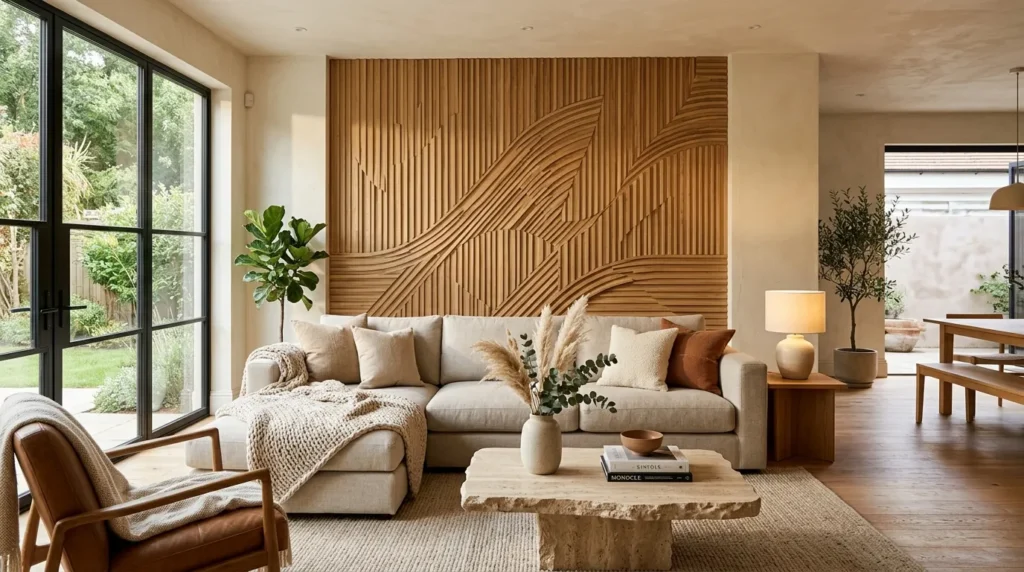
Wood introduces an organic quality that can make minimalist interiors feel warmer. A simple arrangement of wood strips, panels, or carefully finished pieces can create a sculptural artwork that feels architectural.
How To Style It
Use consistent wood tones or combine complementary shades. Arrange pieces vertically, horizontally, or in a simple geometric pattern.
Sand and finish the material appropriately, and make sure the final wall-mounted piece is safely supported for its weight.
7. Paint an Organic Landscape
Quick Benefits
- Adds softness
- Brings nature indoors
- Works with neutral palettes
- Creates a calming focal point
- Feels timeless
Why It Works
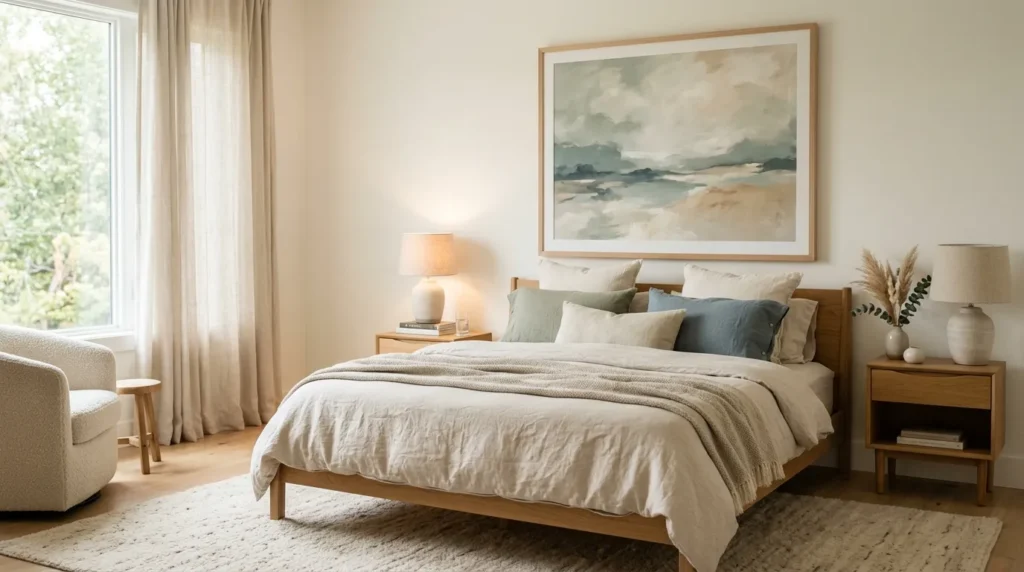
Landscape-inspired artwork can make a room feel relaxed and collected. You don’t need advanced painting skills to create an atmospheric interpretation of mountains, fields, trees, or a coastal horizon.
How To Style It
Choose a restrained palette such as warm beige, muted green, dusty blue, cream, and soft brown.
Focus on broad shapes rather than intricate details. Slightly blurred forms and atmospheric transitions can create a sophisticated, painterly effect.
8. Make a Diptych or Triptych
Quick Benefits
- Creates a designer look
- Fills large walls
- Adds symmetry
- Makes simple art more impactful
- Can be customized
Why It Works
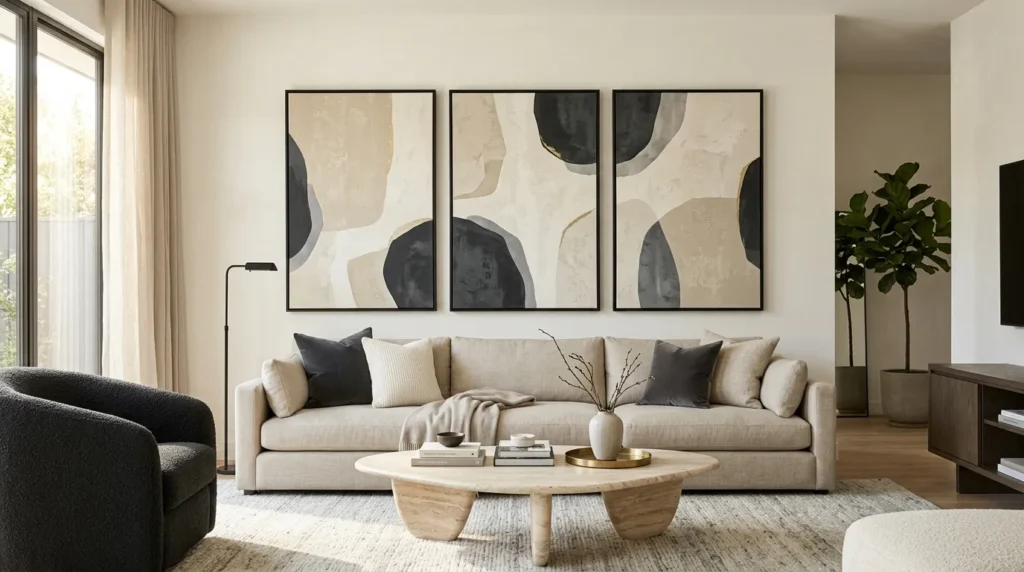
Dividing one composition across two or three canvases creates a gallery-like effect. It also allows you to make a large statement without needing to paint one enormous piece.
How To Style It
Plan the entire composition before painting. Keep the pieces visually connected through color, texture, and shape.
Hang them with consistent spacing and align them carefully. Even simple artwork looks more sophisticated when the installation is precise.
9. Add Metallic Details
Quick Benefits
- Adds subtle shine
- Creates contrast
- Elevates neutral artwork
- Works with traditional interiors
- Adds visual interest
Why It Works
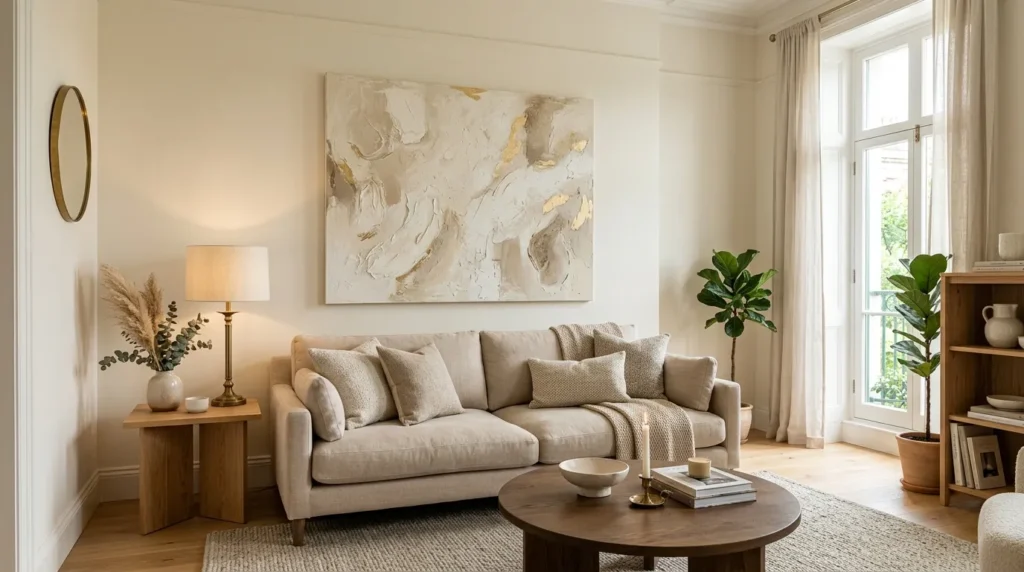
A small amount of metallic detail can make handmade artwork feel more luxurious. The key is restraint.
Instead of covering the entire canvas in metallic paint, use it as a small accent that catches the light.
How To Style It
Add thin gold, brass, bronze, or silver-inspired lines to an abstract painting or textured canvas.
Coordinate the metallic detail with existing hardware, lighting, or décor in the room so it feels intentional rather than random.
10. Create a Gallery-Style Statement Wall
Quick Benefits
- Makes multiple pieces cohesive
- Adds personality
- Works with different art styles
- Creates a collected look
- Makes DIY artwork feel intentional
Why It Works
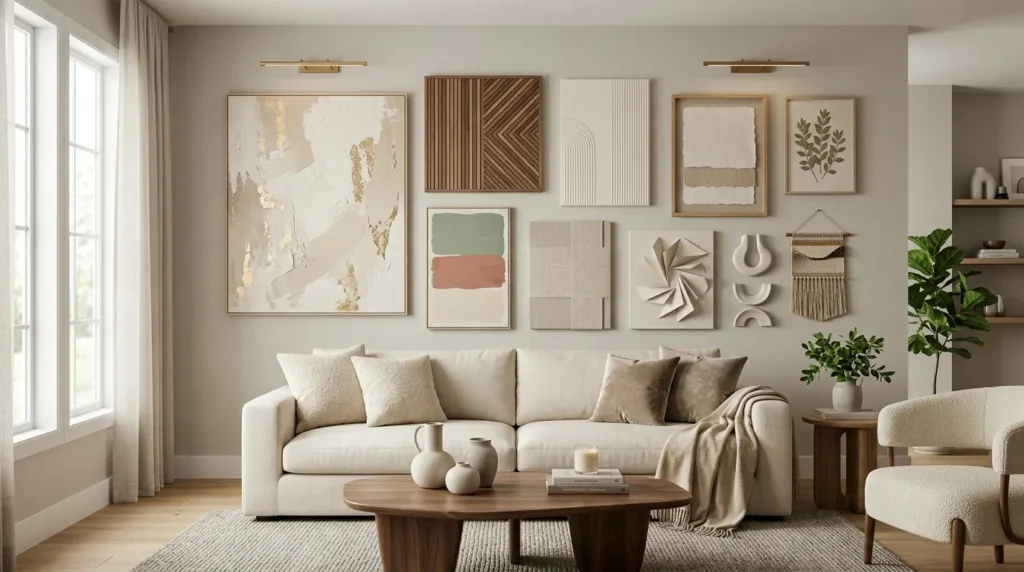
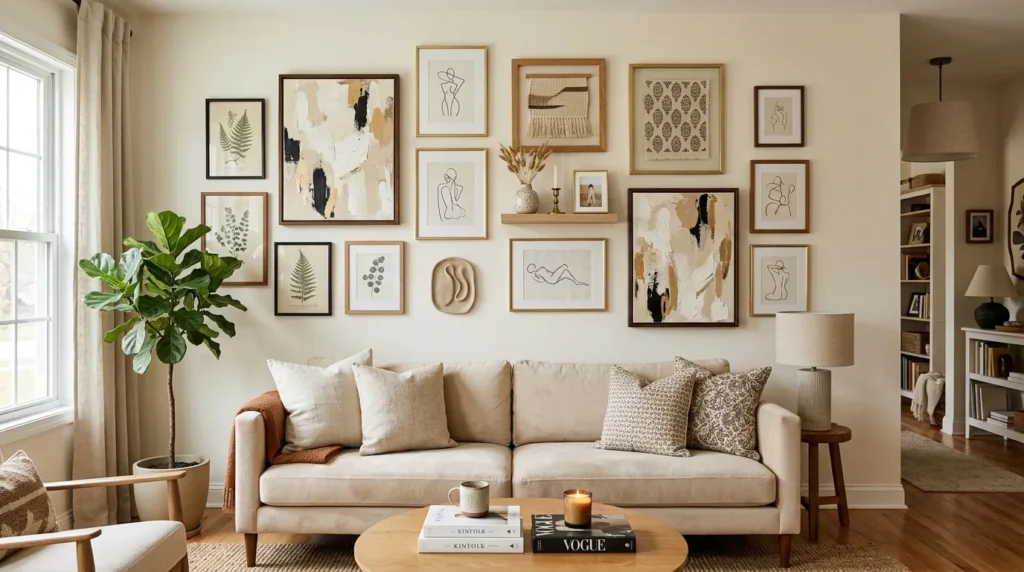
A single DIY piece can look homemade if it doesn’t relate to its surroundings. A carefully composed gallery wall, however, can make individually simple pieces feel like part of a curated collection.
How To Style It
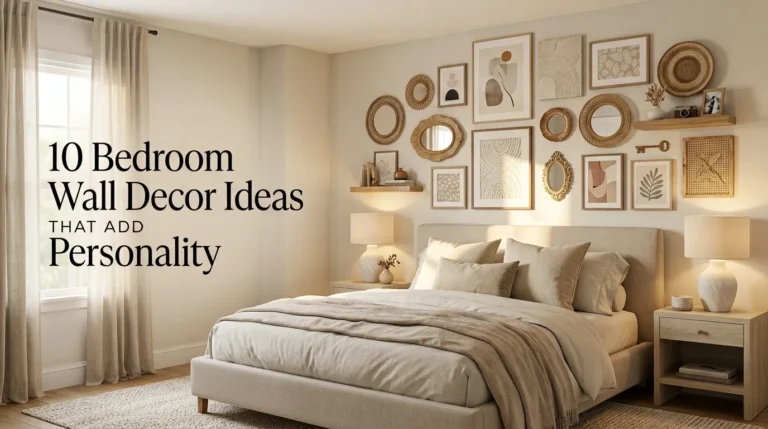
Choose a common thread such as color, frame style, subject matter, or material. Mix DIY artwork with photographs, sketches, textiles, mirrors, or other decorative objects.
Lay everything out before hanging it. Maintain intentional spacing and give the largest piece a strong position within the arrangement.
Frequently Asked Questions
How can I make DIY wall art look expensive?
Focus on scale, restrained colors, quality presentation, texture, and proper framing. Large artwork with a simple composition often looks more sophisticated than small pieces with excessive detail.
What colors make DIY art look designer?
Neutral and muted palettes are particularly versatile. Warm white, cream, taupe, beige, charcoal, muted green, dusty blue, and soft brown can create a sophisticated foundation.
What is the easiest DIY wall art idea?
Minimalist line art, neutral abstract painting, and framed fabric are among the easiest options. They require relatively simple techniques while still allowing you to create a customized look.
Should DIY wall art be framed?
Not always. Oversized canvases and textured artwork can look beautiful unframed. However, a quality frame can instantly elevate simpler artwork, especially line drawings, prints, and fabric pieces.
How big should wall art be above a sofa?
As a general design guideline, artwork or a grouped arrangement should usually have enough visual width to relate to the furniture beneath it without overwhelming the wall. Consider the sofa, wall dimensions, ceiling height, and surrounding furniture together rather than following one rigid measurement.
How do I choose DIY art colors for my room?
Pull colors from existing elements such as rugs, pillows, curtains, upholstery, wood tones, or accessories. Repeating one or two colors can make handmade artwork feel integrated into the room.
Conclusion
You don’t need an expensive art budget to create walls that look thoughtfully designed.
The most convincing DIY artwork focuses on the same principles used in high-end interiors: strong scale, beautiful texture, restrained color, thoughtful composition, and quality presentation.
An oversized abstract canvas can become the centerpiece of a living room. Textured plaster art can bring subtle architectural interest to a bedroom. A framed textile can add softness, while a simple wood panel can introduce warmth to a minimalist space.
Don’t worry about making your artwork perfectly polished. A little imperfection can make handmade pieces feel more authentic and personal.
Start with the room you’re decorating. Look at its colors, textures, furniture, and proportions, then create artwork that supports those elements.
When the art feels connected to the space, it can look intentional, elevated, and surprisingly designer—even when you made it yourself.