10 Backyard Landscape Design Ideas with Low-Maintenance Design
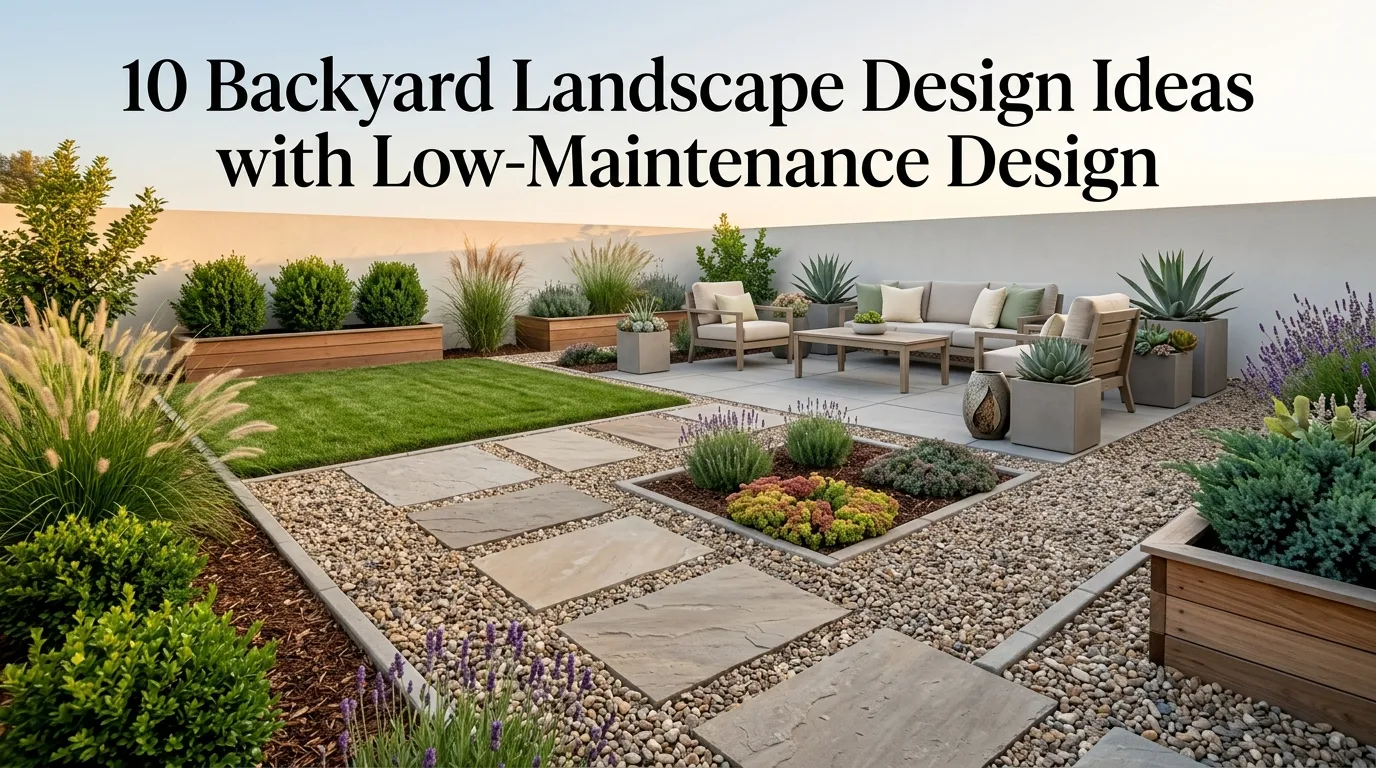
A beautiful backyard doesn’t have to become another item on your weekly to-do list. With the right landscape design, you can create an outdoor space that looks intentional, welcoming, and polished while reducing the amount of mowing, watering, pruning, and seasonal maintenance it requires.
Low-maintenance landscaping isn’t about removing all the plants or turning your backyard into a completely hardscaped space. The best designs combine durable materials, thoughtfully selected plants, defined planting areas, and practical outdoor features that make the yard easier to care for.
In my experience, the biggest difference comes from designing around how you actually use the yard. If you want a place for weekend dinners, prioritize a comfortable patio and shade. If you enjoy gardening but don’t want constant upkeep, concentrate plants in a few defined beds instead of scattering them throughout the property.
It also helps to think about maintenance before choosing materials and plants. A large lawn may require frequent mowing, while a well-designed combination of hardscaping, ground covers, shrubs, and appropriate planting can reduce ongoing work.
Whether you have a large suburban backyard, a compact outdoor area, or a newly renovated landscape, these ideas can help you create a functional space that stays attractive without demanding constant attention.
The goal is simple: less maintenance without sacrificing beauty.
Table of Contents
1. Create a Defined Patio
Build an outdoor living area with minimal upkeep.
2. Choose Native Plants
Work with the natural conditions of your yard.
3. Reduce Lawn Areas
Replace high-maintenance grass strategically.
4. Add Mulched Planting Beds
Simplify garden maintenance.
5. Use Gravel Paths
Create durable and attractive circulation.
6. Plant Evergreen Shrubs
Add structure throughout the year.
7. Install Drip Irrigation
Make watering more efficient.
8. Add Ground Covers
Fill spaces with lower-maintenance greenery.
9. Create a Simple Fire Pit Area
Build a destination for outdoor gatherings.
10. Use Repeated Planting
Create a cohesive landscape with fewer plant varieties.
1. Create a Defined Patio
Quick Benefits
- Reduces lawn maintenance
- Creates usable outdoor space
- Provides room for furniture
- Defines the backyard layout
- Works for entertaining
Why It Works
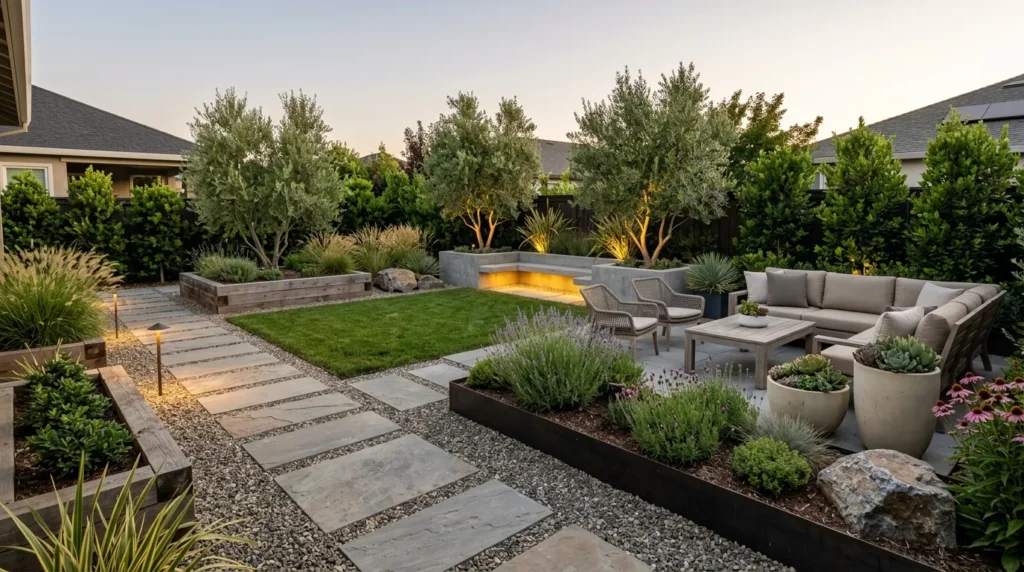
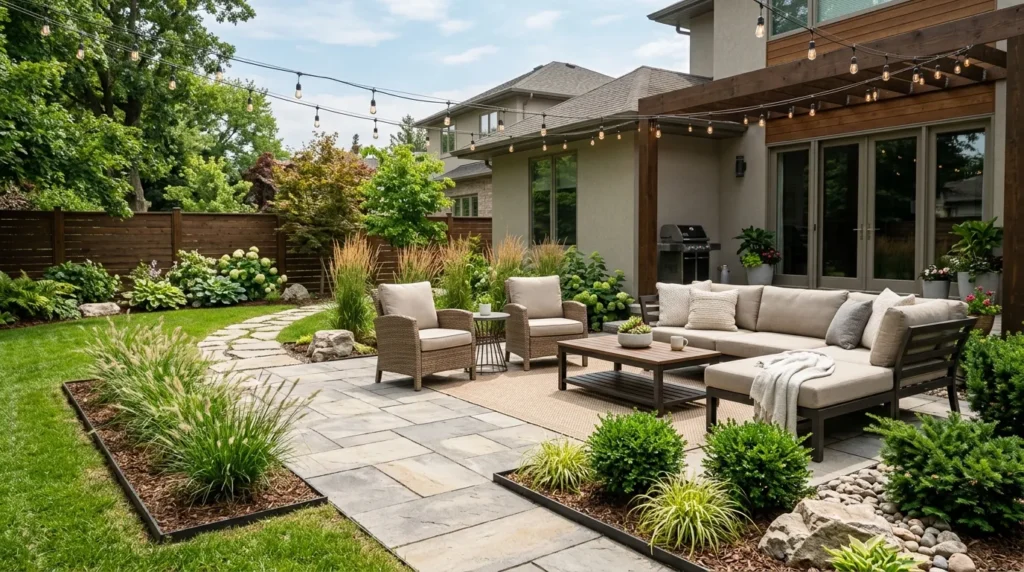
A clearly defined patio gives the backyard a strong functional center while reducing the amount of lawn that needs regular care. Instead of maintaining every square foot as grass, you can dedicate part of the yard to a durable surface designed for outdoor living.
This also makes furniture placement and landscaping decisions easier because the patio establishes a clear boundary.
How To Style It
Choose a durable patio material appropriate for your climate and property. Pavers, concrete, natural stone, and other suitable surfaces can create different aesthetics.
Keep the surrounding landscaping relatively simple. A few planting beds, container plants, and shade features can soften the edges without creating excessive maintenance.
2. Choose Native Plants
Quick Benefits
- Can adapt to local conditions
- Supports local ecosystems
- Reduces unnecessary maintenance
- Adds natural character
- Can improve garden resilience
Why It Works
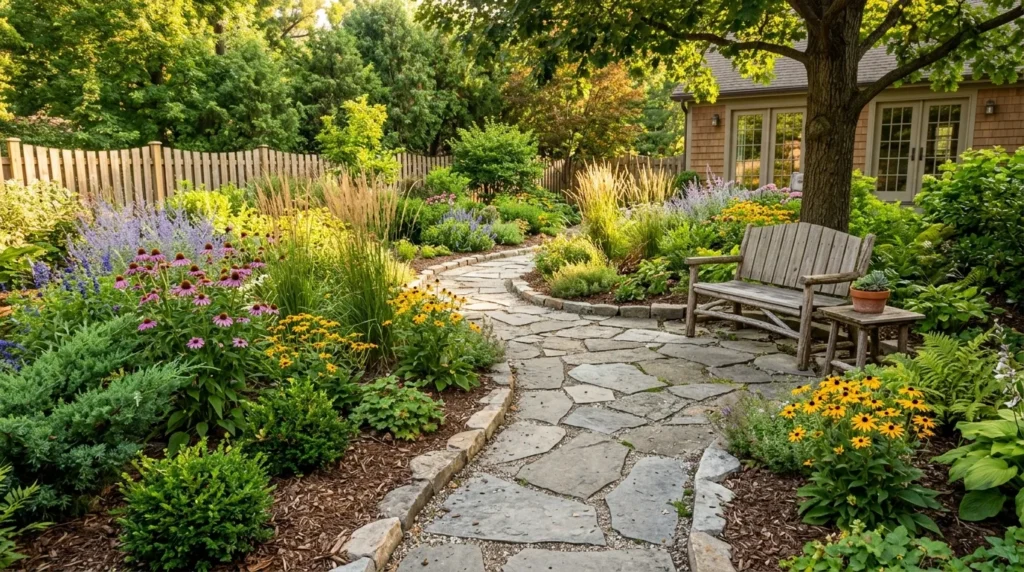
Plants that are well suited to the local environment can often handle regional conditions more naturally than plants that struggle outside their preferred climate.
This doesn’t mean every native plant will automatically be maintenance-free. Site conditions such as sunlight, soil, drainage, and water availability still matter.
How To Style It
Research plants suited to your specific region and growing conditions. Consider mature height and width before planting so you don’t create a future pruning problem.
Group plants with similar water and sunlight requirements together. This makes ongoing care more predictable and can simplify irrigation.
3. Reduce Lawn Areas
Quick Benefits
- Less mowing
- Reduces watering needs
- Creates more usable space
- Adds visual variety
- Makes landscaping more intentional
Why It Works
Large lawns can be attractive, but they often require regular mowing, edging, watering, fertilizing, and seasonal attention.
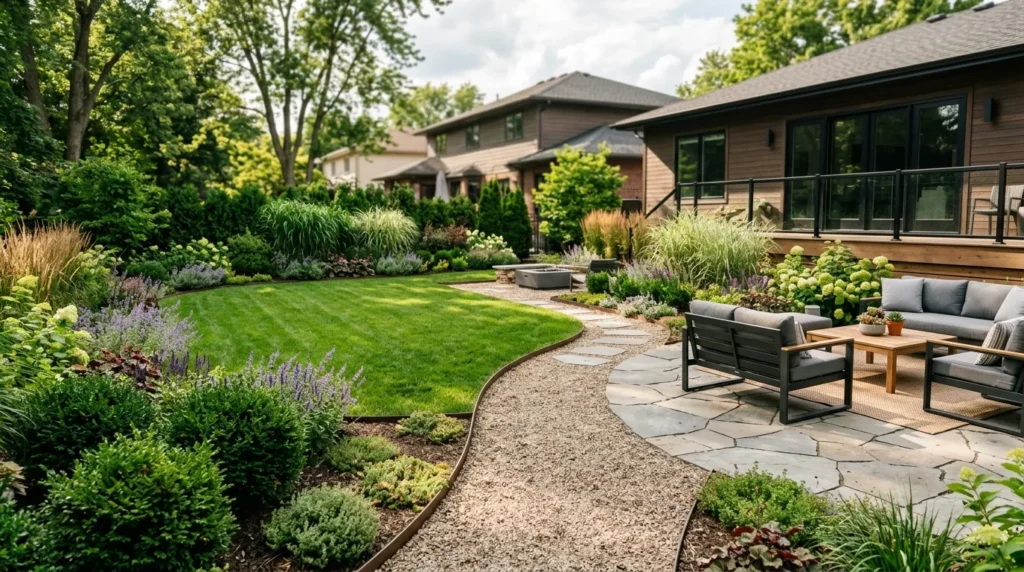
You don’t necessarily need to remove all the grass. Reducing lawn strategically can provide a balance between open space and lower-maintenance planting areas.
How To Style It
Identify areas of lawn that aren’t regularly used and consider replacing them with planting beds, paths, patio space, ground covers, or other appropriate landscape features.
Keep some lawn if it serves a genuine purpose, such as children’s play, pets, outdoor games, or simply an open visual area.
4. Add Mulched Planting Beds
Quick Benefits
- Helps suppress weeds
- Creates defined garden areas
- Retains soil moisture
- Improves visual organization
- Makes maintenance easier
Why It Works
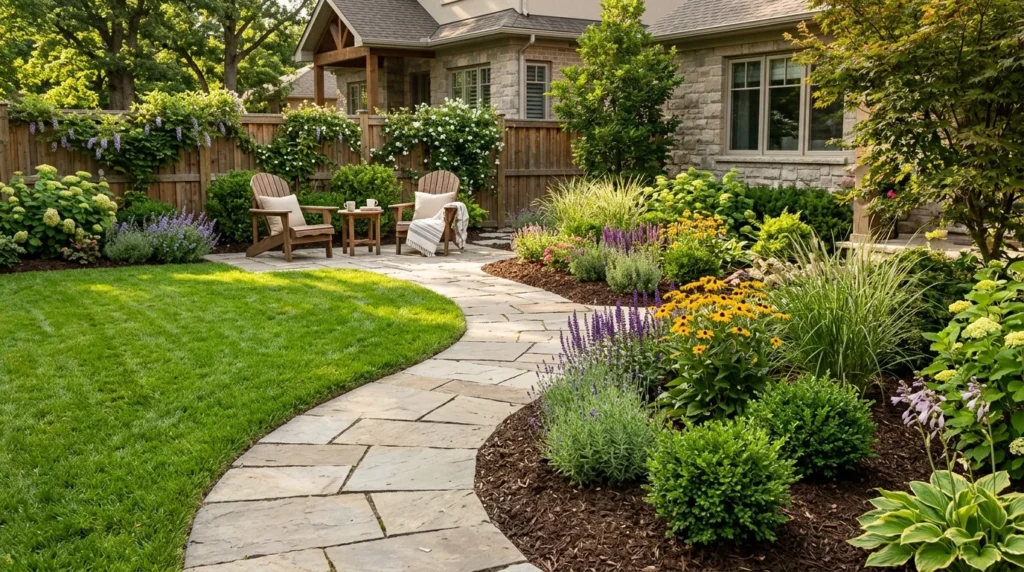
Mulch creates a clean transition between plants and surrounding lawn or hardscape. It can also help reduce the amount of exposed soil where weeds might otherwise establish.
The exact mulch type and application should be selected according to the plants and conditions in your yard.
How To Style It
Create broad, gently curved or clearly defined planting beds rather than numerous tiny patches.
Group plants in clusters and leave enough space for them to reach their mature size. This reduces the need for frequent pruning simply to keep plants from crowding one another.
5. Use Gravel Paths
Quick Benefits
- Creates durable walkways
- Adds texture
- Requires relatively little upkeep
- Defines movement through the yard
- Complements natural landscaping
Why It Works
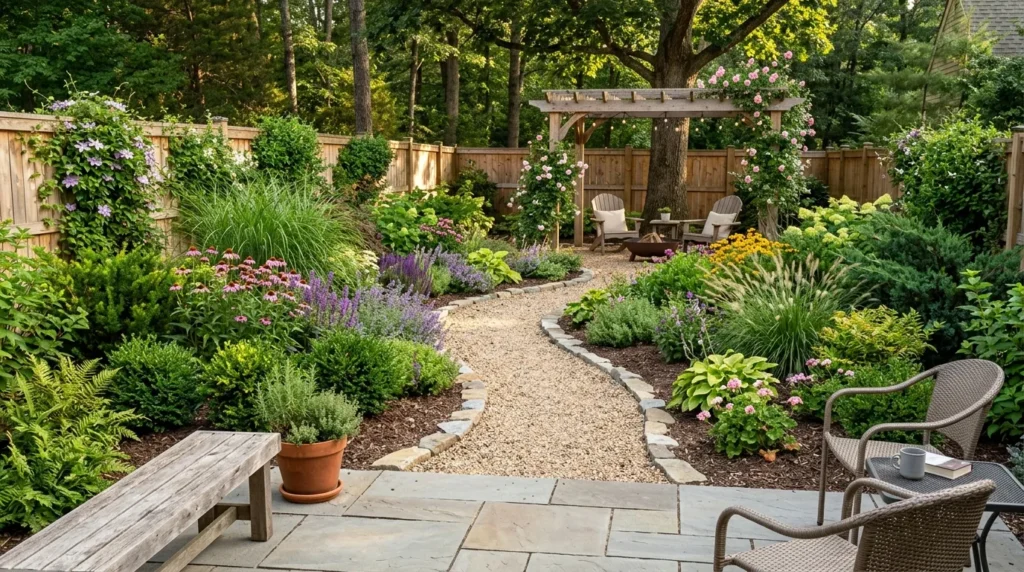
Gravel can provide a practical transition between planting areas while adding an informal, garden-inspired appearance.
A path also prevents people from repeatedly walking through planting beds, which helps protect plants and keeps the landscape visually organized.
How To Style It
Define the path edges clearly and choose an appropriate aggregate for the application. Consider using edging to keep material contained.
Connect meaningful destinations such as the patio, garden, seating area, shed, or fire pit rather than creating paths simply for decoration.
6. Plant Evergreen Shrubs
Quick Benefits
- Provides year-round structure
- Reduces seasonal bare spots
- Creates privacy
- Adds consistent greenery
- Can define boundaries
Why It Works
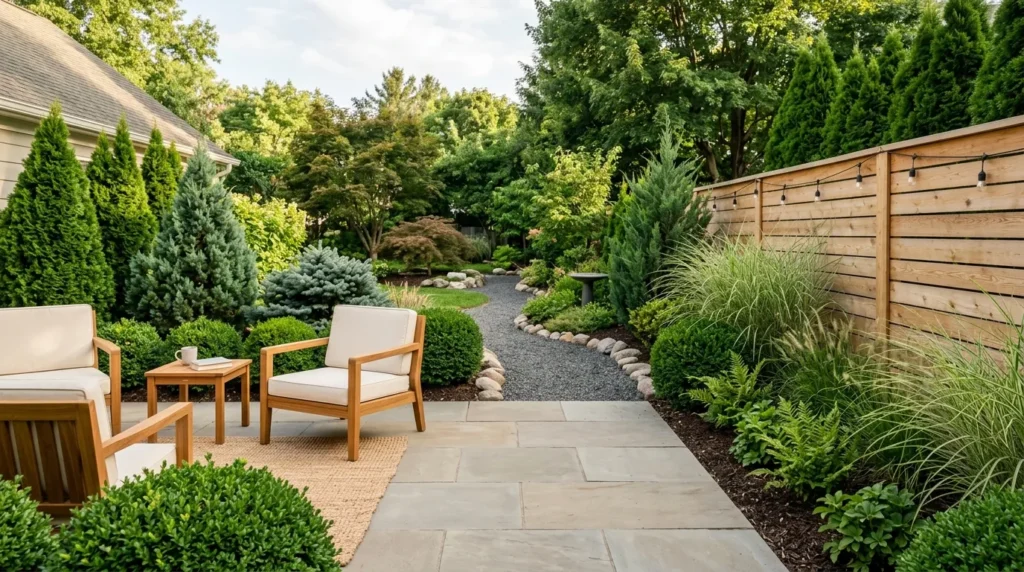
Evergreen plants can give a landscape structure even when many other plants have gone dormant or lost their leaves.
When appropriately selected for your region, they can form the backbone of a low-maintenance planting scheme.
How To Style It
Use evergreen shrubs strategically rather than planting them everywhere. They can frame patios, define property edges, soften fences, or create privacy.
Pay attention to mature size. A plant that eventually becomes too large for its location may require regular pruning, defeating the purpose of a low-maintenance design.
7. Install Drip Irrigation
Quick Benefits
- Delivers water efficiently
- Simplifies watering
- Supports consistent plant care
- Can reduce unnecessary water use
- Helps automate routine maintenance
Why It Works
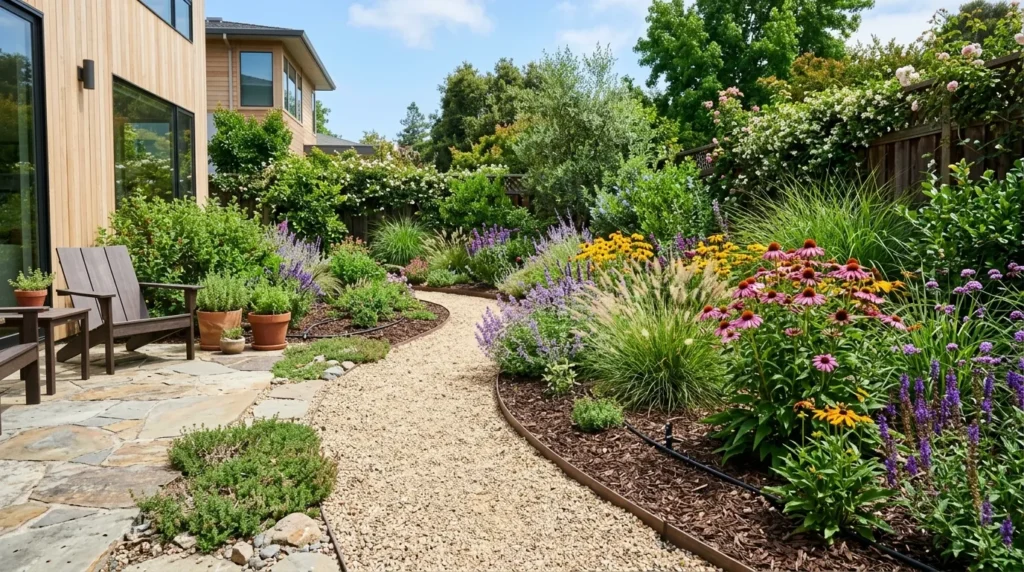
Watering can become one of the most time-consuming parts of maintaining a landscape. An appropriately designed irrigation system can deliver water where plants need it rather than relying entirely on manual watering.
Drip systems can be particularly useful in defined planting beds.
How To Style It
Design irrigation around plant groupings and their water requirements. Keep emitters accessible for inspection and maintenance.
Use appropriate controls and adjust schedules based on weather, season, soil conditions, and local water guidance rather than running irrigation automatically regardless of conditions.
8. Add Ground Covers
Quick Benefits
- Fills empty planting areas
- Helps reduce exposed soil
- Adds texture
- Can reduce weeding
- Creates a finished appearance
Why It Works
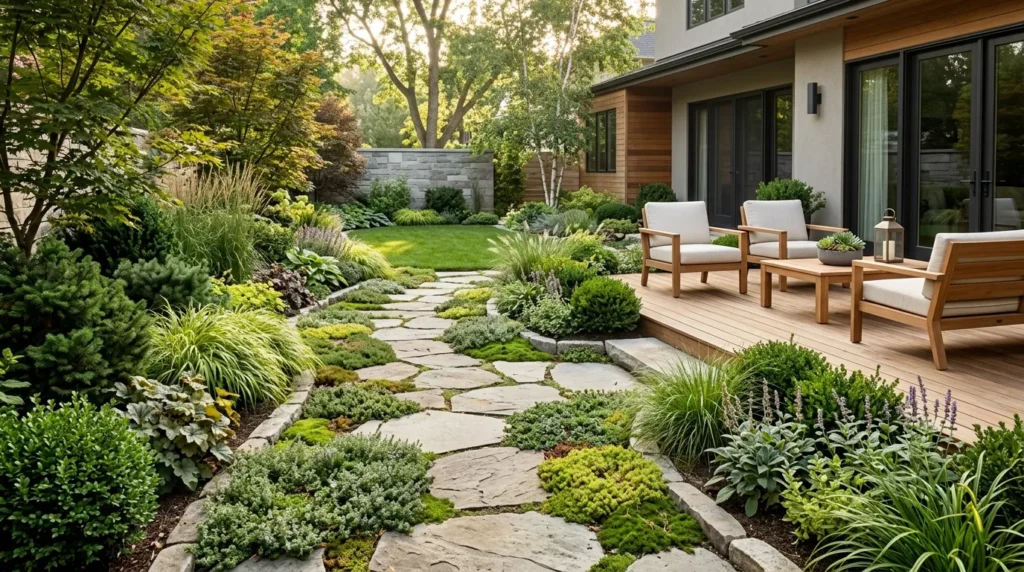
Ground-covering plants can fill spaces between larger landscape elements and reduce the amount of bare soil available for weeds.
However, not every ground cover is appropriate for every yard. Some can spread aggressively, so selecting suitable species is important.
How To Style It
Choose ground covers suited to your light, soil, climate, and maintenance preferences. Use them in defined areas rather than allowing them to spread unchecked.
Combine ground covers with shrubs, ornamental grasses, stones, or pathways to create layers of texture.
9. Create a Simple Fire Pit Area
Quick Benefits
- Creates a backyard destination
- Encourages outdoor entertaining
- Reduces lawn dependency
- Adds visual structure
- Extends outdoor enjoyment
Why It Works
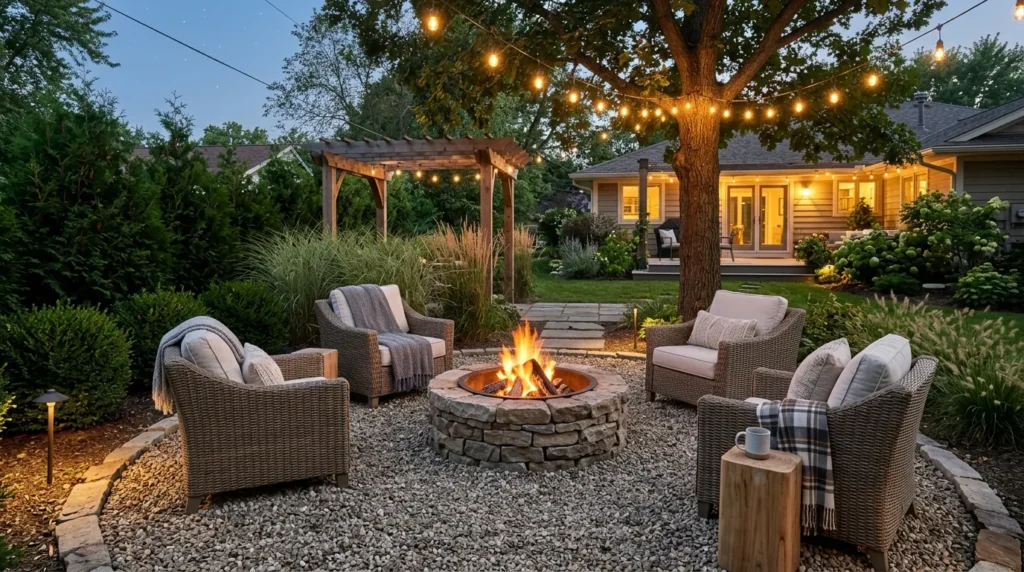
A fire pit area can turn an underused section of the backyard into a purposeful gathering space. Instead of maintaining that area as lawn, you can create a durable seating zone surrounded by thoughtfully selected landscaping.
Always follow applicable local fire regulations and manufacturer requirements for fire features.
How To Style It
Create a defined surface around the fire feature using an appropriate patio or hardscape material. Add comfortable outdoor seating and keep surrounding planting relatively simple.
Use low-maintenance shrubs, ornamental plants, or gravel to connect the fire pit area visually with the rest of the landscape.
10. Use Repeated Planting
Quick Benefits
- Creates visual cohesion
- Simplifies plant selection
- Makes the landscape look intentional
- Reduces visual clutter
- Makes maintenance more predictable
Why It Works
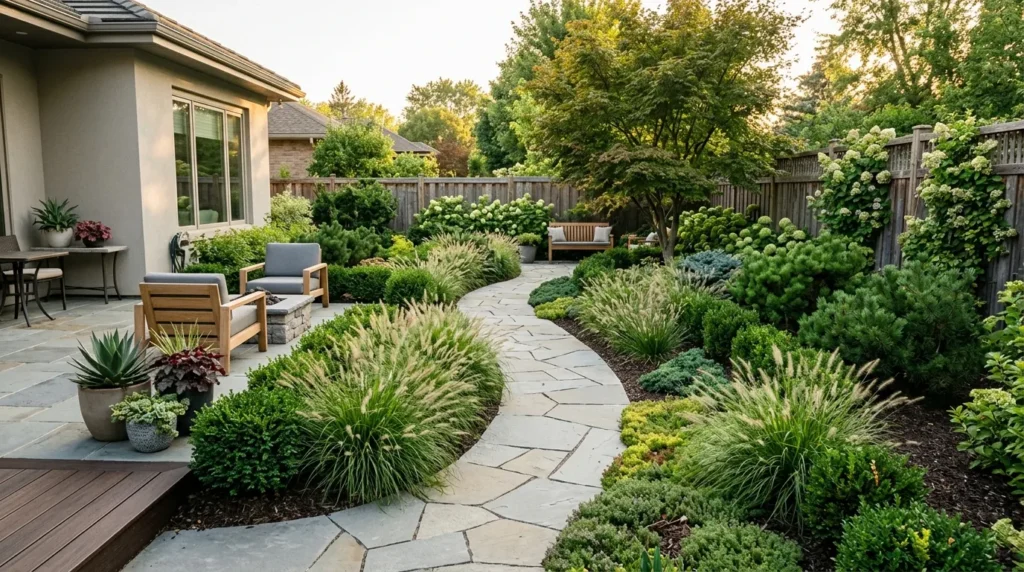
Repeating a smaller number of plant varieties can make a landscape look more professionally designed. Instead of filling every bed with different species, repeating plants creates rhythm and continuity.
It can also make care easier because you aren’t managing dozens of completely different plant requirements.
How To Style It
Choose a limited plant palette that suits your conditions, then repeat those plants throughout different areas of the backyard.
Vary height and texture rather than constantly adding new species. For example, combine low ground covers, medium shrubs, and taller structural plants to create layers.
Frequently Asked Questions
What is the easiest way to create a low-maintenance backyard?
Start by simplifying the layout. Reduce unnecessary lawn, group plants according to their needs, define planting beds, use durable hardscape materials, and choose plants appropriate for your local conditions.
What plants are best for low-maintenance landscaping?
There isn’t one universal list because plant suitability depends heavily on location, climate, soil, sunlight, and water availability. Native and well-adapted plants are often good starting points, but local extension services or qualified landscape professionals can help identify appropriate choices.
Does low-maintenance landscaping mean no maintenance?
No. Every landscape needs some care. The goal is to reduce routine work and make maintenance more manageable through thoughtful plant selection, irrigation, layout, and durable materials.
How can I reduce lawn maintenance?
Keep only the lawn you actually use and replace unnecessary areas with suitable planting beds, patios, paths, ground covers, or other landscape features. Avoid removing grass without considering drainage, erosion, and the needs of the site.
Is gravel a good choice for a backyard?
Gravel can work well for paths, seating areas, and other applications when properly installed. Edge restraint, drainage, accessibility, local conditions, and the type of gravel all matter.
How can I make a low-maintenance backyard look expensive?
Focus on clean lines, consistent materials, repeated plants, well-defined edges, quality outdoor furniture, layered planting, and intentional lighting. A simple design executed consistently often looks more polished than a yard filled with unrelated features.
Conclusion
A low-maintenance backyard doesn’t have to look plain. In fact, simplifying the landscape can often make it feel more intentional and sophisticated.
Start by deciding how you actually want to use the space. A patio can become the center of outdoor entertaining, a gravel path can connect different destinations, and a simple fire pit area can transform an unused corner into a favorite gathering spot.
Then build your planting design around plants that are appropriate for your local environment. Grouping plants with similar needs, using evergreen structure, reducing unnecessary lawn, and adding suitable ground covers can all help make routine maintenance more manageable.
The most important principle is to design with the landscape rather than against it. Work with your sunlight, soil, rainfall, climate, and available space instead of choosing features that require constant correction.
And remember that low-maintenance doesn’t mean maintenance-free. A thoughtful landscape still benefits from seasonal cleanup, pruning, irrigation checks, and occasional refreshing.
The payoff is a backyard that gives you more time to enjoy it—and less time worrying about keeping every corner perfect.