Digital Keyless Locks for Pocket Doors: Do They Fit Inside the Wall Cavity?
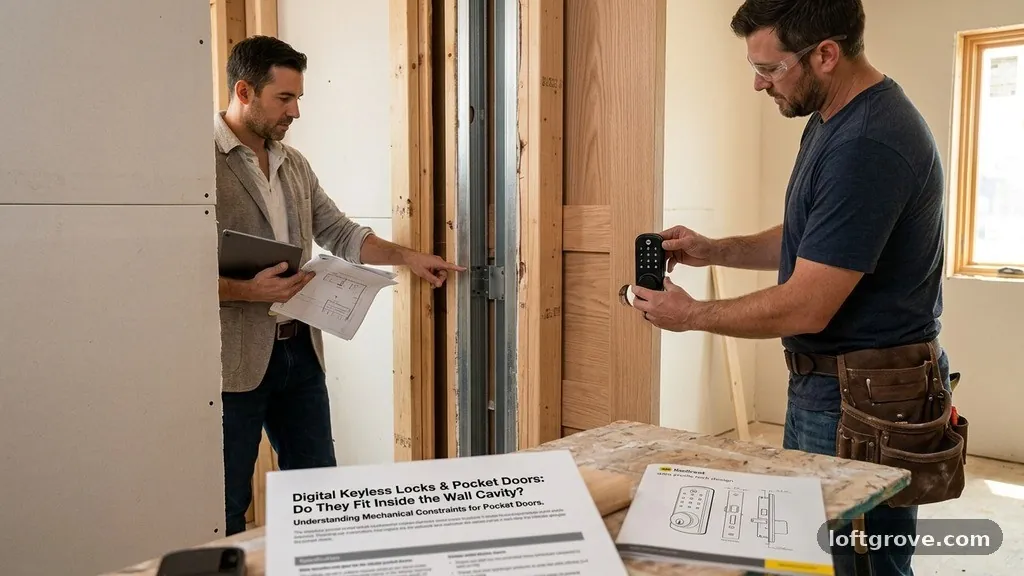
Installing digital keyless locks for pocket doors requires careful planning because the door must slide completely into the wall cavity without obstruction. Most standard smart locks are designed for swinging doors that sit flush against a frame, meaning they are often too thick for a recessed door setup. You need to verify the clearance between the door face and the wall pocket before selecting hardware.
If the lock protrudes even slightly, it will hit the wall studs or the pocket frame when the door retracts. This article examines the technical realities of fitting modern electronic access hardware into these space-saving openings.
The short answer is that most standard digital keyless locks do not fit inside the wall cavity if they have protruding handles or thick external housings. Pocket doors rely on a precise clearance gap, usually around 1/8 to 1/4 of an inch, to slide into the wall without scraping the interior frame. Standard smart lock deadbolts often extend an inch or more from the door surface.
If you attempt to use a standard lock, the door will essentially get stuck halfway when you try to open it. Specialized hardware exists, but you must prioritize low-profile designs that sit flush against the door face.
Understanding the Mechanical Constraints of Pocket Doors
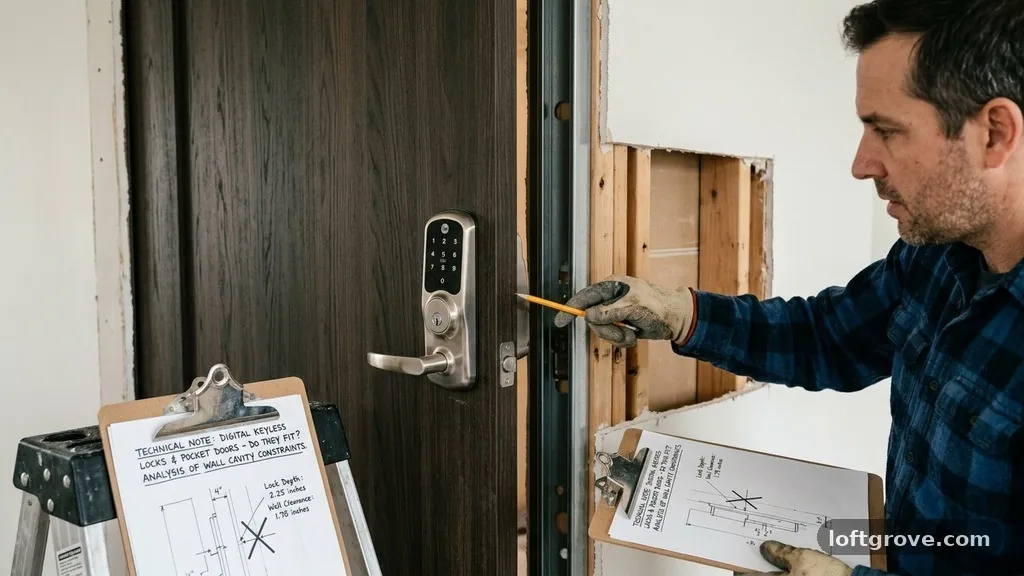
A pocket door operates by sliding into a hidden space within the wall frame. This wall cavity is typically constructed using a wooden or metal frame that houses the track and the door itself.
Any hardware you mount on the door must remain within the footprint of the door’s thickness. If you add a bulky digital keypad, you are essentially adding “thickness” to the door.
The track system itself is another limiting factor. These tracks are engineered for specific door weights and widths, and they rarely have extra room for protruding hardware.
If you add a lock that extends past the edge of the door, the door will strike the header or the wall opening before it can fully slide out of sight. You must measure the gap between the door and the wall with extreme precision.
Manufacturers of high-quality door hardware provide technical drawings that detail the “projection” of their products. You should look for the projection measurement on every product specification sheet.
If the projection exceeds the clearance gap of your pocket door frame, that lock is physically incompatible. Never assume that a “slim” lock is slim enough for a pocket cavity without verifying the exact millimeter count.
Why Standard Smart Locks Fail in Wall Pockets
Standard smart locks are designed for traditional swinging doors that meet a doorstop. Because they don’t need to slide into a narrow slot, designers prioritize aesthetics and battery size over ultra-low profiles.
These locks feature large exterior touchscreens and bulky thumb-turns that are meant to be seen and gripped. When placed on a sliding door, these features become major liabilities.
The biggest issue is the strike plate and the latching mechanism. A standard smart lock uses a heavy-duty deadbolt that moves horizontally into a frame.
Pocket doors require a hook-style latch or a specialized mortise lock that fits into the thin edge of the door. You cannot easily adapt a standard smart lock’s mechanical housing to fit the narrow edge of a sliding panel.
Attempting to modify a door to fit a standard lock often compromises the structural integrity of the wood or metal. You might end up cutting into the core of the door, which can cause it to warp or sag over time.
Furthermore, the weight of a standard smart lock can cause the door to hang unevenly on the track. This leads to friction, noise, and eventual failure of the rollers.
Identifying Flush-Mount Electronic Hardware
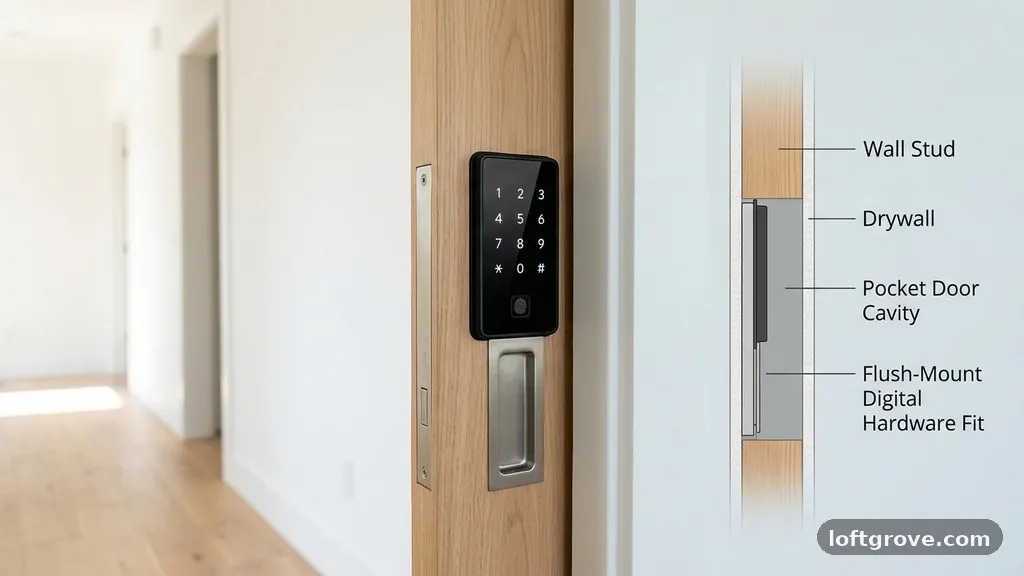
To find a digital solution that works, you need to search specifically for “flush-mount” or “recessed” electronic locks. These units are engineered to sit entirely within the mortise of the door.
They replace the traditional pull or latch with a flat keypad or a biometric scanner. Because they are designed for sliding applications, they don’t have a protruding handle that would catch on the wall.
These locks often use a magnetic or hook-style mechanism that engages with a strike plate on the door jamb. The electronics are typically hidden inside the door cavity or behind a very thin faceplate. While they might not offer the same range of smart features—like built-in cameras or voice control—they provide the essential security you need for a bedroom or bathroom.
When shopping, look for hardware marketed specifically for sliding or pocket doors. You can find these by searching for Builders Hardware Manufacturers Association standards, which categorize products by their functional use.
Stick to reputable brands that specialize in sliding door systems. Avoid generic “smart” hardware from unverified sources, as these often lack the necessary weather-sealing or structural durability for frequent use.
The Role of the Pocket Door Frame
The wall cavity is a highly controlled environment. The frame inside is usually composed of studs that have been notched or replaced with a metal split-stud system.
This frame determines exactly how much space you have. If your house has a standard 2×4 wall construction, the cavity is already quite narrow.
Adding a lock means you are effectively reducing the usable door opening width. If the lock is 1/2 inch thick, your doorway will be 1/2 inch narrower than it was before.
This might seem negligible, but it can make moving furniture or appliances through the door much more difficult. Consider the total width of the opening before making a final decision.
Some pocket door kits include a “door stop” or a bumper that prevents the door from sliding all the way into the wall. If you have this feature, you have a bit more flexibility with your lock choice.
However, you are still limited by the distance between the door and the wall surface. Always test the clearance by temporarily taping a piece of cardboard of the same thickness as the lock to the door.
Privacy Needs for Bathrooms and Bedrooms
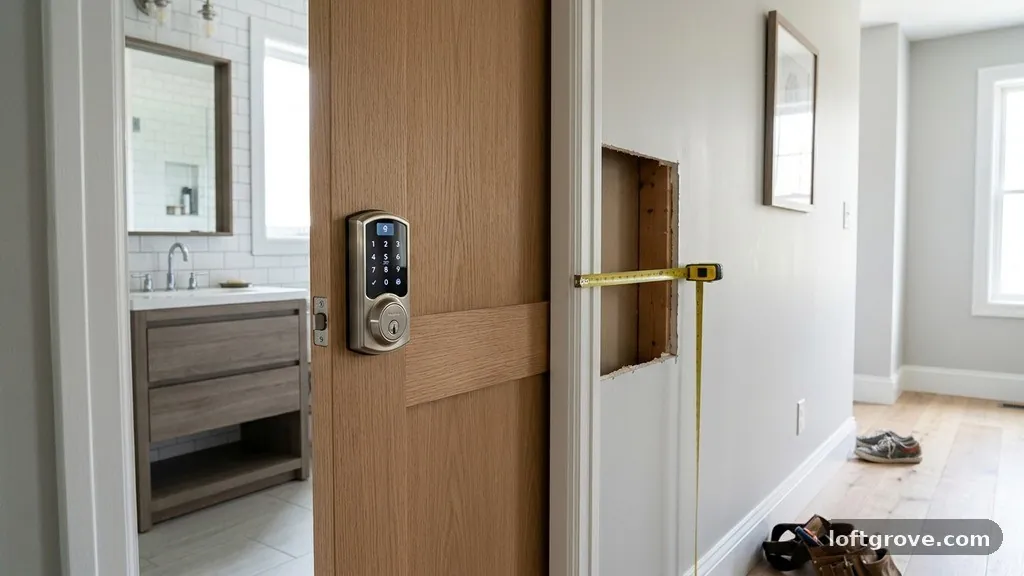
Privacy is the most common reason people look for locks on pocket doors. Bathrooms are the primary location for these installations.
You need a lock that is easy to operate from the inside but provides a reliable indicator of whether the room is occupied. A digital lock adds a layer of convenience here, as it can be set to “privacy mode” with a single tap.
However, you must consider the “emergency access” requirement for bathrooms. If someone gets locked in or has a medical issue, you need a way to open the door from the outside.
Many digital locks have a master override code or a physical key backup. Ensure the lock you choose allows for this, as it is a critical safety feature for residential homes.
Think about the power source for these locks as well. You don’t want to be stuck in a bathroom because the battery died and you cannot unlock the door from the inside.
Look for models that have a low-battery warning or a manual thumb-turn release on the interior side. This ensures that the electronic failure doesn’t result in a physical entrapment.
Comparing Traditional and Digital Locking Options
The choice between a traditional mechanical lock and a digital one comes down to your specific requirements for convenience and security. Traditional locks are simple, cheap, and very low-profile.
They have been used for decades and rarely fail. Digital locks offer convenience but come with the complexities of power and potential electronic glitches.
| Feature | Mechanical Pocket Lock | Digital Keyless Lock |
|---|---|---|
| Thickness | Ultra-low profile | Requires flush mount |
| Power Source | None (manual) | Batteries or wired |
| Security Level | Privacy only | Privacy + Access Control |
| Ease of Installation | Standard mortise | Complex (requires wiring) |
| Durability | High | Moderate (electronic components) |
As shown in the table, the trade-off is clear. If you only need to ensure a bathroom door stays closed, a mechanical privacy latch is usually the better choice. If you are securing a home office or a basement storage area, a digital lock provides the audit trail and remote access that a mechanical lock cannot.
Installation Challenges and Professional Help
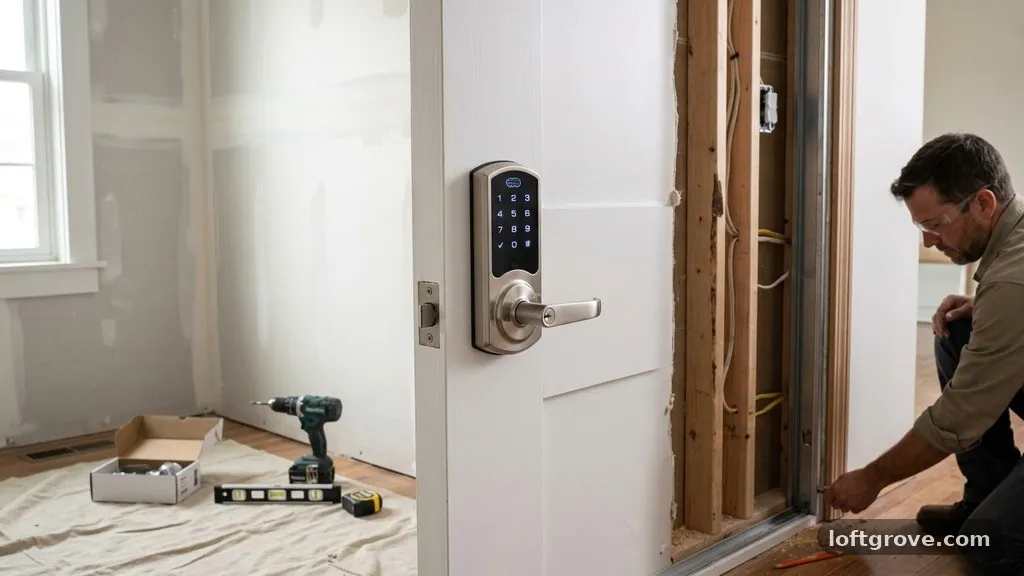
Installing a digital lock into a pocket door is not a standard DIY project. It often requires precise woodworking to enlarge the mortise or to create a path for the wiring.
If your door is solid wood, you may be able to chisel it out yourself. If your door is hollow-core, you will likely destroy it if you try to mount a heavy lock.
You also have to deal with the issue of the “lead” edge of the door. The edge of a pocket door is often covered by a thin strip of wood or a metal trim.
You may need to remove this trim to access the space behind it for the lock body. This can be a delicate process that requires careful removal and re-installation.
If you aren’t comfortable with high-precision carpentry, hire a professional locksmith or a finish carpenter. They have the tools to ensure the lock is perfectly centered and that the door continues to slide smoothly. A mistake in the alignment can lead to the door scraping the wall, which will eventually damage your drywall or paint.
Common Problems and Troubleshooting
Even with the right lock, things can go wrong. The most frequent issue is the door “binding” because the lock is slightly off-center.
If the door isn’t perfectly level, the lock might catch on the strike plate every time you close it. This is usually a sign that the track system needs adjustment, not that the lock is broken.
Another common problem is signal interference. If you are using a Wi-Fi or Bluetooth-enabled lock, the wall cavity can act as a shield.
The signal might not reach your hub if the door is fully inside the wall. You may need to install a signal repeater in the same room to maintain a stable connection.
Battery life is another concern. Because these locks are often used in high-traffic areas like bathrooms, the batteries can drain faster than expected.
Always choose a lock that uses standard, easy-to-replace batteries. Avoid models that require proprietary rechargeable packs, as these can be difficult to source years down the line.
FAQ About Pocket Door Security
Can I install a standard smart lock on a pocket door if I use a spacer?
While you can technically use a spacer to pull the door out further from the wall, this creates a significant gap that ruins the aesthetic and the function of the pocket door. It also makes the door much easier to force open. It is better to choose a lock specifically designed for sliding doors.
Do digital locks for pocket doors require special wiring?
Most residential digital locks for pocket doors are battery-operated to avoid the need for wiring through the door and into the wall. Running wires through a sliding door is extremely difficult and usually requires a special power transfer hinge, which isn’t compatible with a pocket door track.
What is the most secure way to lock a pocket door?
The most secure method is a dedicated mortise lock with a hooked deadbolt. You can find these in both mechanical and electronic versions. The hook design is critical because it grabs the strike plate and prevents the door from being pried open.
Are there biometric locks for pocket doors?
Yes, there are several manufacturers producing fingerprint-scanning locks that sit flush against the door. These are excellent for home offices where you want quick access without carrying a key or remembering a code. Ensure they are rated for the thickness of your specific door.
Conclusion
Choosing to install digital keyless locks for pocket doors is a balance between modern convenience and the physical limitations of a sliding panel. While standard smart locks rarely fit inside the wall cavity, specialized flush-mount hardware offers a functional alternative.
You must prioritize low-profile designs that do not interfere with the door’s travel path. Always measure your clearance gaps before purchasing any hardware to avoid damaging your door or your wall.
If you decide to move forward with a digital upgrade, verify the power source and the emergency release features. A well-installed system adds both security and ease of use to your home.
Take your time with the installation or consult with a professional to ensure the work is done correctly. Feel free to reach out to a local hardware expert to discuss the best options for your specific door setup.