
10 Small Living Room Ideas That Create a Cozy Home
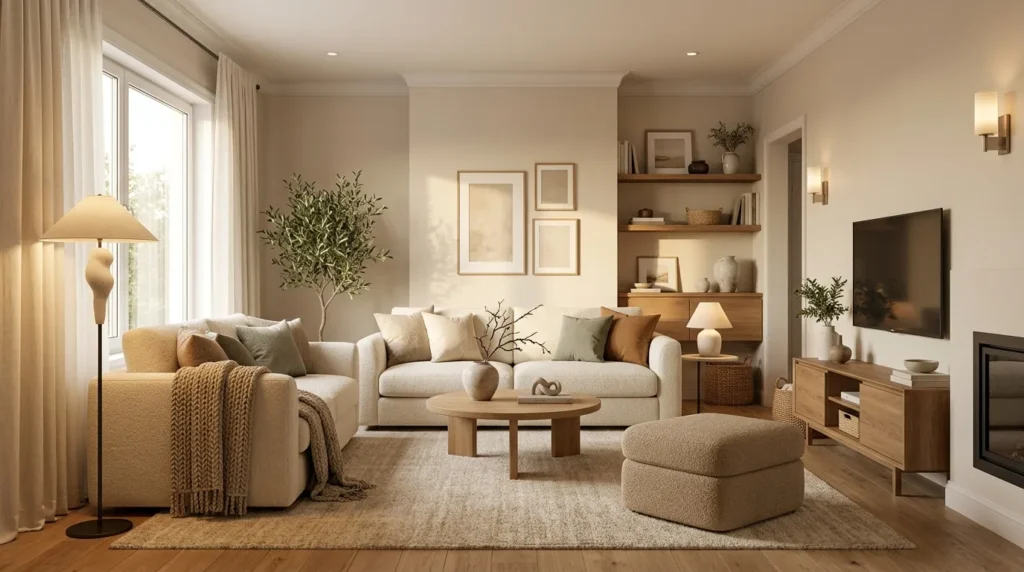
A small living room can be one of the coziest spaces in the house when the layout, furniture, lighting, and textures work together. The challenge is making the room comfortable without filling every available corner with furniture and décor.
When square footage is limited, every piece needs to earn its place. A sofa that’s too deep can make the walking area feel cramped, while a bulky coffee table may interrupt the flow of the room. On the other hand, the right proportions, soft textiles, warm lighting, and a thoughtful arrangement can make a compact living room feel welcoming rather than crowded.
I’ve noticed that the most comfortable small living rooms aren’t necessarily minimalist. They simply have a clear visual hierarchy. There’s a comfortable place to sit, enough room to move around, useful storage, and a few decorative elements that make the space feel personal.
You can also create a cozy atmosphere without committing to a major renovation. Swapping in warmer lighting, adding a textured rug, rearranging furniture, or introducing a few layered textiles can make a surprisingly big difference.
Whether you’re decorating a small apartment, townhouse, starter home, or compact family living room, these ideas can help you create a space that feels warm, functional, and inviting. The goal isn’t to make every inch look bigger—it is to make the room feel comfortable enough that everyone actually wants to spend time there.
Table of Contents
1. Choose a Compact Sofa
Create comfortable seating without overwhelming the room.
2. Layer Soft Textures
Add warmth and visual depth.
3. Use Warm Lighting
Create an inviting atmosphere throughout the room.
4. Add a Soft Area Rug
Define the seating arrangement.
5. Choose Round Tables
Improve circulation around furniture.
6. Create Hidden Storage
Keep everyday clutter under control.
7. Use Vertical Decor
Make walls work harder.
8. Add Natural Elements
Bring warmth and organic character indoors.
9. Create Flexible Seating
Make the room work for everyday life.
10. Style With Personal Details
Give the space a lived-in feeling.
1. Choose a Compact Sofa
Quick Benefits
- Preserves walking space
- Provides comfortable seating
- Makes the room feel balanced
- Works well in apartments
- Leaves room for accent pieces
Why It Works
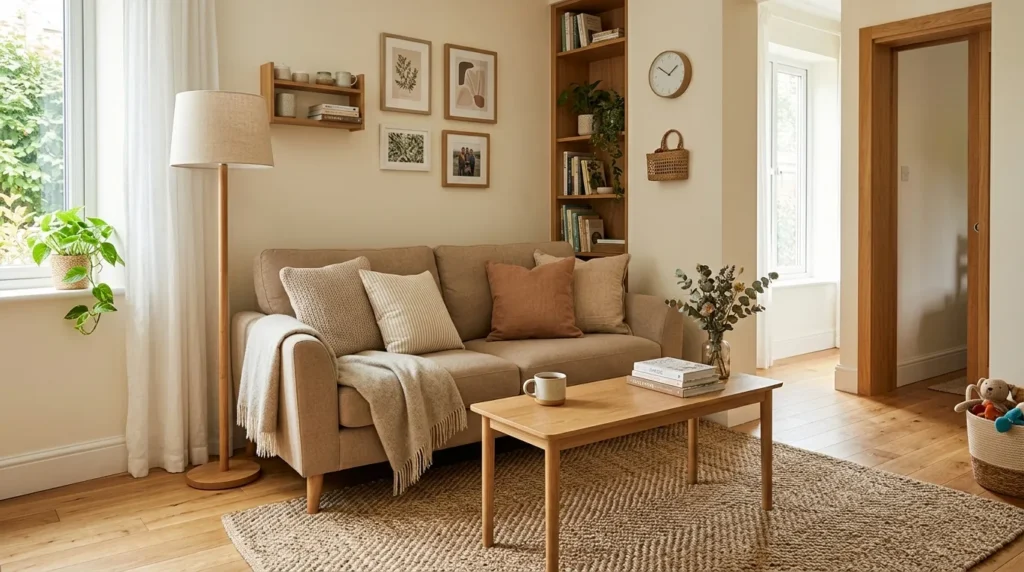
The sofa usually occupies more floor space than any other living room furnishing, so choosing the right proportions can completely change how a small room functions. A sofa doesn’t need to be tiny to work; it simply needs to fit the room without overwhelming it.
A compact sofa with a streamlined silhouette can provide plenty of seating while preserving valuable floor area.
How To Style It
Measure the wall and surrounding walkways before purchasing a sofa. Consider a moderately deep design rather than an oversized sectional if space is limited.
Add two or three pillows and a soft throw rather than covering the entire sofa with accessories. Choose upholstery that complements the room’s overall palette, such as warm beige, cream, muted gray, or earthy tones.
2. Layer Soft Textures
Quick Benefits
- Makes the room feel warmer
- Adds visual depth
- Creates physical comfort
- Softens hard furniture
- Works with neutral palettes
Why It Works
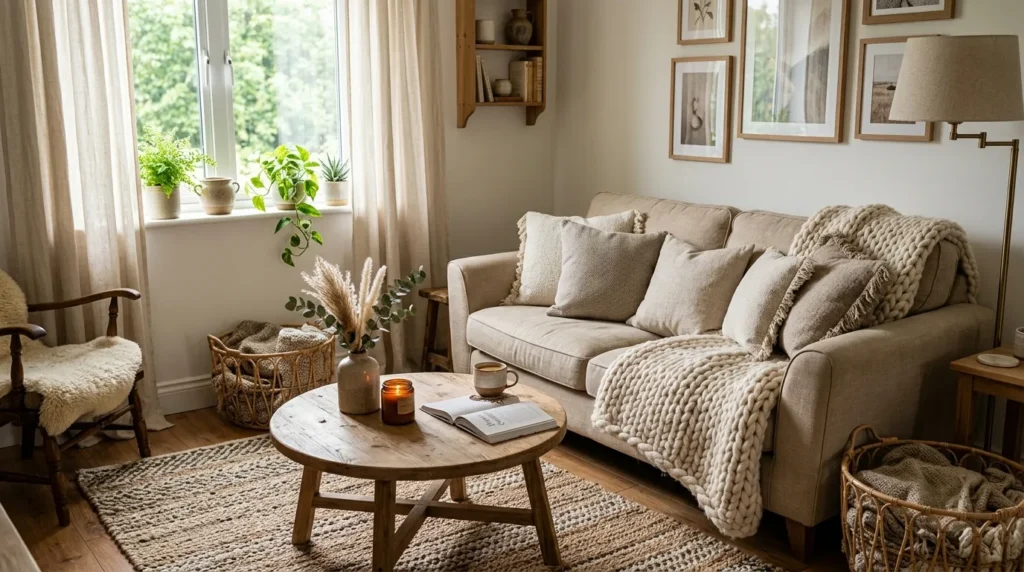
Small living rooms can sometimes feel visually flat when they contain mostly hard surfaces. Adding layers of texture makes the space feel more welcoming without requiring additional furniture.
Textiles are especially effective because they add softness without taking up much structural space.
How To Style It
Start with an area rug, then add cushions, curtains, a throw blanket, and perhaps one upholstered accent chair. Mix materials instead of using the same fabric everywhere.
Try combining linen, cotton, woven fibers, boucle, wool-inspired textiles, and natural wood. Keep the colors related so the room feels cohesive rather than busy.
3. Use Warm Lighting
Quick Benefits
- Creates a cozy atmosphere
- Makes evenings more inviting
- Highlights décor
- Adds visual warmth
- Reduces reliance on one ceiling light
Why It Works
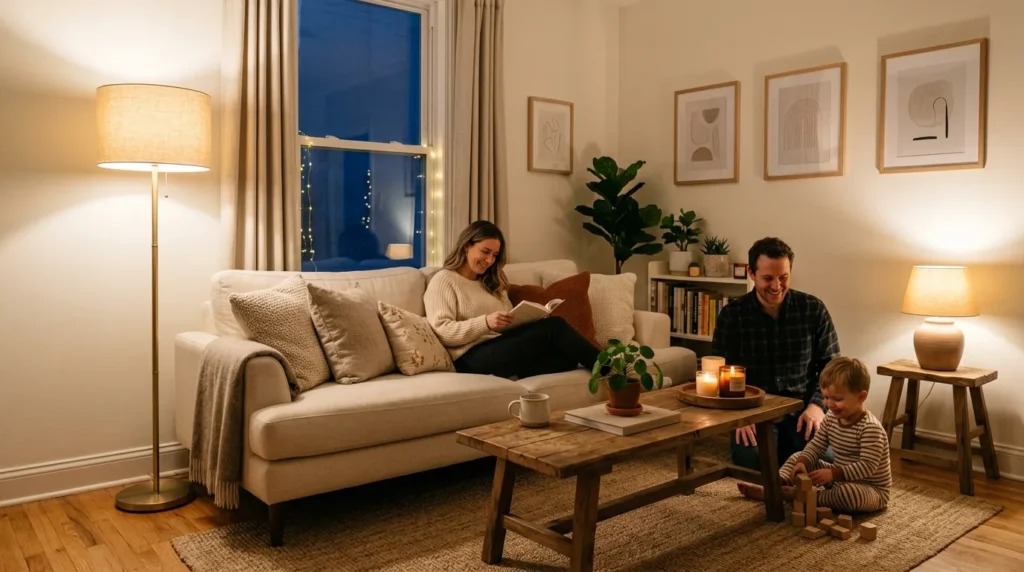
Lighting has an enormous effect on how comfortable a small living room feels. A bright overhead fixture may provide useful general illumination, but it can also make the space feel stark.
Layered lighting creates smaller pools of light that make the room feel intimate.
How To Style It
Combine a floor lamp, table lamp, wall light, or other suitable fixtures with the main room lighting. Position lamps near the sofa or reading area where practical illumination is needed.
Warm-toned bulbs can enhance the cozy feeling. If possible, use lighting controls that allow brightness to be adjusted for different activities.
4. Add a Soft Area Rug
Quick Benefits
- Defines the seating area
- Adds warmth
- Creates visual cohesion
- Makes floors more comfortable
- Introduces color or pattern
Why It Works
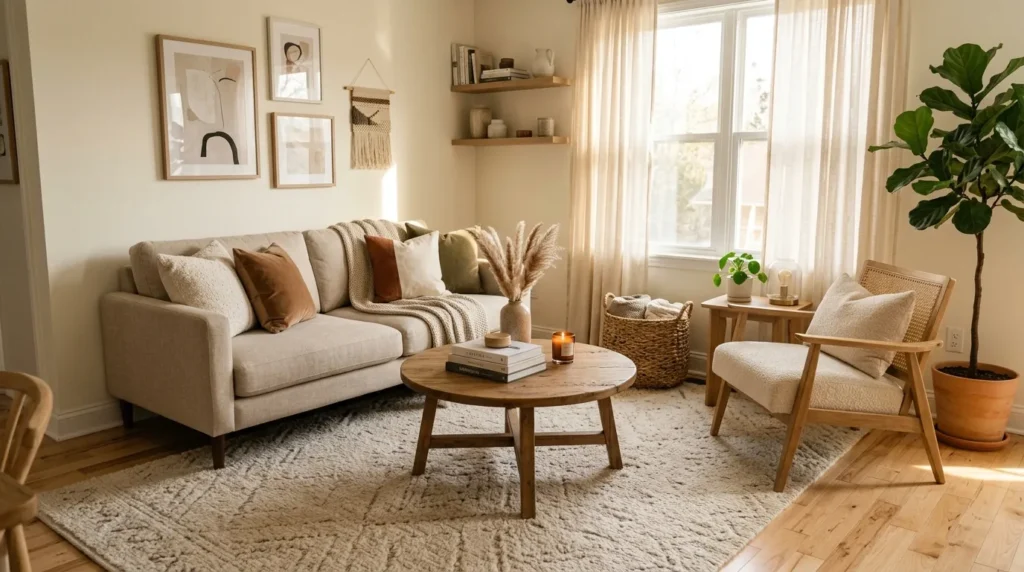
A rug can visually connect the sofa, coffee table, and chairs into one intentional seating zone. In a small room, this helps prevent furniture from looking randomly placed around the floor.
It also adds an important layer of softness.
How To Style It
Choose a rug large enough to visually connect the main seating pieces without blocking doors or creating difficult transitions.
For a calm look, try a neutral textured rug. If the furniture is simple, a subtle pattern can introduce personality. Keep the rug’s colors connected to the pillows, artwork, or curtains.
5. Choose Round Tables
Quick Benefits
- Improves circulation
- Reduces sharp corners
- Makes tight layouts easier
- Adds visual variety
- Works well beside compact sofas
Why It Works
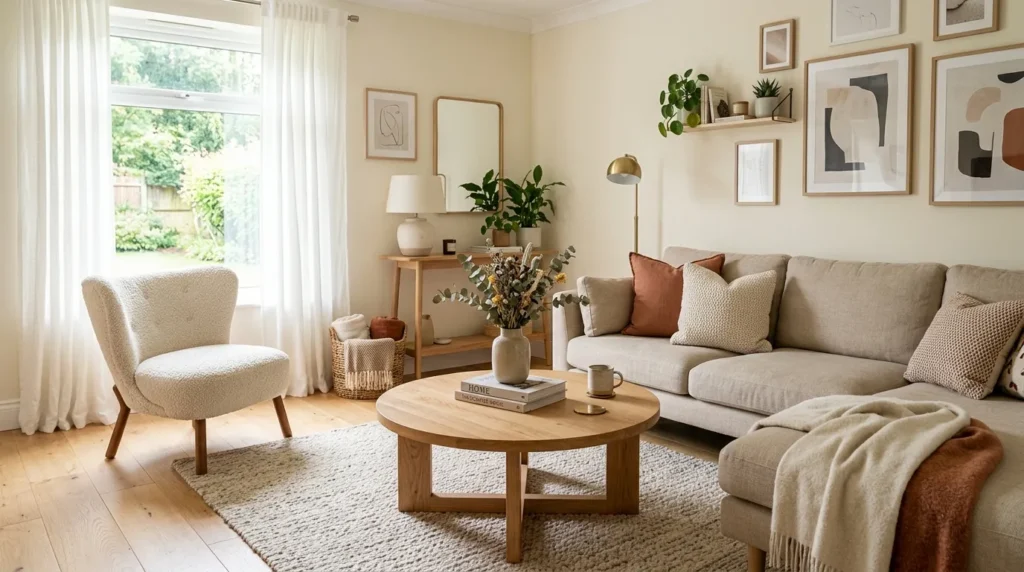
Corners and narrow walking paths can become difficult when a small living room is filled with rectangular furniture. Round coffee tables and side tables eliminate some of those hard corners and can make movement around the seating area feel more natural.
They also introduce a softer shape into rooms dominated by straight lines.
How To Style It
Choose a round coffee table that leaves comfortable space between the table and sofa. Wood creates warmth, while glass or visually lightweight materials can maintain an airy appearance.
A small round side table can also fit neatly into corners where a larger rectangular table would feel awkward.
6. Create Hidden Storage
Quick Benefits
- Reduces visual clutter
- Keeps everyday items accessible
- Makes cleaning easier
- Preserves open surfaces
- Improves functionality
Why It Works
A cozy living room can quickly become uncomfortable when books, toys, electronics, blankets, and miscellaneous items accumulate everywhere. Hidden storage allows you to keep necessities nearby without making them part of the room’s visual landscape.
This is particularly important in homes where the living room serves several purposes.
How To Style It
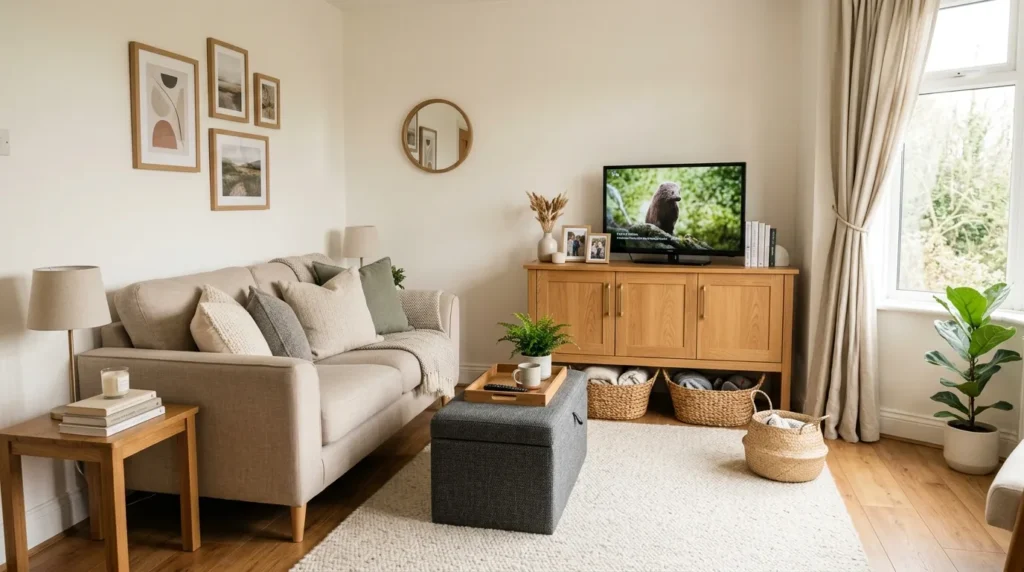
Look for storage ottomans, baskets, media cabinets, nesting tables, or sofas with appropriate built-in storage.
Assign each storage area a purpose. For example, one basket can hold throws while a cabinet stores electronics. This makes tidying up much easier.
7. Use Vertical Decor
Quick Benefits
- Uses unused wall space
- Keeps floors open
- Adds personality
- Draws the eye upward
- Creates visual balance
Why It Works
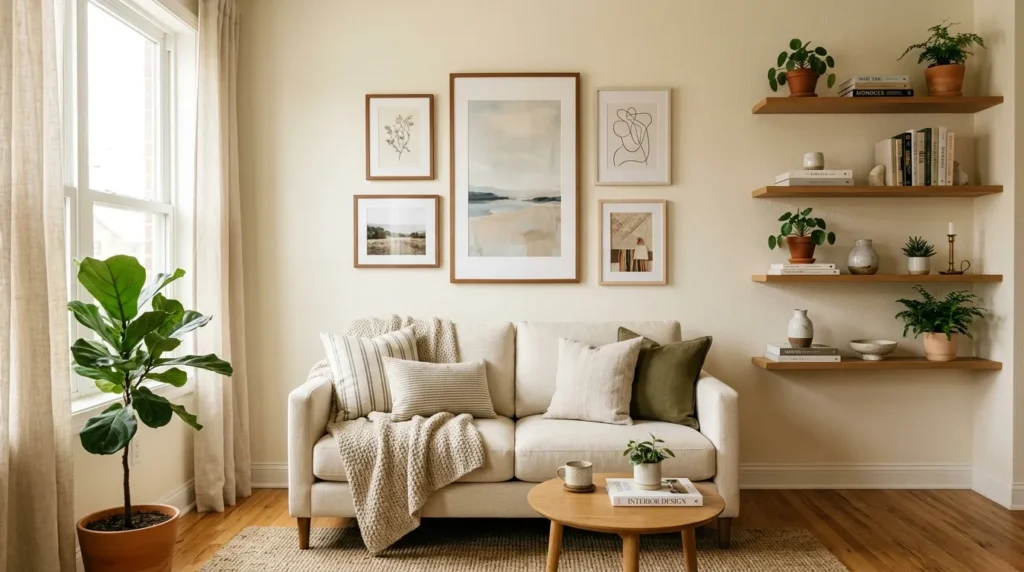
When floor space is limited, walls become valuable real estate. Artwork, mirrors, shelves, and vertical décor can add character without taking up seating or walking space.
A well-positioned wall feature can also give a small living room a strong focal point.
How To Style It
Hang artwork at an appropriate viewing height and choose pieces proportional to the wall and furniture below them.
Floating shelves can hold books, small plants, and decorative objects. A tall mirror can reflect light and add depth, while a vertical gallery arrangement can make the ceiling feel visually higher.
8. Add Natural Elements
Quick Benefits
- Adds warmth
- Creates organic texture
- Softens modern furniture
- Introduces greenery
- Works across decorating styles
Why It Works
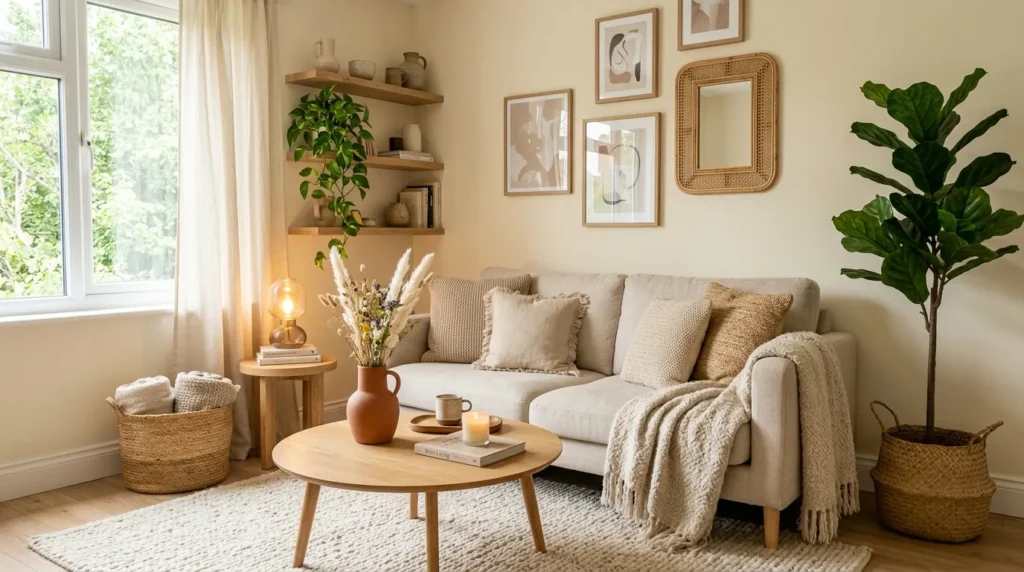
Natural materials can make a compact living room feel more relaxed and welcoming. Wood, woven fibers, stone, ceramics, and greenery bring subtle variation to the room without requiring bold colors.
Plants can also add life to corners that might otherwise feel empty.
How To Style It
Try a wooden coffee table, woven basket, rattan accent, ceramic vase, or small indoor plant. If natural light is limited, choose plants appropriate for the available conditions rather than selecting them solely for appearance.
Repeat natural materials in small doses throughout the room for a cohesive effect.
9. Create Flexible Seating
Quick Benefits
- Accommodates guests
- Saves floor space
- Makes rearranging easier
- Supports multiple activities
- Adds personality
Why It Works
A small living room needs to adapt. You may need comfortable seating for family movie nights, extra places for guests, or an open area for children.
Instead of filling the room with large chairs, use flexible pieces that can move when necessary.
How To Style It
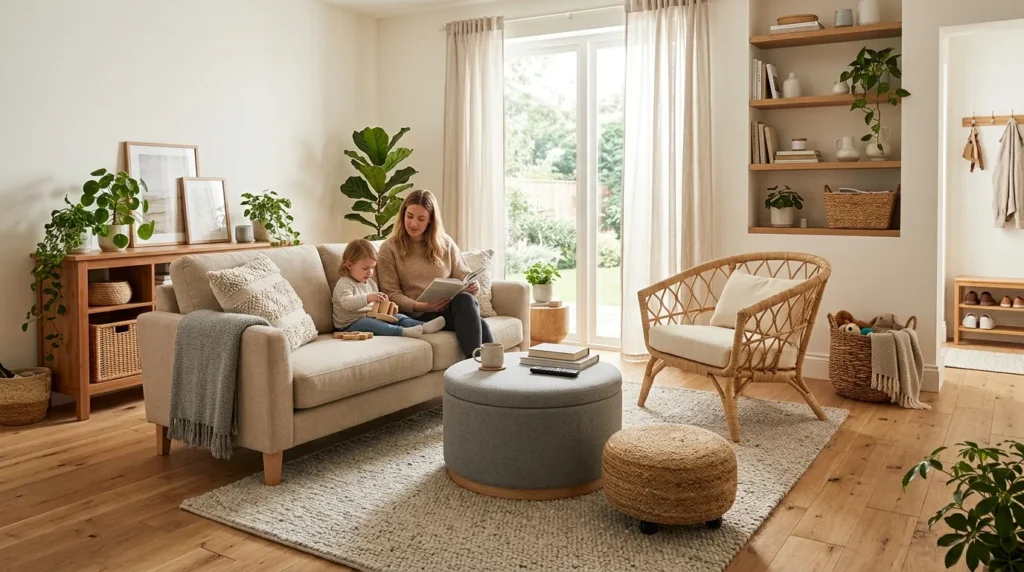
Consider a compact accent chair, lightweight stool, pouf, or bench. Place these pieces where they can be moved without disrupting the main walkway.
A storage ottoman can serve several purposes at once: extra seating, a footrest, a coffee table alternative, or concealed storage.
10. Style With Personal Details
Quick Benefits
- Makes the room feel unique
- Adds emotional warmth
- Creates a lived-in atmosphere
- Prevents generic styling
- Works on any budget
Why It Works
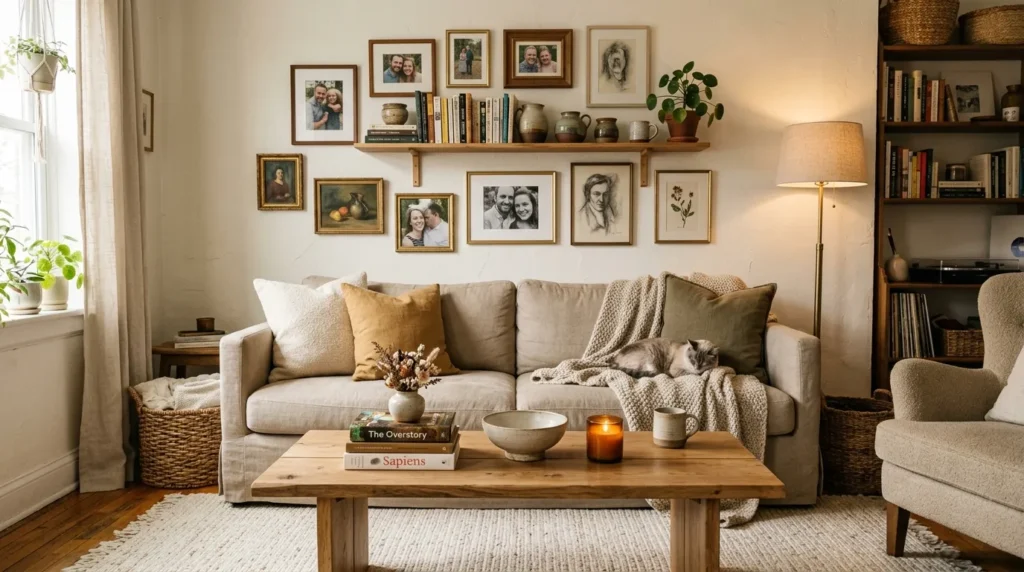
The final layer of coziness comes from the things that make the room feel like home. Family photographs, favorite books, artwork, travel finds, ceramics, and meaningful objects give the living room personality.
Without personal details, even beautifully coordinated furniture can feel impersonal.
How To Style It
Choose a handful of items that genuinely mean something to you. Display favorite books on the coffee table, place a framed photograph on a shelf, or add a meaningful piece of artwork above the sofa.
Keep collections edited so they enhance the room instead of creating clutter. A few intentional pieces usually have more impact than filling every surface.
Frequently Asked Questions
How can I make a small living room feel cozy?
Focus on comfortable seating, layered textiles, warm lighting, a well-sized rug, and a cohesive color palette. Keep clutter contained and avoid oversized furniture that blocks walking paths. Personal artwork and natural materials can add warmth without consuming much floor space.
What furniture is best for a small living room?
Compact sofas, apartment-sized sectionals, nesting tables, storage ottomans, slim side tables, and lightweight accent chairs can work well. Choose pieces based on actual measurements rather than simply selecting the smallest furniture available.
What colors make a small living room feel cozy?
Warm neutrals such as cream, beige, taupe, warm white, and soft gray can create a comfortable foundation. Muted greens, earthy browns, dusty blues, and terracotta can then be added as accents for personality.
Should a small living room have a rug?
A rug can be extremely useful because it visually anchors the seating arrangement and adds warmth. Choose a size that connects the main furniture without interfering with doors, vents, or walking paths.
How do I decorate a small living room without making it cluttered?
Start with fewer decorative objects and add pieces gradually. Use vertical storage, baskets, closed cabinets, and multifunctional furniture to keep everyday belongings contained. Leave some open surfaces and wall space so the room can breathe.
How can I make a small living room comfortable for a family?
Prioritize durable upholstery, washable or easy-care textiles where appropriate, storage for everyday belongings, and flexible seating. A storage ottoman can provide seating and organization, while baskets can make toys, blankets, and books easier to manage.
Conclusion
A small living room can be warm, practical, and genuinely comfortable without being packed with furniture. The key is to make every major choice support the way your household actually uses the room.
Start with a sofa that fits the scale of the space, then build a comfortable seating arrangement around it. Add a rug to define the area, layer soft textiles for warmth, and introduce lighting that creates a gentle atmosphere in the evening.
Storage is just as important as décor. Baskets, storage ottomans, cabinets, and multifunctional furniture can keep everyday clutter under control while allowing the room to remain inviting.
Then add the details that make the space yours. Natural wood, greenery, artwork, books, family photographs, and favorite objects can transform a functional room into a place that feels personal.
You don’t need a large living room to create a cozy home. With thoughtful proportions, comfortable materials, smart organization, and a little personality, even a compact space can become the room where everyone naturally wants to gather.