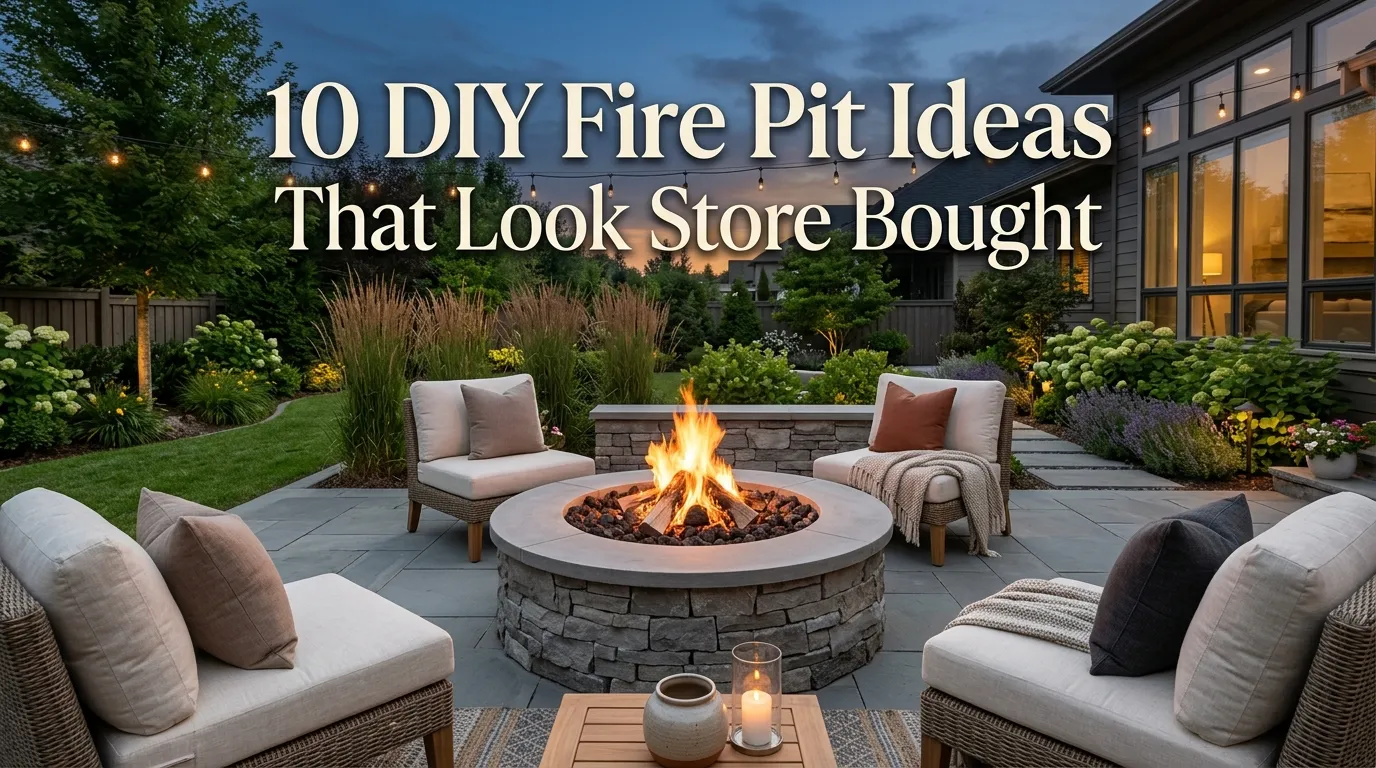
10 DIY Fire Pit Ideas That Look Store Bought
A fire pit can instantly make a backyard feel more inviting. It gives everyone a natural place to gather, creates a cozy focal point, and can turn an ordinary outdoor area into a space that feels designed for lingering evenings.
The challenge with many DIY fire pit projects is making them look intentional rather than improvised. The difference often comes down to the surrounding details: clean lines, consistent materials, a properly defined seating area, thoughtful landscaping, and a finished surface that makes the fire pit feel like part of the overall backyard design.
In my experience, the best DIY fire pit projects don’t try to imitate an expensive product exactly. Instead, they borrow the design principles that make professionally designed outdoor features look polished—simple shapes, restrained materials, balanced proportions, and cohesive colors.
A round stone fire pit can look remarkably sophisticated when surrounded by a carefully finished gravel patio. A simple metal bowl can feel custom when paired with a modern seating arrangement and attractive landscaping. Even inexpensive materials can look elevated when they’re installed neatly and repeated throughout the space.
Safety should always come before appearance. Fire features need to be designed and installed according to local regulations, manufacturer requirements, appropriate clearances, and the specific fuel type being used. Never use materials or construction methods simply because they look good in photographs.
With that foundation in mind, these DIY-inspired ideas can help you create a fire pit area that feels polished, comfortable, and intentionally designed.
Table of Contents
1. Build a Circular Stone Pit
Create a timeless backyard centerpiece.
2. Create a Gravel Fire Pit Area
Give the fire pit a polished outdoor-room setting.
3. Use a Metal Fire Bowl
Get a modern look with a simple structure.
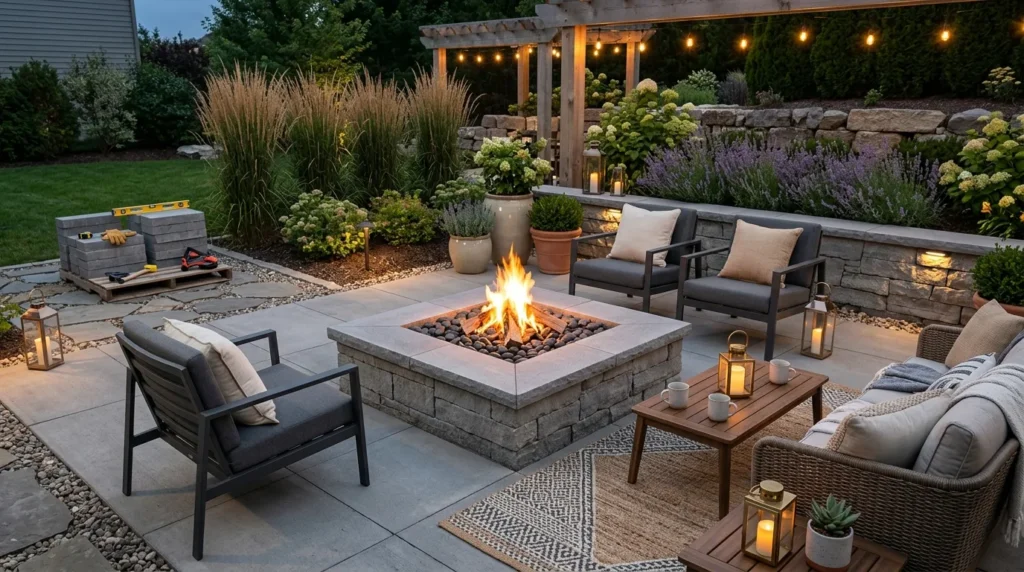
4. Add a Paver Surround
Create clean visual definition.
5. Build a Sunken Seating Area
Make the fire pit feel architectural.
6. Add Built-In Seating
Create a cohesive gathering zone.
7. Use a Modern Concrete Look
Bring contemporary style outdoors.
8. Add Decorative Gravel
Finish the area with texture and contrast.
9. Frame It With Landscaping
Blend the fire pit into the backyard.
10. Create a Complete Fire Pit Zone
Make the entire area feel custom designed.
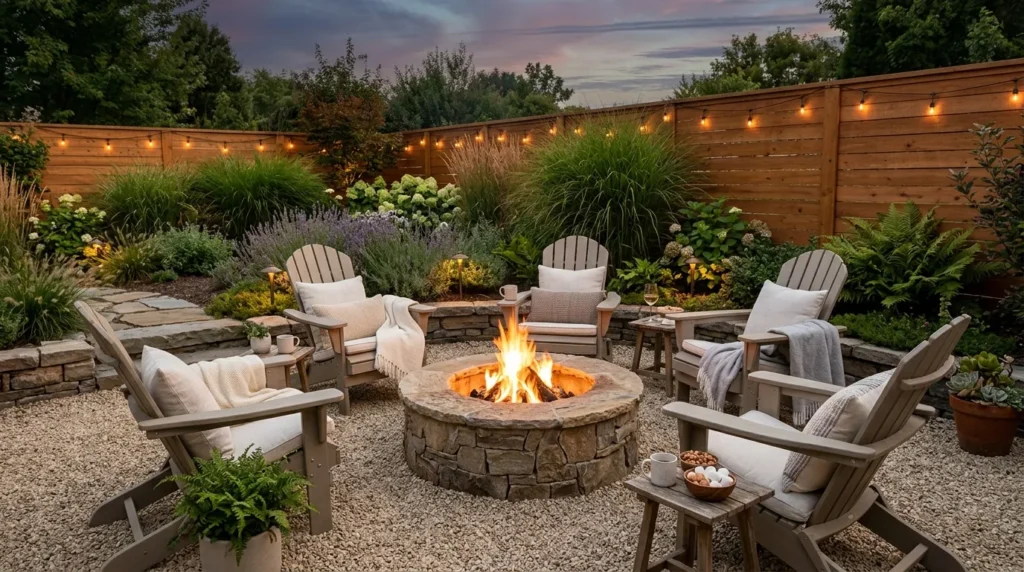
1. Build a Circular Stone Pit
Quick Benefits
- Creates a classic focal point
- Works with many backyard styles
- Looks substantial
- Defines the gathering area
- Complements natural landscaping
Why It Works
Circular fire pits naturally encourage conversation because seating can face the center from multiple directions. A stone surround also has a timeless appearance that works particularly well with gardens, patios, and natural landscaping.
The finished look depends heavily on consistency. Uneven materials or poorly defined edges can make the feature look unfinished, while a carefully planned circular design can feel much more professional.
How To Style It
Choose appropriate fire-rated materials and follow local requirements for construction, placement, and clearances. Keep the shape simple and make sure the finished structure is stable and level.
Surround the pit with a defined noncombustible surface and comfortable outdoor seating. Repeat the stone or a complementary material elsewhere in the backyard to create visual continuity.
2. Create a Gravel Fire Pit Area
Quick Benefits
- Defines the gathering zone
- Creates a clean foundation
- Complements stone
- Requires relatively little upkeep
- Works with many design styles
Why It Works
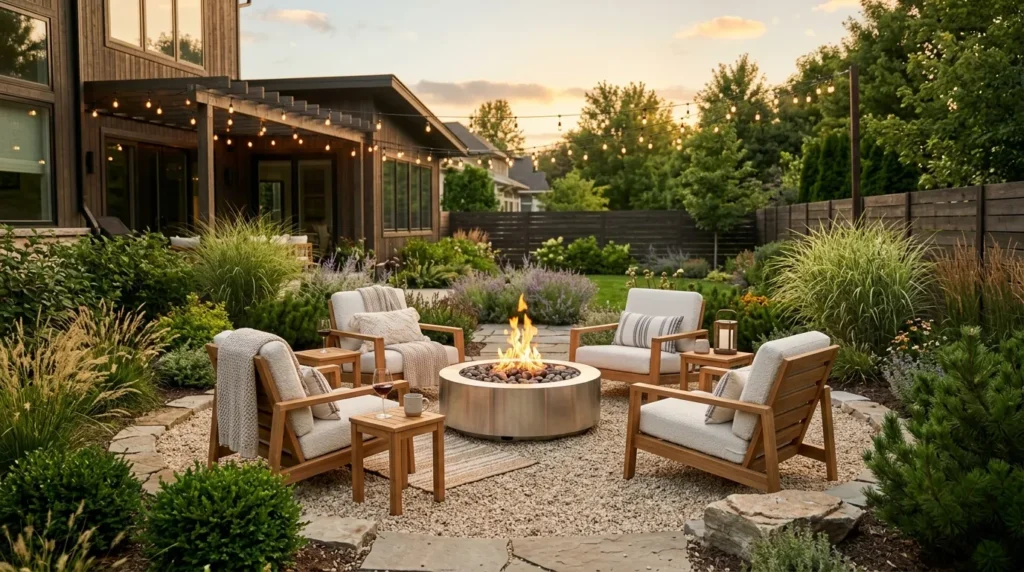
A fire pit can look disconnected when it sits randomly in a lawn. Creating a dedicated gravel area makes it feel like an intentional outdoor room.
Gravel also provides visual contrast against greenery while giving chairs and the fire feature a clear place to sit.
How To Style It
Define the perimeter of the fire pit zone and choose a suitable aggregate for the application. Proper base preparation, drainage, and edging can make a major difference in the finished appearance.
Add a few comfortable chairs around the perimeter and keep surrounding decorations restrained.
3. Use a Metal Fire Bowl
Quick Benefits
- Creates a modern look
- Requires less construction
- Works in compact yards
- Easy to coordinate
- Can become a focal point
Why It Works
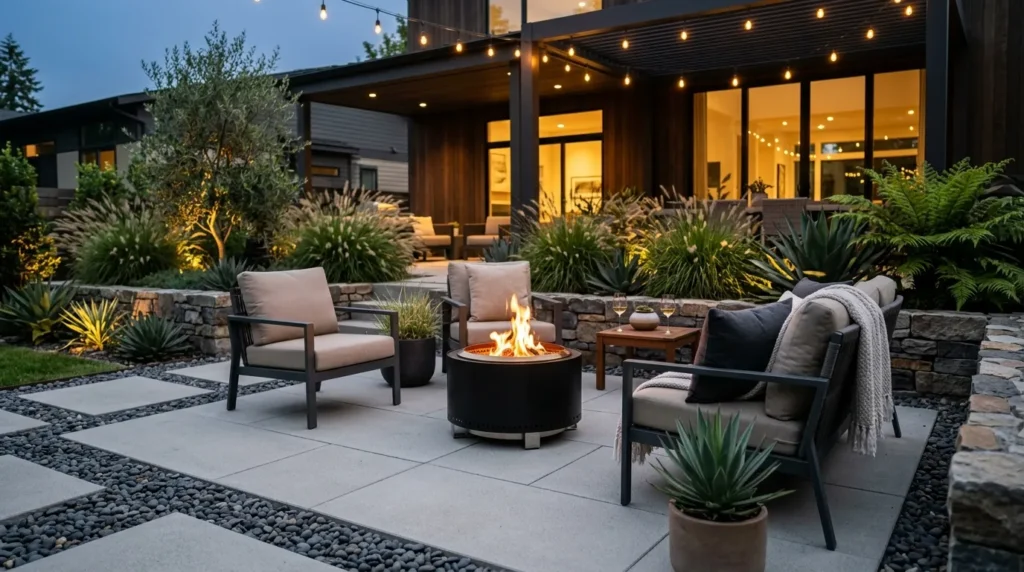
A freestanding fire bowl can provide the appearance of a custom outdoor feature without requiring a large permanent structure.
Its clean silhouette works particularly well in modern and contemporary landscapes.
How To Style It
Select a fire bowl designed and approved for its intended fuel type and outdoor use. Position it on an appropriate noncombustible surface with the required clearances.
Surround it with simple outdoor furniture, gravel, stone, or low-maintenance planting. Avoid adding too many decorative objects around the bowl.
4. Add a Paver Surround
Quick Benefits
- Creates a finished appearance
- Defines the fire pit area
- Adds visual structure
- Coordinates with patios
- Creates durable circulation space
Why It Works
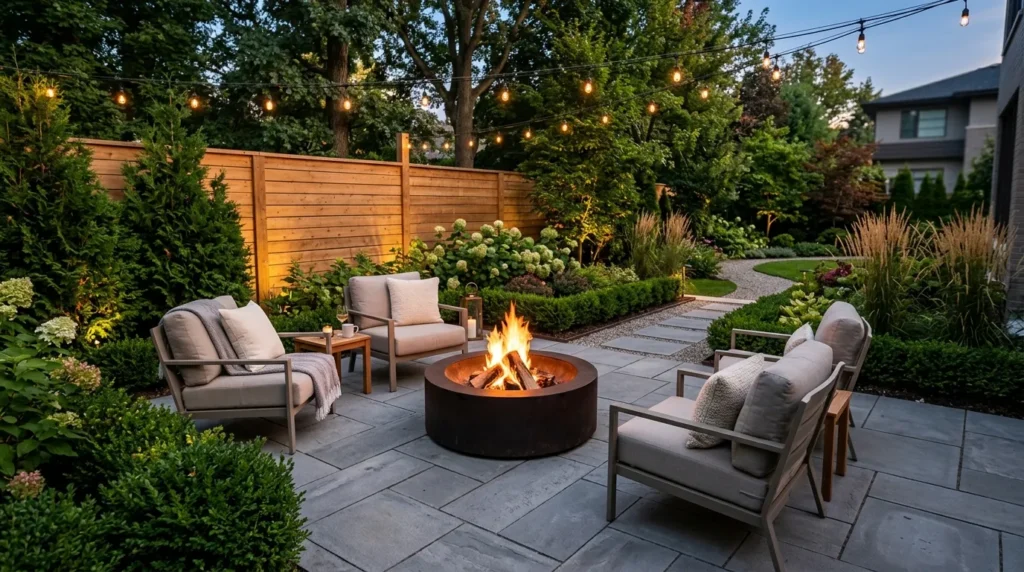
Pavers can make a fire pit area feel more like a professionally designed outdoor living zone. The repeated geometry creates visual order while providing a practical surface around the fire feature.
It also gives the seating area a stronger sense of place.
How To Style It
Choose pavers that complement existing hardscape rather than introducing an unrelated material. Keep the pattern simple if the surrounding landscape already has lots of visual activity.
Use appropriate installation methods for the specific site, including suitable base preparation and drainage.
5. Build a Sunken Seating Area
Quick Benefits
- Creates architectural interest
- Makes the fire pit feel intentional
- Defines the seating zone
- Creates a strong focal point
- Adds depth to large yards
Why It Works
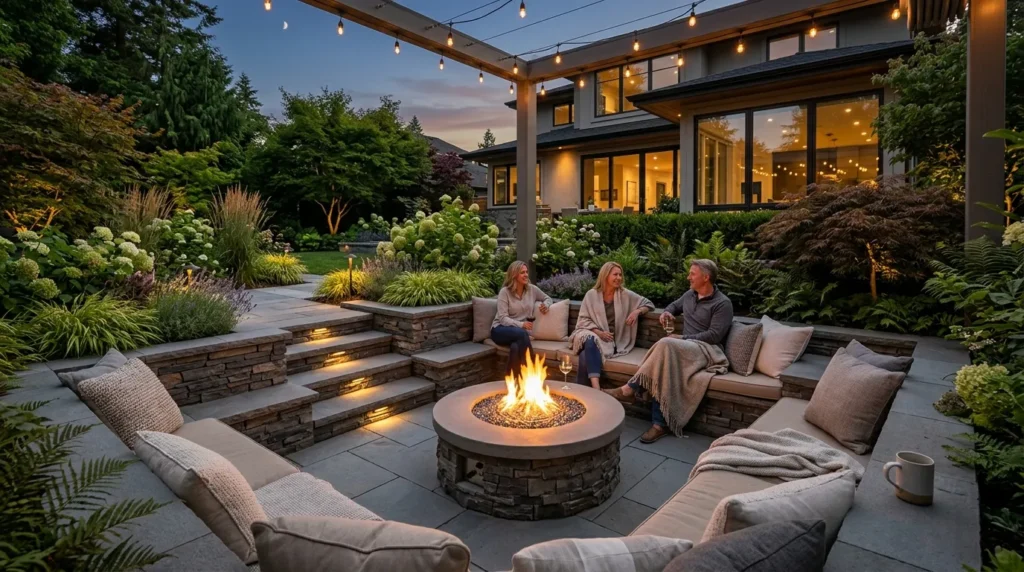
A sunken seating arrangement can give the fire pit area the feeling of a dedicated outdoor room. The change in elevation naturally separates the gathering space from the surrounding yard.
This is a more involved landscaping project, so proper grading, drainage, retaining structures, and local requirements need to be considered.
How To Style It
Keep the design simple and cohesive. Use durable hardscape surfaces, comfortable seating, and restrained planting around the perimeter.
The fire feature should remain visually central while the surrounding architecture supports it.
6. Add Built-In Seating
Quick Benefits
- Creates a custom appearance
- Maximizes seating
- Defines the fire pit zone
- Reduces furniture clutter
- Works beautifully in modern landscapes
Why It Works
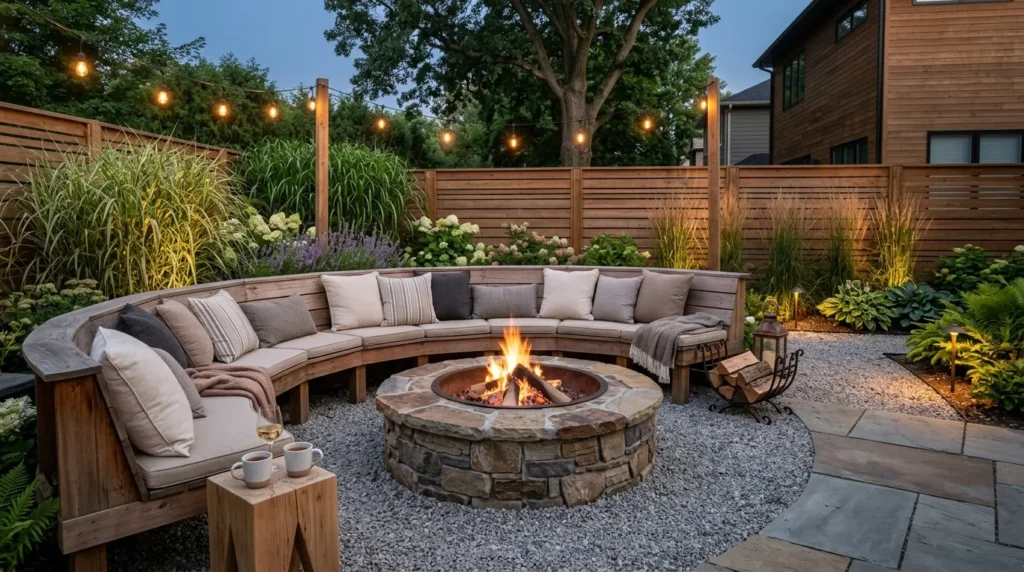
Built-in benches can make a fire pit area look considerably more permanent and intentional. They also help organize the seating arrangement without requiring numerous individual chairs.
The result can resemble a professionally designed outdoor entertaining area.
How To Style It
Use appropriate durable outdoor materials and make sure seating dimensions are comfortable. Add removable outdoor cushions for softness and color where suitable.
Leave sufficient space around the fire feature and follow all applicable safety clearances.
7. Use a Modern Concrete Look
Quick Benefits
- Creates contemporary appeal
- Works with minimalist landscaping
- Provides strong visual contrast
- Looks architectural
- Complements modern furniture
Why It Works
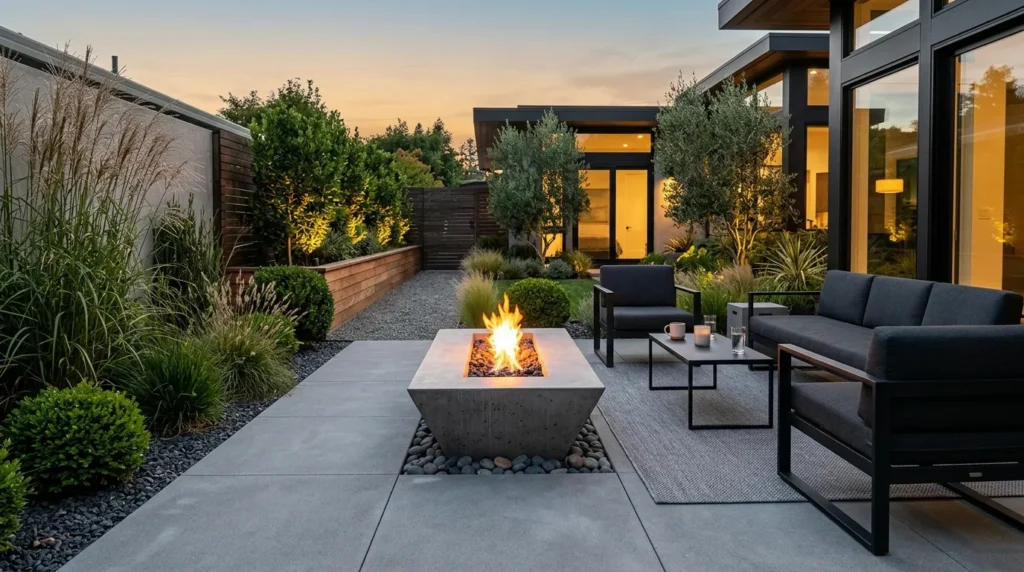
Concrete-inspired materials and simple geometric forms can make a fire pit area feel contemporary and sophisticated.
The clean appearance works particularly well when paired with simple planting and restrained outdoor furniture.
How To Style It
Use only materials specifically appropriate for the temperatures and application involved. Don’t assume ordinary decorative concrete or masonry products are suitable for direct exposure to fire.
Pair the finished feature with neutral outdoor furniture, gravel, large-format pavers, or ornamental grasses for a cohesive modern look.
8. Add Decorative Gravel
Quick Benefits
- Adds texture
- Creates contrast
- Defines the fire pit
- Complements modern landscaping
- Helps finish the surrounding area
Why It Works
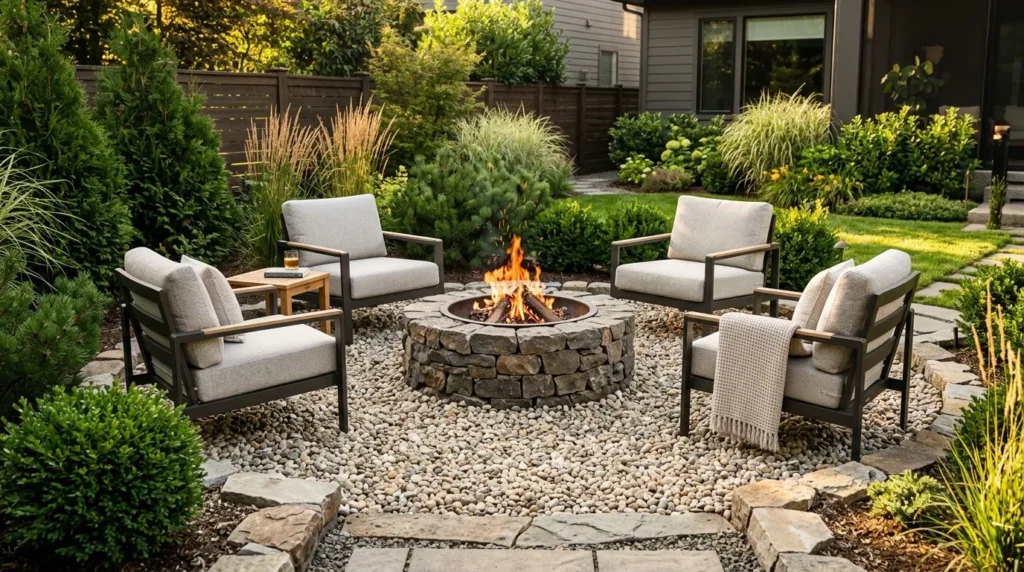
Decorative gravel can act as the visual transition between a fire feature and the surrounding landscape. It also creates a simple, uncluttered backdrop that allows the fire pit itself to stand out.
How To Style It
Choose an appropriate aggregate size and color that complements the house and surrounding materials.
Use edging to maintain clean boundaries where appropriate. Avoid placing combustible decorative materials too close to the fire feature.
9. Frame It With Landscaping
Quick Benefits
- Connects the fire pit to the garden
- Softens hardscape
- Adds privacy
- Creates visual depth
- Makes the space feel finished
Why It Works
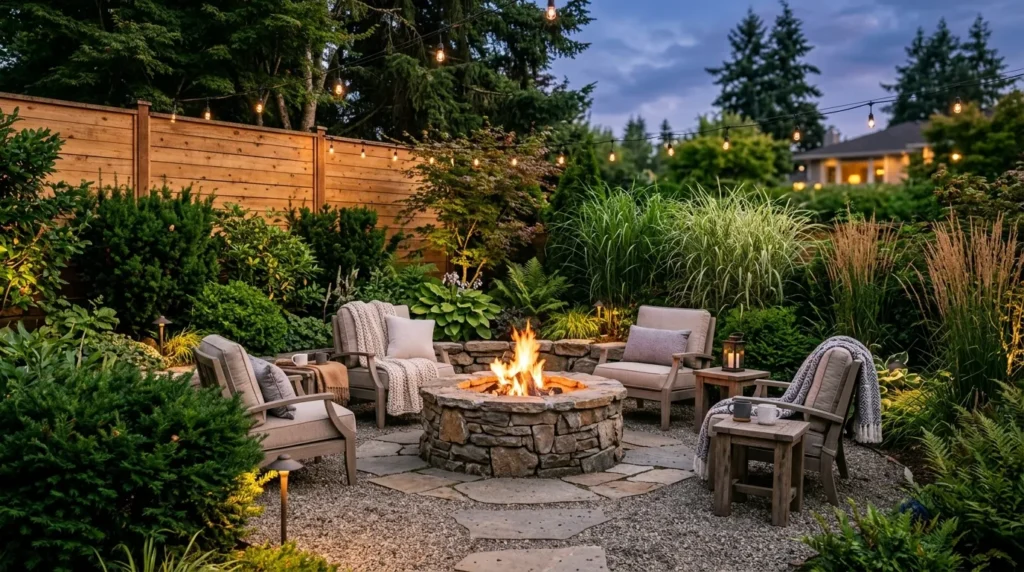
A fire pit shouldn’t necessarily look like an object dropped into the middle of a backyard. Landscaping can visually connect it to the rest of the property.
The plants provide a softer backdrop while the hardscape defines the actual gathering area.
How To Style It
Use appropriate low-maintenance plants around the perimeter while maintaining all required fire clearances. Ornamental grasses, shrubs, and suitable perennials can create layers without overwhelming the feature.
Repeat plants already used elsewhere in the garden to make the entire landscape feel cohesive.
10. Create a Complete Fire Pit Zone
Quick Benefits
- Looks professionally planned
- Creates a true outdoor room
- Improves functionality
- Combines multiple design elements
- Increases visual impact
Why It Works
The biggest secret to making a DIY fire pit look store-bought—or even professionally designed—is to stop treating the fire pit as the entire project.
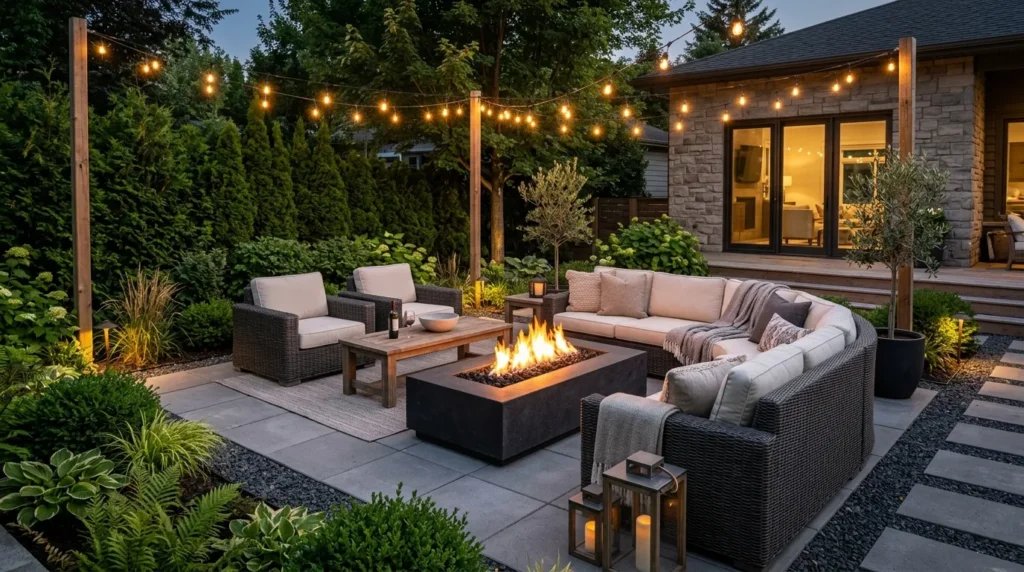
The surrounding space matters just as much. Furniture, flooring, lighting, landscaping, and accessories work together to create the finished impression.
How To Style It
Begin with the fire feature and establish a safe surrounding zone. Then add an appropriate hardscape surface, comfortable seating, subtle lighting, and a small amount of landscaping.
Repeat colors and materials from the rest of the backyard. When everything feels connected, even a simple fire feature can look remarkably polished.
Frequently Asked Questions
What materials can make a DIY fire pit look expensive?
The surrounding design often matters more than the cost of the fire pit itself. Clean pavers, properly installed stone, coordinated gravel, quality outdoor seating, subtle lighting, and cohesive landscaping can create a more polished appearance.
What should I put around a fire pit?
A suitable noncombustible surface is typically important, but the exact requirements depend on the fire feature, fuel type, location, and local regulations. Always follow manufacturer instructions and applicable codes.
Can I build a fire pit myself?
Some fire pit projects can be DIY-friendly, but safety requirements vary significantly. Before construction, check local regulations, fire restrictions, property requirements, and manufacturer instructions. More complex installations may require professional design or installation.
How do I make a cheap fire pit look expensive?
Focus on the complete setting. Create a defined seating area, use coordinated materials, keep the landscaping intentional, add appropriate outdoor lighting, and avoid clutter. A simple fire feature can look elevated when its surroundings are thoughtfully designed.
Should a fire pit be placed on grass?
A fire feature should not simply be placed anywhere because the surface is convenient. Follow the manufacturer’s installation requirements and local safety rules for the specific fire pit. A properly designed noncombustible area is often an important part of the overall installation.
How can I make a fire pit area cozy?
Comfortable seating, soft outdoor cushions, subtle lighting, coordinated landscaping, and a clearly defined outdoor room can make the space more inviting. Keep decorative items safely away from the fire feature.
Conclusion
A DIY fire pit doesn’t have to look homemade.
The secret is to design the entire area, not just the fire feature. A simple fire bowl can look sophisticated when it’s surrounded by the right surface, comfortable seating, thoughtful landscaping, and subtle lighting.
Start with safety and local requirements, then focus on proportion and consistency. Choose materials that complement your home’s exterior and repeat those materials throughout the backyard whenever possible.
A defined gravel or paver area can instantly make the fire pit feel more intentional. Built-in seating can create a custom appearance, while carefully selected plants can soften the surrounding hardscape.
You don’t need dozens of decorative elements. In fact, restraint usually creates a more expensive-looking result.
Think clean lines, coordinated materials, comfortable seating, and a clear focal point.
With those principles, even a relatively simple DIY fire pit can become the centerpiece of a backyard that feels polished, welcoming, and ready for long evenings outdoors.